
Image Source: www.lloydpest.com
Why Are There So Many Wasps In My Yard?
Have you noticed a surge in wasp activity around your home lately? If you’re asking yourself, “Why are there so many wasps in my yard?”, the most common reasons are the presence of a nearby wasp nest, favorable environmental conditions, and readily available food sources.
Wasps are a natural part of many ecosystems, and their populations can fluctuate throughout the year. However, a sudden increase in their numbers can be concerning, especially if you’re worried about stings or the overall nuisance they can cause. This article will delve into the various factors contributing to a high wasp population in your yard, offering insights into identifying wasps, common wasp species you might encounter, and effective wasp control methods. We’ll also explore how to prevent future wasp infestation and discuss the delicate balance between deterring unwanted stinging insects and avoiding actions that might be attracting wasps.
Deciphering Wasp Populations: What Drives Their Numbers?
Several key factors contribute to the prevalence of wasps in a specific area. It’s not usually just one isolated incident but a combination of elements that create an attractive environment for these insects.
Nesting Sites: The Foundation of Abundance
Wasps need safe places to build their nests. The availability of suitable nesting locations is a primary driver of their population density. Different species prefer different types of habitats.
- Ground Nesters: Many common species, like yellowjackets, build their nests underground in abandoned rodent burrows, hollow logs, or other sheltered cavities. If your yard has numerous such spots, it can become an ideal nesting ground.
- Aerial Nesters: Paper wasps and hornets, on the other hand, prefer to build exposed nests from chewed wood pulp. Eaves of houses, attics, sheds, garages, and dense shrubbery are prime locations for these wasp nests.
- Cavity Nesters: Some wasps, like mud daubers, utilize mud to construct their nests in sheltered areas, often on walls or under eaves.
A single queen can start a nest in early spring, and by late summer, a mature colony can contain thousands of workers. The presence of multiple suitable nesting sites can lead to several colonies establishing themselves in proximity, resulting in what appears to be an overwhelming number of wasps.
Food Sources: Fueling the Colony
Wasps are opportunistic feeders, and the availability of food is crucial for colony growth and survival. Your yard might inadvertently be a buffet for wasps.
- Insects and Spiders: Many wasp species are predatory and feed on other insects and spiders, which they often bring back to feed their young. A yard with a healthy population of caterpillars, flies, or other small invertebrates can therefore support a larger wasp population.
- Sugary Substances: Adult wasps, particularly when seeking energy, are attracted to sugary liquids. This includes:
- Fallen Fruit: Ripe or decaying fruit from trees in your yard can be a major attractant.
- Sweet Drinks: Spilled soda, juice, or other sugary beverages outdoors can quickly draw wasps.
- Pet Food: Many pet foods, especially those containing meat by-products, can also be a food source.
- Nectar from Flowers: While some wasps do feed on nectar, they are more often attracted to other sources when available.
- Protein Sources: Wasps also need protein, which they get from hunting insects or scavenging from dead animals or garbage. Uncovered garbage cans or compost bins can be a significant attractant.
If your yard offers a consistent and varied food supply, it can sustain larger and more numerous wasp colonies.
Environmental Conditions: The Climate Connection
Weather patterns can significantly influence wasp populations.
- Mild Winters: Winters that are not excessively cold can allow more overwasp queens to survive and establish new colonies in the spring.
- Warm Springs and Summers: Warm weather promotes faster development of wasp larvae and increases insect activity, providing more food for wasps. A prolonged period of favorable weather can lead to larger colonies and a more active population throughout the summer and into fall.
- Drought Conditions: In some cases, drought can push wasps to seek out water sources, including puddles or even leaky faucets, potentially increasing their presence around human dwellings.
Seasonal Cycles: Peaks and Troughs
Wasp populations naturally follow a seasonal pattern.
- Spring: A single queen emerges from hibernation and begins to build a nest and lay eggs. The population is small and manageable.
- Summer: As the season progresses, the colony grows rapidly with the emergence of worker wasps. This is when you’ll start to notice increased activity.
- Late Summer/Early Fall: This is the peak season for most wasp populations. Colonies are at their largest, and young queens are being produced, preparing for the next generation. This is also when wasps become more aggressive as they are actively foraging for food and defending their territory.
If you’re observing a lot of wasps in late summer or early fall, it’s a normal, albeit potentially unsettling, part of their life cycle.
Fathoming the Locals: Identifying Wasps in Your Yard
To effectively manage wasp activity, it’s helpful to know what you’re dealing with. Different species have different appearances, behaviors, and nesting habits. Here are some common wasp species you might find:
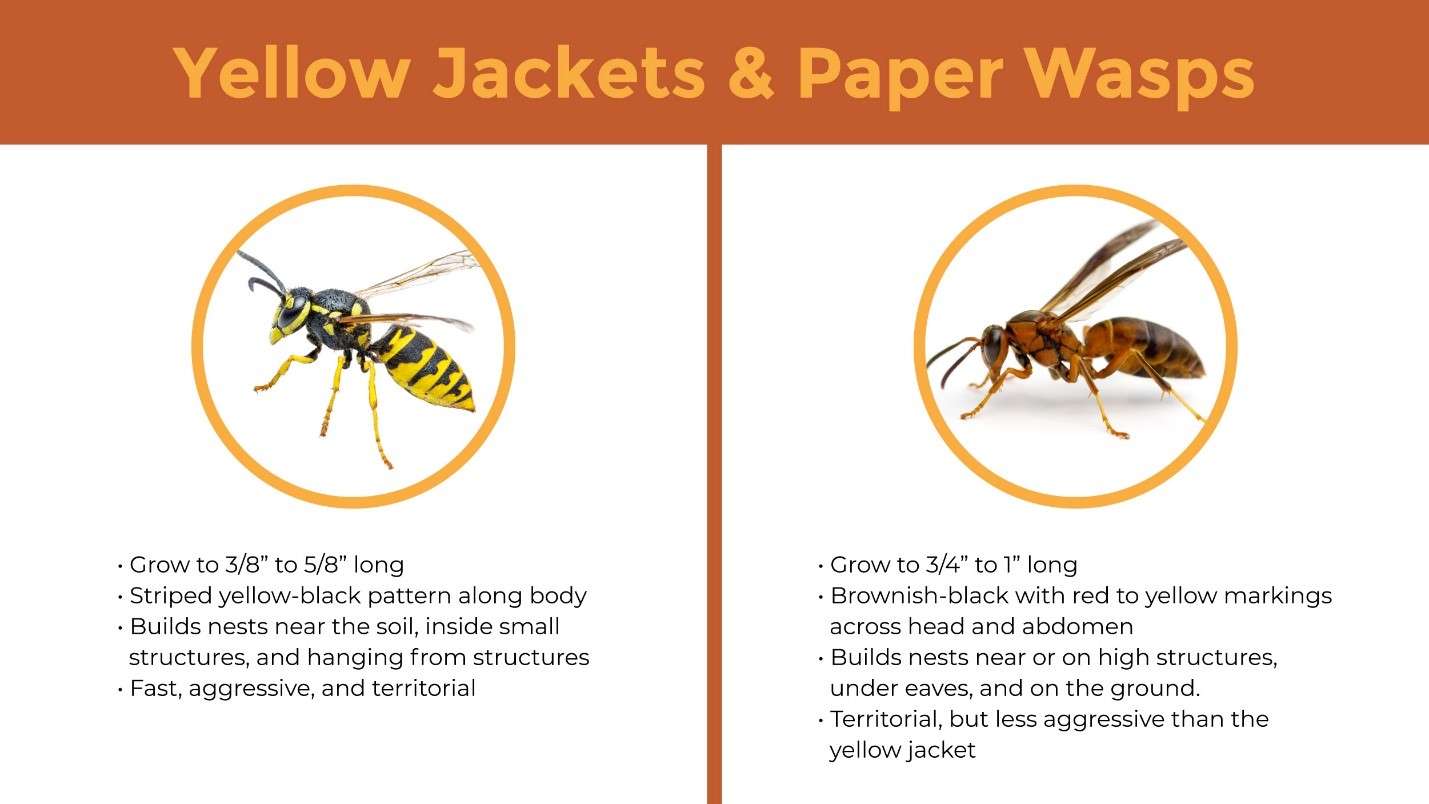
Yellowjackets (Vespula and Dolichovespula species)
Yellowjackets are perhaps the most common and often the most problematic wasps for homeowners.
- Appearance: Typically black and bright yellow or greenish-yellow markings. They have a slender waist, and their body is smooth and shiny. They are generally about ½ to 1 inch long.
- Nesting Habits: Many yellowjacket species are ground nesters, building large, paper nests in abandoned rodent burrows, under landscaping timbers, or in wall voids. Some species can nest in aerial locations.
- Behavior: Yellowjackets are social wasps and can be very aggressive, especially when their nests are disturbed or when foraging for food. They are attracted to sweets, meats, and garbage.
Paper Wasps (Polistes species)
Paper wasps are often seen building their distinctive umbrella-shaped nests.
- Appearance: Generally brown or black with yellow or reddish markings. They have a more slender body and longer legs than yellowjackets, which often dangle in flight. They range from ¾ to 1 ½ inches long.
- Nesting Habits: They build open, paper nests, usually attached to a surface by a single stalk. Common locations include eaves of houses, porch ceilings, railings, and branches of trees or shrubs.
- Behavior: Paper wasps are generally less aggressive than yellowjackets unless their nest is directly threatened. They feed on other insects and spiders.
Hornets (Vespa and Dolichovespula species)
Hornets are large, social wasps known for their impressive nests.
- Appearance: Can be quite large, often black with white, yellow, or reddish markings. Some species, like the European hornet, are reddish-brown. They are generally 1 to 1 ½ inches long, with some species being larger.
- Nesting Habits: Hornets typically build large, enclosed, papery nests in aerial locations such as hollow trees, attics, sheds, and behind siding.
- Behavior: Hornets can be aggressive, especially when defending their nest. They are predators of other insects.
Mud Daubers (Sceliphron and Chalybion species)
Mud daubers are solitary wasps, meaning they don’t form colonies.
- Appearance: Often have a very long, thin “waist” or petiole connecting their thorax to their abdomen. They can be black, blue, or metallic green. They are typically 1 to 1 ½ inches long.
- Nesting Habits: They build distinctive nests made of mud, often in sheltered locations like garages, sheds, under eaves, or on porches. These nests are typically constructed as small, cylindrical cells.
- Behavior: Mud daubers are not aggressive and rarely sting humans. They hunt spiders, paralyze them with venom, and provision their mud cells with them to feed their larvae.
Bald-Faced Hornets (Dolichovespula maculata)
Despite the name, bald-faced hornets are actually a type of aerial-yellowjacket.
- Appearance: Large, black wasps with distinctive white markings on their face and abdomen. They are about ¾ to 1 inch long.
- Nesting Habits: They build large, enclosed, grayish paper nests, often hanging from tree branches, utility poles, or buildings.
- Behavior: Bald-faced hornets can be quite aggressive when their nests are disturbed.
Managing Wasp Numbers: Effective Control Methods
When wasp activity becomes problematic, several wasp control methods can be employed. It’s important to approach wasp management thoughtfully, considering the potential risks and the environmental impact of different strategies.
Prevention: The First Line of Defense
The best way to deal with too many wasps is to prevent them from becoming a problem in the first place.
- Secure Trash Cans: Ensure all outdoor trash cans have tight-fitting lids. Regularly clean trash cans to remove residual food odors.
- Clean Up Spills and Debris: Promptly clean up any sugary spills, fallen fruit, or pet food left outdoors.
- Seal Entry Points: Inspect your home and outbuildings for cracks or openings that could provide access for nesting wasps. Seal these areas with caulk or repair materials. Pay attention to eaves, soffits, and vents.
- Manage Outdoor Food Sources: If you enjoy outdoor dining, be mindful of leaving food or drinks unattended. Consider using covers for dishes and cleaning up immediately after meals.
- Trim Vegetation: Keep shrubs and trees trimmed away from your house, as dense foliage can provide attractive nesting sites for paper wasps.
- Consider Companion Planting: Some plants are said to deter wasps, such as mint, eucalyptus, and wormwood. While scientific evidence can be mixed, it might be worth trying in your garden.
Wasp Nest Removal: A Necessary Action
If you locate a wasp nest, especially a large or aggressively defended one, wasp nest removal might be necessary for safety.
- Timing is Key: The best time to attempt nest removal is early morning or late evening when wasps are less active and all or most of the colony is inside the nest.
- Protective Gear: Always wear thick, protective clothing, including gloves, long sleeves, pants, and a hat, and ideally a veil or mask to protect your face.
- Use Appropriate Products: Insecticidal dusts or sprays specifically designed for wasps can be effective. Apply directly into the nest opening. For ground nests, applying dust into the entrance can be very effective as the wasps track it into the colony.
- Aerial Nests: For aerial nests, a spray that can reach from a safe distance is often recommended. Aim to saturate the nest.
- Professional Help: For large nests, nests in difficult-to-reach locations, or if you are uncomfortable dealing with wasps yourself, it is highly recommended to contact a professional pest control service for safe and effective wasp nest removal.
Wasp Control Methods: Beyond Nest Removal
When wasp activity is widespread and nests are not easily located or are too numerous, broader wasp control methods may be needed.
- Trapping: Wasp traps can be effective in reducing the number of foraging wasps in a specific area. These traps typically use a bait to lure wasps inside, where they become trapped and die. Place traps away from areas where people congregate.
- Insecticides: While widespread insecticide use should be a last resort due to potential environmental impact, targeted applications can be effective. Insecticidal baits can also work, where wasps carry poisoned bait back to the nest. Always follow product instructions carefully.
- Natural Deterrents: Some people find success with natural wasp repellents.
- Essential Oils: Peppermint, clove, and geranium oils are sometimes cited as repellents. You can dilute these in water and spray around outdoor areas.
- Vinegar Sprays: A diluted vinegar spray can deter wasps, but its effectiveness may be limited.
- Fake Nests: Some believe that hanging fake wasp nests can deter new wasps from establishing a colony, as wasps are territorial and may avoid areas that appear to be already occupied.
Avoiding Attracting Wasps
It’s crucial to avoid inadvertently attracting wasps to your yard. This is a critical part of integrated outdoor pest control.
- Sweet Treats: Be cautious with sugary drinks, ice cream, and ripe fruits left outdoors.
- Pet Food: Don’t leave pet food out for extended periods, especially overnight.
- Garbage Management: Keep garbage cans sealed and clean.
- Water Sources: Fix leaky faucets and eliminate standing water, as wasps also need water.
When Do I Need Professional Wasp Control?
While some wasp issues can be managed with DIY methods, there are instances where professional intervention is the safest and most effective option.
- Large or Aggressive Nests: If you find a large nest, particularly that of yellowjackets or hornets, attempting to remove it yourself can be dangerous due to their aggressive nature when disturbed.
- Nests in Difficult Locations: Nests located high up in trees, inside wall voids, or in other hard-to-reach areas pose a significant risk for DIY removal. Professionals have the equipment and expertise to access these locations safely.
- Allergies: If you or anyone in your household has a severe allergy to wasp stings, it is paramount to avoid any direct contact and call in professionals.
- Recurring Problems: If you consistently find yourself dealing with wasp infestations year after year, a professional can help identify underlying causes and implement more long-term solutions for preventing wasps.
- Uncertainty About Species: If you are unsure about the type of stinging insects you are dealing with, a professional can accurately identify them and recommend the most appropriate control measures.
Professional outdoor pest control services have access to specialized equipment, powerful treatments, and the knowledge to handle wasp problems safely and efficiently, minimizing the risk of stings and ensuring thorough eradication.
Conclusion: Coexisting with Wasps or Taking Action
Observing a high number of wasps in your yard can be alarming. However, by identifying wasps, understanding their behavior, and implementing preventative measures, you can significantly reduce their presence and make your outdoor spaces more enjoyable. Remember that wasps play a role in the ecosystem, often by preying on other insects that can be considered pests. The goal is not necessarily complete eradication but rather effective management and wasp control methods that ensure safety and minimize nuisance.
If you’re struggling with a significant wasp infestation or have concerns about wasp nest removal, don’t hesitate to seek professional assistance. A proactive approach to preventing wasps and knowing when to call in the experts are key to managing these common stinging insects in your yard.
Frequently Asked Questions (FAQ)
Q1: Are wasps beneficial?
A: Yes, wasps can be beneficial in an ecosystem. Many species are predators that help control populations of other insects, including agricultural pests like caterpillars and flies. Some also contribute to pollination. However, their presence can become a nuisance or a safety concern when they nest near human activity.
Q2: How can I safely deter wasps without harming them?
A: You can try non-lethal methods such as sealing up potential nesting sites, removing attractants like sugary food and water sources, using decoy nests, and planting deterrent plants like mint or eucalyptus. Keeping your yard clean and tidy is also a major deterrent.
Q3: When is the best time of year to deal with wasps?
A: The best time to deal with wasps is in the early spring when colonies are just starting. A single queen is establishing the nest, and the population is small. Later in the season, especially in late summer and fall, colonies are at their peak size, and wasps can be more aggressive, making removal more dangerous.
Q4: What should I do if a wasp lands on me?
A: Stay calm and still. Slowly and gently brush the wasp away without sudden movements. Wasps typically sting when they feel threatened, so avoid swatting at them. If you have a known allergy, carry your epinephrine auto-injector.
Q5: Can I spray a wasp nest with water to get rid of it?
A: Spraying a wasp nest with water is generally not recommended and can be ineffective. It may agitate the wasps, making them more aggressive, and is unlikely to eliminate the colony. Using a proper insecticide or seeking professional help is a more reliable approach for nest removal.