
Knowing your yard size is a fundamental step for many homeowners. What is my yard size? Your yard size refers to the total area of your property that is outdoors and usable space. Can I measure my yard myself? Yes, you can measure your yard yourself using simple tools and techniques.
Many people wonder about their lot size for various reasons. Perhaps you’re planning a new garden, considering a fence, or just curious about your property’s extent. This guide will help you discover the answer to “How big is my yard?” and provide clear, actionable steps for accurate land measurement. We’ll explore how to determine your property dimensions, calculate square footage, and even get a sense of your acreage.
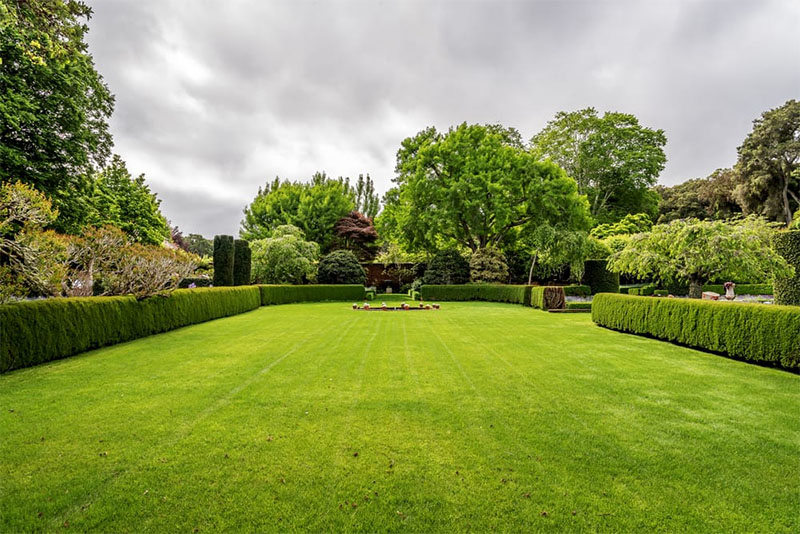
Image Source: www.fallaslandscape.com
Why Measure Your Yard?
There are several compelling reasons to take the time to measure your outdoor space. Knowing the precise dimensions of your yard can be incredibly useful for a variety of projects and decisions.
Planning for Improvements
- Landscaping Projects: Whether you envision a new flower bed, a sprawling vegetable garden, a patio, or a play area for children, knowing your garden area and overall lawn size is crucial for planning the layout and determining how much material you’ll need.
- Fencing and Boundaries: If you plan to install a fence for privacy, security, or to keep pets contained, accurate measurements are essential for ordering the right amount of fencing material and posts. It also helps clarify property lines.
- Outdoor Structures: Building a deck, a shed, a pergola, or even a swimming pool requires precise measurements to ensure proper fit and compliance with any local building codes.
- Irrigation Systems: For efficient watering, understanding the square footage of your lawn and garden areas is vital for selecting the correct sprinkler heads and planning the pipe layout.
Property Value and Information
- Real Estate Listings: When selling your home, the yard size is a significant factor in its market value. Accurate measurements ensure your listing is correct and appealing to potential buyers.
- Property Taxes: While your official lot size is determined by tax records, understanding your actual usable outdoor space can sometimes provide context.
- Insurance Purposes: In the event of damage from storms or other disasters, knowing the extent of your property can be helpful when dealing with insurance claims, especially for landscaping damage.
Personal Knowledge and Enjoyment
- Understanding Your Space: Simply knowing the dimensions of your backyard size can enhance your appreciation for your property and help you better visualize how you want to use it.
- DIY Projects: For many DIY enthusiasts, accurate measurements are the first step in any successful project.
Simple Ways to Measure Your Yard
You don’t need to be a surveyor to get a good idea of your yard size. Here are several methods, from the most basic to slightly more advanced, that will help you measure your property dimensions.
1. Using Measuring Tapes (The Classic Method)
This is the most straightforward way to measure smaller, more manageable areas of your yard.
What you’ll need:
- A long measuring tape (at least 100 feet or 30 meters). A metal tape measure is generally more durable.
- A helper (makes it much easier, especially for longer distances).
- Chalk or stakes to mark points.
- A notebook and pen to record measurements.
How to do it:
-
Start with Rectangular Areas: If your yard is a simple rectangle or square, this is easy.
- Have your helper hold the end of the tape at one corner.
- Walk with the tape measure straight across to the opposite side, keeping the tape taut.
- Record the measurement.
- Repeat this process for the other side of the rectangle.
- Calculate Square Footage: Multiply the length by the width. (Length x Width = Square Footage).
-
Irregular Shapes: Most yards aren’t perfect rectangles. You’ll need to break down the irregular shape into smaller, manageable geometric shapes like rectangles, squares, and triangles.
- Divide and Conquer: Mentally or physically divide your yard into these simpler shapes. You can use stakes or chalk to mark these divisions.
- Measure Each Section: Measure the length and width of each rectangular section. For triangles, measure the base and the height.
- Calculate Area of Each Shape:
- Rectangle/Square: Length x Width = Area
- Triangle: (Base x Height) / 2 = Area
- Sum the Areas: Add up the areas of all the smaller shapes to get your total square footage.
Tips for Using a Tape Measure:
- Keep it Straight: Ensure the tape measure is pulled taut and straight, without sagging or bending, for the most accurate reading.
- Account for Slopes: If your yard has significant slopes, a straight tape measure will read a shorter distance than the actual ground distance. For most landscaping purposes, the horizontal distance is what matters.
- Mark Your Corners: Use stakes or chalk to clearly mark the corners of your property and the divisions you create.
2. Using Pacing (The Quick Estimate)
This method is less precise but can give you a rough idea of your yard size quickly.
What you’ll need:
- Your own two feet!
How to do it:
- Establish Your Pace Length: First, measure your typical walking stride. Walk a known distance (e.g., 50 feet) and count your steps. Divide the total distance by the number of steps to find your average pace length (e.g., 50 feet / 25 steps = 2 feet per pace).
- Walk Your Yard: Walk the length and width of your yard, counting your paces.
- Calculate Estimated Dimensions: Multiply your pace count by your average pace length for each dimension.
- Calculate Estimated Square Footage: Multiply the estimated length by the estimated width.
Caveats: This method is an approximation and is best used for a quick estimate. Factors like uneven terrain and variations in your walking speed can affect accuracy.
3. Using Online Tools and Satellite Imagery
Modern technology offers convenient ways to get a good estimate of your lot size without leaving your home.
What you’ll need:
- Access to a computer or smartphone with internet.
- Your property address.
How to do it:
- Google Maps or Similar Services:
- Go to Google Maps (or a similar mapping service).
- Enter your property address.
- Zoom in on your house.
- Look for the “Measure distance” tool (often found by right-clicking on the map or in a menu).
- Click on one corner of your property, then click on the other corners to outline your yard. The tool will often display the square footage or acreage.
- Real Estate Websites: Many real estate listing sites (like Zillow, Realtor.com) show property details, including lot size, which is usually based on official records. While this might not reflect your usable outdoor space exactly, it’s a good starting point.
- County Assessor or GIS Websites: Many local government assessor offices have online Geographic Information System (GIS) portals. You can usually search by address to find detailed property dimensions, lot size, and even parcel maps. This is often the most official source for your lot size.
Advantages: These tools are fast and require no physical effort. They are excellent for getting an initial understanding of your yard size.
Limitations: Satellite imagery might not be perfectly up-to-date, and the accuracy of the “measure distance” tool depends on the quality of the imagery and your ability to precisely outline your property boundaries. It might not account for fences that enclose a different area than the official property line.
4. Using a Laser Distance Measurer
For more precision, especially for larger yards or when working alone, a laser distance measurer is a valuable tool.
What you’ll need:
- A laser distance measurer.
- A reflective target (sometimes included or can be a piece of cardboard).
- A helper or a tripod to hold the device steady.
- Notebook and pen.
How to do it:
- Set Up: Place the laser measurer at one point. Ensure it’s steady, perhaps on a tripod or held by a helper.
- Target and Measure: Aim the laser at a reflective surface (like a wall or a target) at the point you want to measure to. Press the button to get the distance reading.
- Irregular Shapes: Just like with a tape measure, you’ll need to break down irregular shapes into simpler geometric forms and measure each one.
- Calculate: Use the measured dimensions to calculate the square footage of each section and sum them up.
Advantages: Laser measurers are very accurate and can measure long distances quickly. They eliminate the need for a taut tape and a second person for many measurements.
Considerations: Ensure you purchase a quality device for best results. The laser needs a clear line of sight to the target.
Calculating Acreage
While most suburban yards are measured in square footage, some larger properties might be measured in acreage.
What is an acre?
An acre is a unit of land area. One acre is equal to 43,560 square feet.
How to calculate your acreage:
- Measure your yard’s total square footage using one of the methods above.
- Divide your total square footage by 43,560.
- Formula: Total Square Footage / 43,560 = Acreage
Example: If your yard is 10,000 square feet:
10,000 sq ft / 43,560 sq ft/acre = approximately 0.23 acres.
This calculation will give you your property’s acreage.
Tools to Help with Land Measurement
Here’s a quick look at the tools you might use, with their pros and cons:
| Tool | Pros | Cons | Best For |
|---|---|---|---|
| Measuring Tape (100ft+) | Inexpensive, widely available, good for detailed measurements. | Can be cumbersome for large areas, requires taut pulling, needs help. | Measuring fences, patios, garden beds, smaller yards. |
| Laser Distance Measurer | Accurate, fast, good for long distances, can be used alone. | More expensive, requires clear line of sight, needs a target/tripod. | Large yards, measuring heights, precise measurements without assistance. |
| Pedometer/Fitness Tracker | Quick estimate, no tools needed. | Highly inaccurate for precise measurements. | Getting a very rough ballpark idea of yard dimensions. |
| Smartphone Apps | Convenient, often free, uses GPS or augmented reality. | Accuracy can vary significantly based on app and device. | Quick estimates, visualizing spaces, general property outline. |
| Online Mapping Tools | Fast, easy access, good for initial research. | Accuracy depends on imagery quality, may not reflect exact boundaries. | Determining initial lot size, researching property data. |
| Survey Markers/Stakes | Useful for marking boundaries during measurement. | Not a measurement tool itself, but aids accuracy. | Marking corners of shapes and property lines. |
Measuring Specific Yard Areas
Beyond the total lot size, you might want to know the dimensions of specific parts of your yard.
Measuring Your Lawn Size
Your lawn size is the area covered by grass.
- Outline the Lawn Area: Identify the exact boundaries of your lawn, excluding driveways, patios, flower beds, and structures.
- Break into Shapes: Divide the lawn area into rectangles, squares, and triangles.
- Measure and Calculate: Measure each shape and calculate its area.
- Sum the Areas: Add up the areas of all the sections to get the total lawn size in square footage.
Measuring Your Garden Area
For your garden area, follow the same principles:
- Define the Garden Boundaries: Measure the edges of your vegetable patch, flower beds, or any other designated garden space.
- Measure Each Section: If your garden is a single rectangular bed, measure its length and width. If it’s multiple beds or an irregular shape, break it down into simpler geometric forms.
- Calculate and Sum: Calculate the area of each section and add them together for the total garden area.
Measuring Backyard Size
Your backyard size typically refers to the area behind your house.
- Identify Backyard Boundaries: Determine where the backyard begins (usually the back of the house) and ends (property lines, fences, etc.).
- Measure Total Backyard Area: Use the methods described earlier (tape measure, laser measurer, or online tools) to get the overall square footage of your backyard. This includes lawn, garden areas, patios, and any other features within that space.
Practical Tips for Accurate Measurement
- Be Patient: Taking accurate measurements takes time and attention to detail. Don’t rush the process.
- Go in Good Lighting: Ensure you can clearly see your measuring tools and any marks you make.
- Double-Check Your Numbers: It’s easy to make a mistake when recording measurements. It’s often a good idea to measure key dimensions twice.
- Use Consistent Units: Stick to either feet and inches or meters throughout your measurements to avoid conversion errors.
- Consider Permanent Features: Sometimes, property lines are marked by permanent features like fences, walls, or hedges. However, be aware that fences are sometimes built inside the actual property line, so official records are still important for precise boundary definition.
- When in Doubt, Get a Professional Survey: For critical projects like major construction or resolving boundary disputes, hiring a professional land surveyor is the most accurate way to determine your property dimensions and lot size.
Frequently Asked Questions (FAQ)
Q1: How do I find the official size of my lot?
A1: The most accurate way to find the official lot size is to check your property deed or contact your local county assessor’s office or recorder’s office. Many of these offices also have online GIS (Geographic Information System) portals where you can look up property information by address.
Q2: What’s the difference between lot size and yard size?
A2: Lot size generally refers to the total area of the land that your property occupies, as defined by legal boundaries. Yard size often refers to the usable outdoor space around your home, which might be slightly different from the total lot size if the lot includes areas like driveways, sidewalks, or unused corners that aren’t typically considered “yard.”
Q3: Is my fence line the same as my property line?
A3: Not always. Fences are often built within the property line by homeowners for convenience or aesthetics. The official property line is determined by surveys and legal descriptions in your deed. If you need to know the exact property boundary for construction or legal reasons, a survey is recommended.
Q4: Can I measure my yard with just my phone?
A4: Yes, there are many apps available that use your phone’s GPS or augmented reality (AR) features to measure distances and areas. While these are convenient for quick estimates, their accuracy can vary, so they are best used for general ideas rather than precise construction planning.
Q5: What is a good size for a backyard?
A5: The “good” size for a backyard is subjective and depends on your needs and lifestyle. A small yard might be perfect for low maintenance, while a larger acreage allows for extensive gardens, play areas, or privacy. What matters most is how the yard size fits your intended use.
By following these steps, you can confidently measure your yard and gain a clear understanding of your outdoor space. Whether you’re planning a dream garden, a new patio, or simply want to know more about your property, accurate land measurement is the key to successful projects and informed decisions.