
Does your lawn mower refuse to start? The most common reasons a lawn mower won’t start are a lack of fuel, a dead battery, a dirty spark plug, or engaged safety features.
There’s nothing quite as frustrating as pulling the starter cord on your trusty lawn mower, only to be met with a disheartening silence. The grass is getting long, the sun is shining, and your lawn care dreams are turning into a green, overgrown nightmare. But before you call for professional help or resign yourself to a weekend of manual trimming, take a deep breath. Most lawn mower starting issues are surprisingly simple to diagnose and fix yourself.
This guide will walk you through the most frequent culprits behind a stubborn mower and offer practical solutions you can implement right in your garage. We’ll cover everything from the basics of fuel and spark to more complex potential issues.
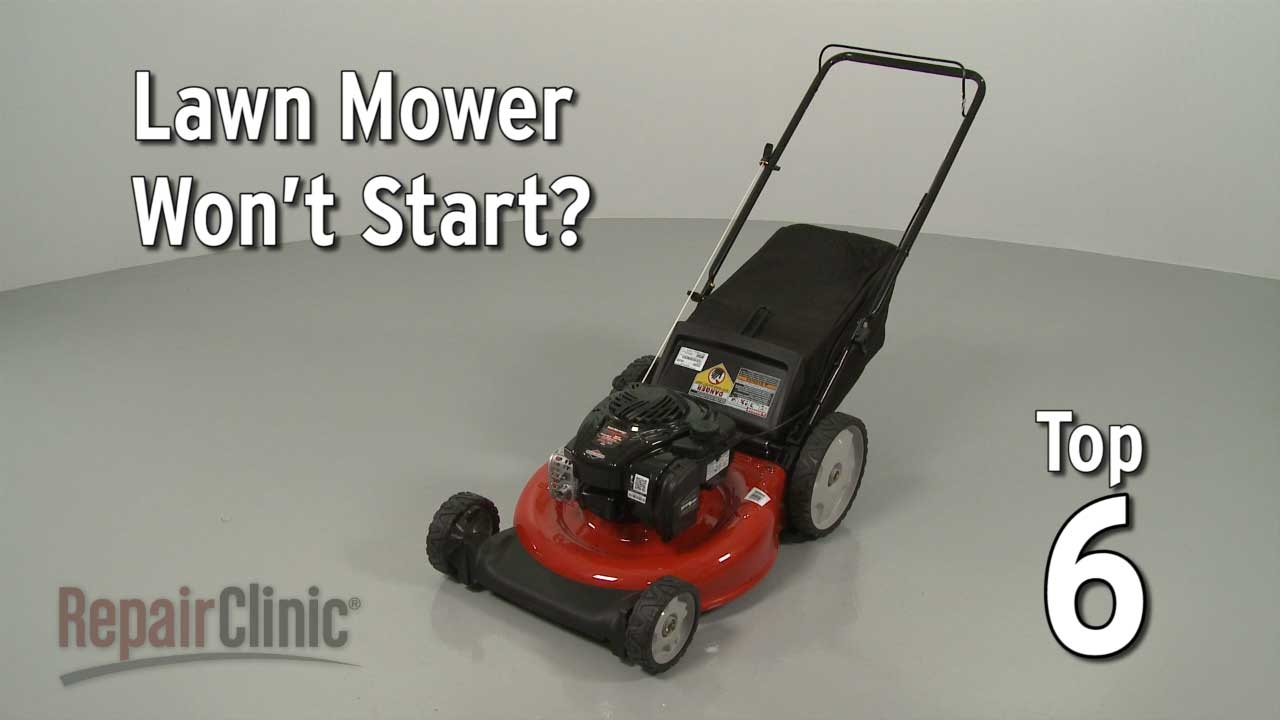
Image Source: i.ytimg.com
Deeper Dive into Common Starting Problems
Let’s break down the usual suspects one by one. Each component plays a crucial role in the engine’s ability to ignite and run.
Fuel System Fouls: The Heart of the Matter
The engine needs a proper mix of fuel and air to combust. If this delicate balance is off, your mower won’t even sputter.
No Fuel: The Obvious, Yet Often Overlooked, Culprit
This might sound like a no-brainer, but it’s the simplest and most common reason your mower won’t start. It’s easy to get caught up in the excitement of mowing and forget to check the fuel tank.
- Actionable Step: Visually inspect the fuel tank. Is it empty? If so, add fresh gasoline.
Old Gasoline: Stale Fuel Hampers Ignition
Gasoline, especially ethanol-blended gasoline, degrades over time. After sitting in the tank for more than a month, it can lose its volatility and create deposits that clog fuel lines and the carburetor.
- Why it Matters: Old gas doesn’t burn as efficiently. It can leave behind sticky residues that block the flow of fuel to the engine.
- Quick Fix: Drain any old gasoline from the tank and carburetor. Dispose of it properly. Refill with fresh gasoline. It’s a good practice to use a fuel stabilizer if you know the mower will sit for extended periods.
Clogged Fuel Filter: A Bottleneck for Your Mower
The fuel filter’s job is to trap debris and impurities before they reach the carburetor. When this filter becomes clogged, it restricts the flow of gasoline, starving the engine.
- Signs of a Clogged Filter: The mower might start but then die quickly, or it might struggle to start at all.
- How to Check and Replace:
- Locate the fuel filter, usually inline between the fuel tank and the carburetor.
- Turn off the fuel supply valve (if your mower has one).
- Use pliers to gently pinch the fuel line on either side of the filter to prevent fuel leakage.
- Carefully remove the old filter and note the direction of fuel flow indicated by an arrow on the filter.
- Install the new filter, ensuring the arrow points towards the carburetor.
- Remove the clamps from the fuel lines and turn the fuel valve back on.
- Check for any leaks.
Carburetor Issues: The Engine’s Digestive System
The carburetor mixes fuel and air in the correct ratio for combustion. Carburetor issues are a frequent cause of starting problems, especially after the mower has been stored for a while.
- Common Carburetor Problems:
- Clogs: Gummed-up fuel from old gasoline can block the tiny jets and passages within the carburetor.
- Dirty Float Bowl: Debris can accumulate in the float bowl, interfering with fuel delivery.
- Incorrect Adjustment: While less common for a sudden no-start, an improperly adjusted carburetor can cause persistent running issues.
- Diagnosing Carburetor Problems:
- Smell of Gas: If you smell gas but the engine doesn’t start, it might indicate a flooded engine (discussed later) or a carburetor issue.
- Rough Running: If the mower runs but poorly, it’s a strong indicator of a carburetor problem.
- Fixing Carburetor Issues:
- Cleaning: This is the most common solution. You can try using a carburetor cleaner spray. With the mower off, spray the cleaner into the carburetor’s air intake. Let it sit for a few minutes, then try starting.
- Disassembly and Cleaning: For more stubborn clogs, you might need to remove the carburetor, disassemble it, and clean each component with carburetor cleaner and a soft brush or compressed air. Refer to your mower’s manual for specific instructions.
- Replacement: If cleaning doesn’t work, the carburetor may need to be replaced.
Ignition System Glitches: The Spark of Life
Even with a perfect fuel mix, the engine needs a spark to ignite it.
Spark Plug Problems: The Ignition’s Key Player
The spark plug creates the spark that ignites the fuel-air mixture. A dirty, fouled, or worn-out spark plug will prevent your mower from starting.
- Signs of Spark Plug Issues:
- Mower won’t crank at all.
- Mower starts but sputters and dies.
- Black, oily, or white deposits on the spark plug tip.
- How to Inspect and Replace:
- Disconnect the spark plug wire from the spark plug.
- Use a spark plug socket to carefully unscrew the spark plug.
- Examine the spark plug. Look for signs of wear, damage to the ceramic insulator, or heavy deposits.
- If the spark plug is dirty, you can try cleaning it with a wire brush and a rag. Ensure it’s completely dry.
- Check the gap between the electrodes. Your mower’s manual will specify the correct gap. You can use a gap tool to adjust it.
- If the spark plug is heavily fouled, damaged, or old, it’s best to replace it with a new one of the correct type for your mower.
- Screw the new or cleaned spark plug back in by hand to avoid cross-threading, then tighten it with the socket.
- Reconnect the spark plug wire.
Ignition System Failure: Beyond the Spark Plug
While the spark plug is the most common culprit in the ignition system, other components can also fail.
- Ignition Coil: This component generates the high voltage needed for the spark plug. If the coil fails, you won’t get a spark.
- Ignition Module/Points (on older models): These control the timing of the spark.
- Troubleshooting Ignition System Failure:
- Spark Tester: The most reliable way to check for spark is with a spark tester, which is readily available at auto parts stores. Connect it between the spark plug and the spark plug wire, then pull the starter cord. If the tester doesn’t light up, there’s no spark.
- Professional Help: Diagnosing and replacing ignition coils or modules often requires more specialized knowledge and tools, so you might need to consult a professional.
Mechanical and Electrical Hurdles: Other Obstacles
Sometimes, the problem isn’t directly fuel or spark, but rather a mechanical issue or a drained power source.
Battery Dead (for electric start mowers): No Juice, No Go
If your lawn mower has an electric start feature, a dead battery is a straightforward reason it won’t crank.
- Symptoms: You’ll hear a clicking sound, or nothing at all, when you turn the ignition key or press the start button. The lights (if any) might be dim or not turn on.
- Quick Fixes:
- Check Connections: Ensure the battery terminals are clean and securely connected. Corrosion can prevent a good connection.
- Jump Start: If you have a compatible battery charger or another vehicle, you can try jump-starting your mower battery.
- Charge the Battery: Use a battery charger designed for your mower’s battery type.
- Replace the Battery: If the battery is old or won’t hold a charge, it’s time for a new one.
Safety Switch Engaged: Built-in Protection
Modern lawn mowers are equipped with safety features to prevent accidental starting. These safety switches are designed to stop the engine if certain conditions aren’t met.
- Common Safety Switches:
- Operator Presence Control (OPC) Lever: This lever on the handlebar must be held down for the engine to run. Releasing it stops the engine.
- Blade Brake Clutch: This often works in conjunction with the OPC lever.
- Seat Switch (on riding mowers): The mower won’t start or will shut off if the operator isn’t seated.
- Parking Brake Switch: On some riding mowers, the parking brake must be engaged for starting.
- How to Check:
- Ensure the OPC lever is fully engaged.
- On riding mowers, make sure you are firmly seated, the parking brake is engaged, and any other required levers or pedals are in the correct position.
- Check the wiring to the safety switches for any visible damage.
Engine Flooded: Too Much of a Good Thing
An engine can become “flooded” if too much fuel enters the combustion chamber, preventing proper ignition. This often happens if you try to start the mower multiple times without it firing up, or if you push the primer bulb too many times.
- Signs of a Flooded Engine:
- A strong smell of gasoline.
- The engine might cough or sputter but not start.
- The spark plug may be wet with fuel.
- Quick Fixes:
- Wait it Out: Turn off the fuel valve (if applicable) and let the mower sit for 10-15 minutes to allow the excess fuel to evaporate.
- “Clear Flood” Mode: Most mowers have a way to clear a flooded engine. Check your manual, but it often involves:
- Holding the throttle to the “Fast” or “Full” position.
- Pulling the starter cord several times.
- Once the engine starts to sputter or run briefly, release the throttle.
- Remove and Dry the Spark Plug: If the above doesn’t work, remove the spark plug. It will likely be wet with fuel. Wipe it dry with a clean cloth and ensure it’s not fouled. Reinstall it and try starting again.
Oil Level Low: A Critical Protection Mechanism
Many modern lawn mowers have a low oil sensor that will prevent the engine from starting if the oil level is too low. This is a safety feature to prevent engine damage.
- How to Check:
- Ensure the mower is on a level surface.
- Locate the oil dipstick.
- Remove the dipstick, wipe it clean, and reinsert it fully.
- Remove it again and check the oil level against the markings on the dipstick.
- Quick Fix: If the oil level is low, add the recommended type and amount of oil according to your owner’s manual. Do not overfill.
Troubleshooting Table: Your Quick Reference Guide
Here’s a handy table to quickly identify potential issues and their solutions.
| Problem Symptom | Potential Cause(s) | Quick Fix(es) |
|---|---|---|
| No crank, no sound when turning key/pressing start | Battery dead (electric start) | Check battery connections, charge or replace battery. |
| Clicking sound when turning key/pressing start | Battery dead (electric start), loose connection | Check battery connections, charge or replace battery. |
| Engine cranks but won’t start | No fuel, old fuel, clogged fuel filter, fouled spark plug, ignition system failure, engine flooded, carburetor issues | Check fuel level, drain old fuel and refill, check/replace fuel filter, clean/replace spark plug, check for spark, use clear flood procedure. |
| Engine starts but sputters and dies | Fuel delivery issue (clogged filter, carb), old fuel, ignition issue | Check fuel filter, ensure fresh fuel, check spark plug, consider carburetor cleaning. |
| Strong smell of gas | Engine flooded, fuel leak | Use clear flood procedure, check fuel lines for leaks. |
| Mower won’t start, even with fresh fuel | Spark plug issue, ignition system failure, safety switch engaged, engine flooded, clogged carburetor | Inspect/clean/replace spark plug, check for spark, verify safety switches are disengaged, use clear flood procedure, clean carburetor. |
| Oil level low | Low oil level | Add the correct type and amount of oil. |
Maintenance for Prevention: Keeping Your Mower Ready
The best way to avoid starting problems is through regular maintenance.
Pre-Season Tune-Up Checklist
Before the first mow of the season, or after a long winter storage, give your mower a once-over.
- Check Oil: Ensure the oil level is correct and consider an oil change if it’s been a year or more.
- Inspect Air Filter: A dirty air filter restricts airflow, impacting performance. Clean or replace it.
- Examine Spark Plug: Clean or replace the spark plug.
- Check Fuel System: Drain any old fuel from the tank and carburetor. Refill with fresh gasoline and consider a fuel stabilizer.
- Inspect Blade: Ensure the blade is sharp and balanced. A dull blade strains the engine.
- Test Safety Features: Confirm all safety mechanisms are functioning correctly.
Fuel Storage Best Practices
- Empty the Tank: If storing for more than a month, it’s best to drain the fuel tank and run the engine until it stops from lack of fuel. This clears fuel from the carburetor.
- Use a Fuel Stabilizer: If you can’t empty the tank, add a fuel stabilizer to the fresh gasoline before storing.
Frequently Asked Questions (FAQ)
Q1: How often should I change my lawn mower’s spark plug?
A1: It’s generally recommended to change your lawn mower’s spark plug once a year, typically during your pre-season tune-up, or after approximately 100 hours of use. However, if you’re experiencing starting issues, checking the spark plug is always a good first step.
Q2: Can I use car gasoline in my lawn mower?
A2: You can use gasoline for cars, but it’s best to use gasoline with a lower octane rating (like 87 octane), as recommended by your mower manufacturer. Higher octane fuels offer no real benefit to a small engine and can be more expensive. Be mindful of ethanol content, as it can degrade fuel lines and seals over time in some mowers.
Q3: My mower starts but then stops after a few minutes. What could be the problem?
A3: This is a common symptom of a fuel delivery issue. It could be a partially clogged fuel filter, a carburetor that’s getting clogged as it warms up, or a vent issue on the fuel cap that’s creating a vacuum.
Q4: I’ve checked everything, and my mower still won’t start. What now?
A4: If you’ve gone through all the common checks—fuel, spark plug, air filter, battery (if electric start), safety switches, and the engine isn’t flooded—it’s time to consider more complex issues. This could involve internal engine problems, a faulty ignition coil, or a more severely damaged carburetor. At this point, it’s advisable to consult your owner’s manual for advanced troubleshooting or take it to a qualified small engine repair shop.
Q5: What kind of oil does my lawn mower need?
A5: Always refer to your lawn mower’s owner’s manual for the specific type and viscosity of oil recommended. Most use SAE 30 or SAE 10W-30 oil, but it’s crucial to confirm with your manual.
By systematically working through these common causes and implementing these quick fixes, you’ll likely get your lawn mower roaring back to life. Remember, regular maintenance is key to preventing these frustrating situations and ensuring your mower serves you well for seasons to come.