
When your car makes a noise like a lawn mower, it often means there’s an issue with the exhaust system, engine, or possibly the transmission. Can you drive a car that sounds like a lawn mower? While you might be able to drive it for a short distance, it’s not recommended as the problem could worsen and cause more significant damage.
That sputtering, rattling, or droning sound from your car that reminds you of a noisy lawn mower can be quite alarming. It’s a common complaint, and thankfully, it usually points to a few specific culprits. Let’s dive into why your car might be making this unwelcome racket.
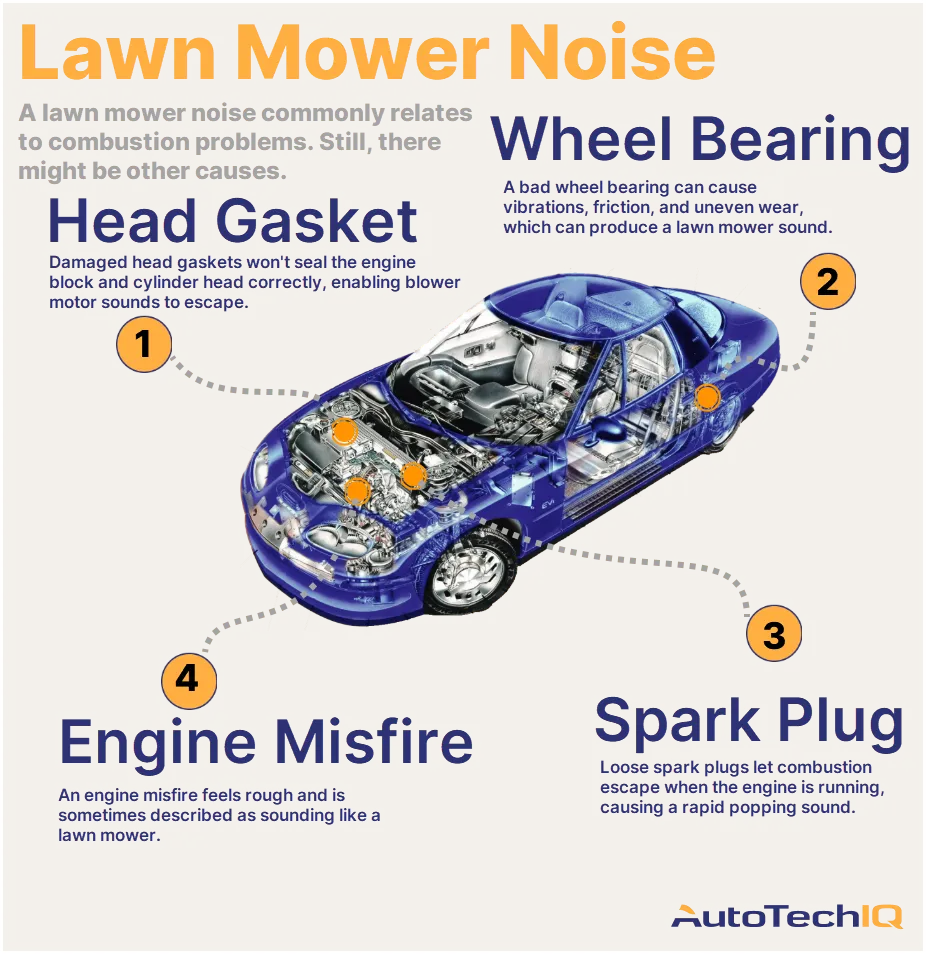
Image Source: www.autotechiq.com
The Sputtering Symphony: Deciphering Exhaust System Woes
The exhaust system is a complex network of pipes, catalytic converters, mufflers, and resonators designed to channel exhaust gases away from your engine and quiet down the noise. When something goes wrong here, it can create a symphony of unpleasant sounds, including that lawn mower-like drone.
The Culprit: Exhaust Leak
An exhaust leak is one of the most frequent reasons your car sounds like a lawn mower. These leaks occur when there’s a hole or crack in the exhaust pipe, manifold, or connections between components.
- How it happens: Exhaust gases are forced out at high pressure. When a leak is present, these gases escape prematurely, creating a loud, sputtering, or hissing sound that can easily be mistaken for a lawn mower. The louder the leak, the more it sounds like the engine is struggling.
- Where to look: Common spots for leaks include the manifold, the flex pipe, and connections near the muffler. A manifold gasket leak is also a prime suspect, as this gasket seals the exhaust manifold to the engine block. If it fails, exhaust gases can escape right at the source.
- Impact: Beyond the noise, exhaust leaks can reduce engine performance, decrease fuel efficiency, and allow harmful exhaust fumes into the cabin.
The Rattling Rumble: Muffler Damage
Your muffler’s job is to dampen the sound of the engine’s exhaust. When it’s damaged, that quietening effect is lost.
- How it happens: Mufflers can rust through, develop holes, or have internal baffles break apart. A muffler damage scenario often leads to a deep, rumbling, or rattling sound, especially when you accelerate. Think of a can with holes in it being shaken – it’s similar, but with the added force of exhaust gases.
- Signs of damage: Besides the noise, you might see rust patches on the muffler or even holes. If the internal baffles have broken loose, you might hear rattling when you tap on the muffler (when the car is off and cooled down, of course).
- Severity: A severely damaged muffler can make your car sound like it’s barely running, much like a poorly maintained lawn mower.
The Choking Sound: Catalytic Converter Noise
The catalytic converter is a vital part of your exhaust system that converts harmful pollutants into less harmful gases. However, it can also be a source of noise if it becomes clogged or damaged.
- How it happens: The internal honeycomb structure of the catalytic converter can break apart due to heat or physical impact. When this happens, the loose pieces can rattle around inside the converter, creating a sound that’s often described as a metallic rattling or a buzzing noise, especially when the engine is under load. A clogged converter can also restrict exhaust flow, leading to a choking, sputtering sound. This is sometimes referred to as catalytic converter noise.
- Symptoms: A rattling noise from underneath the car, especially when accelerating or decelerating, can indicate a failing catalytic converter. You might also notice a loss of power or a burning smell.
- Critical component: This is a serious issue, as a faulty catalytic converter will cause your car to fail emissions tests and can lead to significant engine damage if left unaddressed.
The Loose Connection: Loose Exhaust Pipe
Sometimes, the simplest explanation is the most accurate. A loose exhaust pipe can vibrate against the car’s undercarriage or other components, producing a rattling or droning sound.
- How it happens: Exhaust pipes are held in place by hangers and clamps. Over time, these can loosen or break due to rust or vibration. When a pipe is no longer securely attached, it can move around and make noise.
- The sound: This can range from a light rattle to a more pronounced drone, depending on how loose the pipe is and what it’s hitting. It can mimic the uneven firing of a small engine.
- Easy fix (usually): Often, a loose exhaust pipe can be fixed by tightening clamps or replacing a broken hanger. However, it’s crucial to ensure there aren’t accompanying leaks or further damage.
When the Engine Itself Starts to Rumble Like a Mower
While exhaust issues are common, sometimes the lawn mower sound can originate from deeper within the engine.
The Unsettled Rhythm: Engine Misfire
An engine misfire occurs when one or more cylinders fail to combust fuel properly. This disruption in the engine’s firing order can create a rough, uneven sound.
- How it happens: Misfires can be caused by faulty spark plugs, ignition coils, fuel injectors, or even internal engine problems. When a cylinder isn’t firing, the engine’s balance is thrown off, leading to a sputtering or popping sound.
- The sound: This often sounds like the engine is “skipping a beat.” It can be a rhythmic sputtering or a more erratic chugging, which, in some cases, can be perceived as a lawn mower-like sound, especially at idle or low speeds.
- Other signs: You might also notice a loss of power, poor acceleration, increased fuel consumption, and the check engine light illuminating on your dashboard.
The Growling Grinds: Transmission Noise
While less common, transmission problems can also manifest as unusual noises.
- How it happens: Issues within the transmission, such as low fluid levels, worn gears, or damaged bearings, can cause whining, grinding, or clunking sounds. In some instances, these noises can combine with other engine sounds to create a more complex, lawn mower-like noise, particularly when changing gears or accelerating.
- What to listen for: Pay attention to when the noise occurs. Is it only when accelerating, braking, or changing gears? If the sound changes with gear selection, it’s more likely a transmission issue.
- Urgent attention: Transmission problems can be costly to repair, so it’s essential to address them promptly.
The Slipping Squeal: Belt Squeal
A worn or improperly tensioned serpentine belt or accessory belt can produce a high-pitched squealing sound, especially when the engine is cold or under load.
- How it happens: The belt drives various accessories like the alternator, power steering pump, and air conditioning compressor. If the belt is old, cracked, or loose, it can slip on the pulleys.
- The sound: This is typically a sharp, high-pitched squeal. While not exactly a lawn mower sound, a combination of this with other engine noises can contribute to the overall perception of an unwell engine. Sometimes, a very worn belt can make a more guttural, slapping sound if it’s starting to break apart.
- What is a belt squeal? It’s the sound of friction as the belt slips against the pulleys.
The Shaky Startle: Failing Engine Mounts
Engine mounts are designed to absorb vibrations from the engine and keep it securely in place. When they fail, the engine can move excessively, creating noise.
- How it happens: Engine mounts are made of rubber and metal. Over time, the rubber can degrade, crack, or break. This allows the engine to shift and vibrate more than it should.
- The sound: A failing mount can cause thuds or clunks when you accelerate, brake, or turn. The engine might also vibrate more noticeably inside the cabin. This movement can sometimes cause exhaust components to rattle or bump against the car’s frame, adding to the lawn mower-like cacophony.
- What are failing engine mounts? They are mounts that have lost their ability to dampen engine vibrations effectively.
Diagnosing the Lawn Mower Sound: A Systematic Approach
Pinpointing the exact cause of your car’s lawn mower sound requires careful observation and sometimes professional diagnosis. Here’s a breakdown of how you might approach it:
H3: Listening Closely: When Does the Sound Occur?
The timing and conditions under which the noise appears can provide crucial clues.
- At Idle: If the sound is present when the car is stationary, it might point to an exhaust leak, a misfiring cylinder, or a loose component vibrating.
- During Acceleration: This often indicates a more significant exhaust leak, a failing catalytic converter, or an engine misfire that worsens under load. Transmission issues might also become more apparent here.
- During Deceleration: Certain exhaust leaks or a catalytic converter issue can also produce noise when you lift off the gas.
- When Turning: This could suggest a steering or suspension issue, but if combined with engine sounds, it might be the engine shifting due to failing mounts.
- When Cold vs. Hot: Some noises, like belt squeal, are more prominent when the engine is cold. Exhaust leaks might sound different depending on how hot the system is.
H4: Visual Inspection: What to Look For (Safely)
If you’re comfortable and have a safe space, a quick visual inspection can be helpful. Always ensure the car is off, cool, and on a level surface before looking under it.
- Exhaust System: Look for any obvious rust holes, cracks, or loose connections in the pipes, muffler, and catalytic converter. Check if the exhaust pipes are hanging lower than usual.
- Belts: Inspect the serpentine belt for cracks, fraying, or glazing.
- Engine Bay: Look for any signs of fluid leaks or unusual wear on engine components.
H5: Common Combinations and Their Sounds
| Potential Cause | Typical Sound Description | Other Potential Symptoms |
|---|---|---|
| Exhaust Leak | Sputtering, hissing, popping, or a loud rumble | Reduced power, poor fuel economy, exhaust smell in cabin |
| Muffler Damage | Deep rumble, rattling, or a loud drone | Loud exhaust noise, visible rust or holes on muffler |
| Catalytic Converter | Metallic rattling, buzzing, or a choked sputtering | Loss of power, check engine light, burning smell |
| Loose Exhaust Pipe | Rattling or droning, especially over bumps | Exhaust pipe may be visibly loose or hanging low |
| Engine Misfire | Rough idle, sputtering, chugging, or uneven engine noise | Loss of power, rough acceleration, check engine light |
| Belt Squeal | High-pitched squealing, often when starting or accelerating | Alternator light may flicker, power steering feels heavy |
| Failing Engine Mounts | Clunking or thudding on acceleration/braking, vibration | Engine appears to move excessively, vibration in cabin |
| Transmission Noise | Whining, grinding, or clunking that changes with gear shifts | Difficulty shifting gears, slipping gears, delayed engagement |
| Manifold Gasket Leak | Hissing or ticking noise near the engine, especially when cold | Reduced engine performance, exhaust smell |
Addressing the Lawn Mower Sound: Repair and Prevention
Once you have an idea of the cause, it’s time to consider the repairs.
H3: Professional Diagnosis is Key
For most people, the best course of action is to take the car to a qualified mechanic. They have the tools and expertise to accurately diagnose the problem and recommend the correct repairs.
- Tools: Mechanics use equipment like exhaust gas analyzers, pressure testers, and stethoscopes to pinpoint the source of noises.
- Expertise: They can differentiate between a minor exhaust leak and a serious internal engine problem.
H3: Common Repairs
The type of repair will depend entirely on the diagnosis:
- Exhaust System: This could involve replacing a section of pipe, welding a hole, replacing a muffler, or fixing a manifold gasket.
- Engine: If it’s an engine misfire, it might be as simple as replacing spark plugs or ignition coils, or it could require more extensive engine work.
- Belts: A worn belt can usually be replaced relatively quickly and affordably.
- Transmission: Transmission repairs can range from fluid changes to complete overhauls.
- Engine Mounts: Replacing failing engine mounts involves supporting the engine and unbolting the old mounts to install new ones.
H4: Preventive Maintenance Tips
While not all issues can be prevented, good maintenance can help reduce the likelihood of some of these noises.
- Regular Inspections: Have your exhaust system checked periodically for rust or damage.
- Fluid Checks: Ensure all engine and transmission fluids are at the correct levels and are clean.
- Belt Replacement: Follow your car’s maintenance schedule for belt replacements.
- Listen to Your Car: Don’t ignore new or unusual noises. Addressing them early can prevent more costly repairs down the line.
Frequently Asked Questions (FAQ)
Q1: Is it safe to drive my car if it sounds like a lawn mower?
A1: While you might be able to drive it for a short distance, it’s generally not recommended. Continuing to drive with certain issues, especially exhaust leaks or engine misfires, can cause further damage to your engine or catalytic converter, leading to more expensive repairs. It can also be dangerous if exhaust fumes are entering the cabin.
Q2: Can a simple exhaust leak cause a sound like a lawn mower?
A2: Yes, a significant exhaust leak, especially in a location that amplifies the sound, can definitely create a sputtering or droning noise that resembles a lawn mower. The high-pressure exhaust gases escaping through a hole are a prime culprit.
Q3: If my car sounds like a lawn mower, does it mean my catalytic converter is bad?
A3: A failing catalytic converter can cause noises that sound like a lawn mower, often a rattling or choked sputtering. However, it’s not the only cause. Exhaust leaks, engine misfires, and muffler damage are also common reasons for this type of sound. A mechanic can properly diagnose the issue.
Q4: How much does it cost to fix a car that sounds like a lawn mower?
A4: The cost varies greatly depending on the cause. A simple exhaust pipe repair or belt replacement might cost a few hundred dollars, while a catalytic converter replacement or significant engine repair could cost upwards of a thousand dollars or more.
Q5: Can I ignore a slight lawn mower sound?
A5: It’s always best not to ignore any unusual car sounds. Even a slight noise could be an early warning sign of a problem that will only worsen over time, leading to more expensive repairs or even a breakdown. Early diagnosis and repair are usually more cost-effective.