
Mushrooms pop up in lawns for a variety of reasons, primarily due to favorable soil conditions, the presence of organic matter, and adequate moisture. Can I prevent mushrooms from growing in my lawn? While complete prevention is difficult, good lawn care practices can minimize their appearance.
Mushrooms, often referred to as toadstools when they are poisonous or unpalatable, are the fruiting bodies of fungi. These fungi live unseen beneath the soil surface, forming vast networks called mycelium. When the conditions are just right, this mycelium produces the mushrooms we see. So, why are these fascinating organisms making an appearance in your otherwise manicured turf? It’s a question many homeowners ask, often with a mix of curiosity and concern. Let’s delve into the world of lawn fungi and uncover the reasons behind their growth.
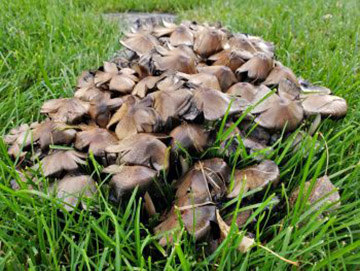
Image Source: organolawn.com
The Hidden Life of Fungi
Before we can comprehend why mushrooms sprout, we need to appreciate the fundamental role fungi play in our ecosystem. Fungi are nature’s master recyclers. Their primary job is decomposition. They break down dead or decaying organic material, returning essential nutrients to the soil. This process is vital for healthy plant life, including your grass.
The mycelium, the main body of the fungus, is a thread-like network that spreads through the soil, often for many years. It consumes and breaks down tough materials like dead roots, fallen leaves, and even buried wood. The mushrooms we see are simply the reproductive structures, designed to release spores into the air, allowing the fungus to spread and colonize new areas.
The Crucial Elements for Mushroom Growth
Several key factors contribute to the emergence of mushrooms in your lawn. These elements create a welcoming environment for fungal mycelium to thrive and produce fruiting bodies.
Soil Conditions and Their Impact
The type and health of your soil play a significant role. Fungi, like many plants, have preferences.
- Soil pH: Most fungi prefer slightly acidic to neutral soil. If your lawn’s pH is too alkaline, it might discourage some fungal growth, but many common lawn fungi tolerate a range of pH levels.
- Soil Compaction: Compacted soil limits air and water circulation. Ironically, while some fungi thrive in compacted areas, this condition generally weakens grass, making it more susceptible to fungal diseases. It also creates pockets of moisture that can encourage mushroom growth.
- Nutrient Availability: Fungi are decomposers, so they are particularly attracted to soils rich in decaying organic matter. This is their food source.
The Essential Role of Moisture
Water is a critical ingredient for fungal development. Mushrooms are largely composed of water, and their spores germinate and grow best in moist conditions.
- Recent Rainfall: A good soaking rain is often followed by a flush of mushrooms. The increased moisture in the soil stimulates the mycelium to produce fruiting bodies.
- Overwatering: Excessively watering your lawn can create a consistently damp environment that is ideal for many types of lawn fungi.
- Drought Followed by Rain: If your lawn has been dry for a while and then experiences a period of heavy rain, it can trigger a significant mushroom bloom.
The Thatch Layer: A Fungal Buffet
The thatch layer is a dense mat of dead and living stems, roots, and leaves that accumulates on the soil surface, between the grass blades. While a thin layer is normal, excessive thatch can become a problem.
- Food Source: Thatch is organic matter. Fungi are experts at breaking down organic matter. A thick thatch layer provides an abundant food source for the mycelium.
- Moisture Retention: Thatch acts like a sponge, holding onto moisture. This keeps the surface of the soil damp for longer periods, creating the ideal humid environment for mushrooms.
- Insulation: The thatch layer can insulate the soil, keeping it cooler in summer and warmer in winter, which can protect fungal mycelium from extreme temperature fluctuations.
Organic Matter: The Foundation of Fungal Life
Organic matter is the lifeblood of fungi. It’s what they consume to grow and reproduce.
- Decomposing Roots: As grass plants age or die, their roots decompose in the soil, providing food for fungi.
- Leaf Litter: Fallen leaves that are not adequately removed or mulched can contribute significantly to the organic matter content.
- Compost and Fertilizers: While beneficial for grass, organic fertilizers or compost left on the surface can also encourage fungal activity.
- Buried Wood: If there’s old tree stumps, roots, or construction debris buried in your lawn, these woody materials are a prime food source for specific types of fungi, leading to prominent mushroom patches.
Common Causes of Mushrooms in Lawns
Understanding the underlying causes helps in managing their appearance. Here are some of the most frequent reasons you might see mushrooms in your yard:
1. Fairy Rings
One of the most noticeable signs of fungal activity is the formation of mushroom patches known as fairy rings. These are circular or arc-shaped bands of mushrooms, often accompanied by darker, more vigorous grass growth or dead grass in the center.
- How They Form: A fairy ring begins when a single fungal spore lands on a suitable spot with food (organic matter) and moisture. The mycelium grows outwards from this point in a circular pattern, consuming the available nutrients. As the mycelium ages and depletes the nutrients in the center, it continues to grow outwards, creating the ring. The mushrooms appear at the edge of the actively growing mycelium.
- Types of Fungi: Many different types of fungi can cause fairy rings. Some are harmless and even beneficial, aiding in decomposition. Others can be detrimental to grass health, especially if they create a “dead zone” in the ring.
Common Fairy Ring Fungi
| Fungus Name (Common) | Description | Impact on Lawn |
|---|---|---|
| Marasmius oreades | Small, buff-colored mushrooms; often forms rings of darker green grass. | Generally considered benign, but can lead to thatch buildup and localized drought stress. |
| Agaricus campestris | Meadow mushroom; white to pale brown cap, pink gills that turn brown. | Can form rings and is edible, but can also contribute to thatch. |
| Lepiota spp. | Various species, some quite small, others larger with scaly caps. | Can vary in impact; some are harmless, others can lead to significant thatch and grass stress. |
| Armillaria spp. | Honey mushrooms; often cluster at the base of trees or on buried wood. | Can be pathogenic to trees, but in lawns, they typically indicate buried wood and produce significant mushroom clusters. |
2. Buried Organic Matter
As mentioned, fungi are excellent decomposers. If your lawn has had trees removed, or if there are old building materials with wood content buried underground, the fungi will actively break this down.
- Tree Stumps and Roots: Even after a tree is cut down, the root system can remain underground for years, providing a substantial food source for fungi. Mushrooms will often appear directly over or around the decaying root system.
- Construction Debris: Old wooden planks, branches, or even sawdust buried during construction can fuel extensive fungal growth.
3. Environmental Conditions
Beyond specific issues like buried wood, general environmental factors can lead to widespread mushroom appearances.
- Shady, Damp Areas: Areas of your lawn that receive less sunlight and tend to stay moist are prime real estate for fungi. This includes areas under dense tree canopies or near leaky faucets.
- Excessive Leaf Fall: If fallen leaves are left to accumulate over the autumn and winter, they create a thick layer of organic matter that provides ideal conditions for fungi to flourish come spring or fall rains.
- Recent Aeration or Dethatching: While beneficial for lawn health in the long run, the process of aeration or dethatching can bring dormant fungal spores and mycelium closer to the surface, along with disturbed organic matter, potentially leading to a temporary increase in mushroom visibility.
4. Poor Lawn Maintenance Practices
Sometimes, the way we care for our lawns can inadvertently encourage mushrooms.
- Over-Fertilizing: Applying too much nitrogen fertilizer can lead to rapid grass growth but can also create a dense, thatch-prone lawn. This, in turn, provides more organic material for fungi to decompose.
- Infrequent Mowing: Letting the grass grow too long can lead to a buildup of clippings, which, if not properly managed, can contribute to thatch and provide food for fungi.
- Inadequate Drainage: Lawns with poor drainage will hold excess moisture, creating the damp conditions that fungi love.
Identifying Lawn Fungi
While all mushrooms are fungi, not all lawn fungi are the same. Some are harmless decomposers, while others can be associated with lawn diseases.
Beneficial Fungi
Many fungi in your lawn are beneficial. They play a crucial role in decomposition, breaking down thatch and dead plant material, and returning nutrients to the soil. These fungi are essential for a healthy, living soil ecosystem. The mushrooms they produce are often a sign that your soil is healthy and actively recycling nutrients.
Pathogenic Fungi
Some fungi are pathogenic, meaning they can cause diseases in your grass. Mushrooms produced by these fungi might appear alongside symptoms like brown patches, yellowing grass, or thinning turf.
- Dollar Spot: Caused by Sclerotinia homoeocarpa, this disease creates small, straw-colored spots. While not typically associated with visible mushrooms, the underlying fungal activity is present.
- Brown Patch: Rhizoctonia solani causes large, circular brown patches. This fungus thrives in warm, humid conditions and can contribute to thatch buildup.
- Rust Fungi: These fungi create powdery orange or yellow spores on grass blades. They are generally not associated with visible mushrooms.
It’s important to distinguish between occasional mushroom sightings and persistent, damaging lawn diseases.
Managing Mushrooms in Your Lawn
The presence of mushrooms isn’t always a cause for alarm, especially if they are isolated incidents. However, if you find them unsightly or suspect they are linked to lawn disease, there are steps you can take.
Addressing the Root Causes
The most effective way to manage mushrooms is to address the conditions that encourage their growth.
- Reduce Thatch: Regularly dethatch your lawn if the thatch layer is more than half an inch thick. This removes the fungal food source and improves air and water circulation. Aeration also helps alleviate compaction.
- Improve Drainage: If your lawn has poor drainage, consider aerating, top-dressing with sand, or installing drainage systems.
- Water Wisely: Water your lawn deeply but infrequently. Avoid overwatering, which keeps the soil constantly saturated.
- Manage Organic Matter: Rake up fallen leaves promptly. Ensure grass clippings are mulched and dispersed, not left in thick clumps.
- Remove Buried Wood: If you know of buried wood or stumps, excavating them will remove the primary food source for certain mushroom-producing fungi. This is often a labor-intensive solution but can be very effective.
Dealing with Fairy Rings
Managing fairy rings can be challenging, as the fungus can be deep within the soil.
- “Little Rings” (Active Growth): For rings where mushrooms are actively appearing, you can try to disrupt the mycelium.
- Aeration and Top-dressing: Core aerate the ring and the area around it, then top-dress with compost and reseed.
- Watering and Fertilizing: Sometimes, aggressive watering and fertilizing of the entire lawn, including the ring, can help the grass outcompete the fungus.
- “Big Rings” (Dormant or Dead): If the ring is older and has stopped producing mushrooms, the damage might be done. The soil might be hydrophobic (repels water). You can try to break up this compacted, hydrophobic layer by deep spiking or aerating, then watering thoroughly and top-dressing with compost and seed.
- Fungicides: Fungicides can be used, but they are often a temporary solution and may require repeated applications. It’s best to identify the specific fungus causing the ring and choose an appropriate product. However, for many common lawn fungi, fungicides are not necessary and can disrupt beneficial soil organisms.
Removing Visible Mushrooms
If you simply dislike the appearance of mushrooms, they can be physically removed.
- Hand-Picking: Wear gloves and simply pull the mushrooms out of the ground. This removes the visible fruiting body but not the underlying mycelium.
- Mowing: Mowing your lawn will cut off the mushrooms. The clippings, including the mushrooms, can then be bagged and discarded to prevent spore dispersal.
It’s important to remember that removing mushrooms without addressing the underlying causes will only provide a temporary aesthetic fix. The mycelium will continue to grow, and more mushrooms will likely appear when conditions are favorable.
Frequently Asked Questions About Lawn Mushrooms
Q1: Are the mushrooms in my lawn poisonous?
A: Many common lawn mushrooms are not poisonous, but some can be. It is impossible to tell if a mushroom is poisonous just by looking at it, and children or pets might be tempted to eat them. If you are unsure, it’s safest to assume they are poisonous and remove them, especially if you have young children or pets who spend time in the yard.
Q2: Will mushrooms damage my grass?
A: Most mushrooms are a sign of a healthy soil ecosystem breaking down organic matter. They generally do not directly damage the grass. However, the fungi that cause fairy rings can sometimes create a hydrophobic layer in the soil that hinders water and nutrient uptake, leading to stressed or dead grass in that area. If you see mushrooms alongside patches of unhealthy grass, it might indicate a fungal disease that needs attention.
Q3: How can I prevent mushrooms from growing in my lawn?
A: Complete prevention is difficult because fungi are a natural part of the soil. However, you can discourage their visible growth by:
* Reducing thatch buildup.
* Improving lawn drainage.
* Watering appropriately (avoiding overwatering).
* Promptly removing fallen leaves.
* Ensuring good overall lawn health through proper mowing, fertilizing, and aeration.
Q4: What are those mushroom patches that form circles?
A: Those are commonly known as fairy rings. They are formed by the outward growth of fungal mycelium. As the mycelium expands, it consumes nutrients in the soil, which can sometimes lead to a ring of darker, more vigorous grass or, in drier conditions, a ring of dead grass at the outer edge where the fungus is actively feeding.
Q5: Should I use a fungicide on my lawn for mushrooms?
A: Fungicides are usually not necessary for occasional mushrooms. They are most effective when targeting specific lawn diseases caused by fungi. If you have a persistent problem with widespread mushrooms or suspect a fungal disease affecting your grass, consult with a local gardening expert or turf professional to identify the issue and recommend the most appropriate course of action. Overuse of fungicides can harm beneficial soil microbes.
Q6: My lawn has lots of mushrooms after I aerated it. Is this normal?
A: Yes, it can be. Aerating your lawn brings dormant fungal spores and mycelium closer to the surface and can disturb pockets of buried organic matter. The process also creates small openings in the soil, which can retain moisture. These conditions, combined with the food source, can trigger a temporary surge in mushroom growth after aeration or dethatching. This usually subsides as the grass recovers and the soil adjusts.
Conclusion
The appearance of mushrooms in your lawn is a natural phenomenon, often indicating a healthy soil environment rich in organic matter and favorable soil conditions. While they can be unsightly, and some species may be poisonous, they are generally not a sign of poor lawn health. By understanding the role of fungi in decomposition and the specific conditions that encourage fungal growth, such as moisture and a thick thatch layer, you can take steps to manage their presence. Addressing underlying issues like poor drainage, buried wood, and excessive thatch will go a long way in creating a more aesthetically pleasing and resilient lawn, while still supporting the vital, unseen work of fungi beneath the surface.