
Can you get rid of mushrooms on your lawn? Yes, you can! While completely eradicating mushrooms from your lawn is often impossible because their spores are everywhere, you can certainly manage and reduce their appearance significantly. The key is to address the underlying conditions that allow them to thrive.
Mushrooms popping up on your lawn can be a perplexing sight. While they might look like a magical addition, they often signal an imbalance in your soil and can be a nuisance for homeowners. If you’re asking yourself, “Why do mushrooms grow on my lawn?” and “How can I get rid of them?”, you’ve come to the right place. This comprehensive guide will delve into the causes of lawn mushrooms and provide effective strategies for lawn fungus removal.
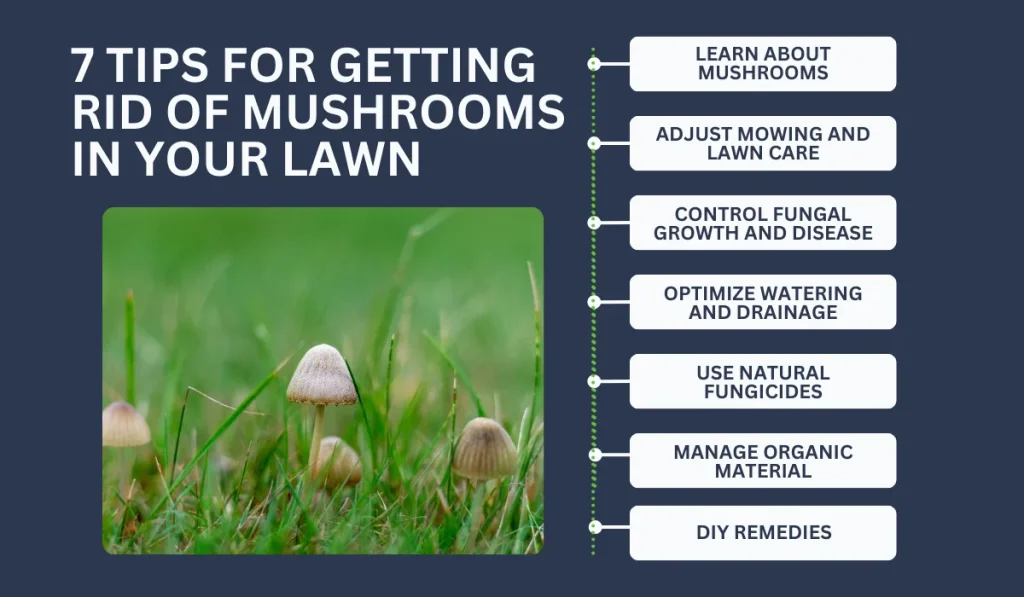
Image Source: sodlawn.com
Why Do Mushrooms Grow on My Lawn?
Mushrooms are the fruiting bodies of fungi that live underground in the soil. They appear when conditions are just right for their growth. Here are the primary reasons you might be seeing mushrooms on your lawn:
- Excessive Moisture: Fungi love damp environments. Overwatering, poor drainage, or frequent rainfall can create the perfect soggy conditions for mushrooms to sprout.
- Thatch Buildup: A thick layer of thatch (dead and living grass stems, roots, and leaves) acts like a sponge, retaining moisture and providing a food source for fungi.
- Organic Matter Decomposition: Mushrooms are nature’s recyclers. They feed on decaying organic matter, such as buried tree stumps, roots, animal droppings, or even dead grass.
- Shady Areas: Shady spots on your lawn tend to stay moist longer than sunny areas, making them more conducive to fungal growth.
- Compacted Soil: Compacted soil restricts air circulation and water drainage, creating a damp environment that fungi favor.
- Nutrient Imbalance: While less common, sometimes a specific nutrient imbalance in the soil can encourage fungal growth.
Deciphering the Causes of Lawn Fungus
Fungal growth on a lawn is rarely a sign of a “sick” lawn, but rather a symptom of an environment that favors fungi. They are not directly harmful to the grass itself in most cases, but their presence indicates an issue you should address for overall lawn health.
How to Get Rid of Mushrooms: A Step-by-Step Approach
Getting rid of mushrooms on your lawn involves a multi-pronged approach. You can think of it as mushroom control that targets both the visible mushrooms and the conditions that allow them to flourish.
1. Address the Visible Mushrooms
The most immediate way to deal with mushrooms is to remove the visible ones. While this doesn’t solve the underlying problem, it can prevent spore dispersal and improve the appearance of your lawn.
- Hand-Removal: The simplest method is to pick them by hand. Wear gloves as some mushrooms can be toxic.
- Mow Them: If the mushrooms are small and you’re mowing anyway, you can simply mow them. The mower will break them up, and the grass clippings will help them decompose. Be sure to bag the clippings if you want to be extra cautious about spore spread, though this is often considered unnecessary.
- Hose Them Away: A strong blast from your garden hose can knock down mushrooms. This is a quick, temporary fix.
Important Note: Never ingest mushrooms found on your lawn. Many species are poisonous.
2. Improve Lawn Drainage
Excess moisture is a primary driver for mushroom growth. Improving drainage is crucial for effective lawn fungus removal.
- Reduce Watering: If you’re watering too frequently or for too long, scale back. Water deeply but less often, allowing the soil surface to dry out between watering sessions.
- Aeration: Aerating your lawn, especially if you have clay soil or compacted soil, helps water penetrate deeper into the ground and improves air circulation. This can be done with a spike aerator or a core aerator.
- Dethatching: A thick thatch layer holds onto water. Dethatching removes this layer, allowing water to drain more freely.
- Check for Underground Leaks: Sometimes, a leaky sprinkler system or underground pipe can create consistently damp spots.
3. Manage Thatch
Thatch is a breeding ground for fungi. Keeping it under control is a key part of mushroom control.
- Dethatching: As mentioned, dethatching is vital. You can do this with a manual dethatching rake or rent a power dethatcher. Aim to remove thatch when the grass is actively growing.
- Proper Mowing: Avoid cutting your grass too short, as this can stress the grass and lead to increased thatch production. Leave grass clippings on the lawn (grasscycling) unless they are excessively long, as they can help replenish nutrients. However, if thatch is a major issue, consider mulching mowing only when the clippings are fine.
4. Reduce Organic Matter
Mushrooms feed on decaying organic matter. Identifying and removing sources of this can significantly help kill lawn mushrooms.
- Remove Dead Stumps and Roots: If you have old tree stumps or large buried roots, these are prime food sources for fungi. While removing large stumps can be a significant undertaking, consider grinding them down or treating them with a stump remover product that encourages decomposition.
- Clean Up Debris: Regularly rake leaves, twigs, and other organic debris from your lawn.
5. Improve Soil Health and Aeration
Healthy soil supports healthy grass, which can outcompete fungi.
- Aeration: We’ve mentioned this for drainage, but it’s also crucial for aeration. Compacted soil lacks oxygen, which is necessary for healthy root growth. Aerating opens up the soil.
- Top-Dressing: After aeration, you can top-dress your lawn with a thin layer of compost or a quality topsoil mix. This helps to break down thatch and improve soil structure.
- Avoid Compaction: Try to limit foot traffic and heavy machinery on your lawn, especially when the ground is wet.
6. Balance Soil Nutrients
While not the primary cause, ensuring your soil has the right balance of nutrients can contribute to a stronger, more resilient lawn.
- Soil Test: Get a soil test done to determine the pH and nutrient levels.
- Fertilize Appropriately: Based on the soil test results, use a balanced fertilizer at the right time of year. Over-fertilizing, especially with nitrogen, can sometimes encourage fungal growth.
7. Address Shady Areas
Shade promotes moisture retention.
- Improve Airflow: Trim overhanging branches of trees and shrubs to allow more sunlight and air to reach the lawn.
- Consider Shade-Tolerant Grasses: If you have persistently shady areas, consider overseeding with grass varieties that are more tolerant of shade.
Specific Strategies for Lawn Fungus Removal
Now let’s look at some more targeted methods for lawn fungus removal and how to kill lawn mushrooms.
Fungicides: A Targeted Approach
Fungicides can be effective in mushroom control, but it’s important to use them correctly and understand their limitations.
- Types of Fungicides: There are various types of fungicides available for lawn use. Some are broad-spectrum, while others target specific fungal diseases. For mushrooms, you’ll generally be looking for products that target common lawn fungi.
- Application: Always follow the product label instructions carefully regarding application rates, timing, and safety precautions.
- Limitations: Fungicides kill the fungal mycelium (the underground network of the fungus), which can reduce mushroom production. However, they won’t eliminate spores already present in the soil, and new mushrooms may appear if conditions remain favorable. They are best used as part of a broader lawn care strategy.
DIY Mushroom Removal and Natural Solutions
For those who prefer a more hands-on or natural approach to kill lawn mushrooms, there are several options for DIY mushroom removal.
Natural Mushroom Killer Options:
- Baking Soda: A solution of baking soda and water can be applied to affected areas. Mix about 1 tablespoon of baking soda with a gallon of water and spray it directly on the mushrooms and the surrounding soil. Baking soda can alter the soil pH in a way that is less favorable to some fungi.
- Vinegar Solution: A diluted vinegar solution can also be used. Mix 1 part white vinegar with 4 parts water. Spray this onto the mushrooms and the soil. Like baking soda, vinegar can affect soil pH. Use this sparingly, as too much vinegar can harm your grass.
- Hydrogen Peroxide: A 3% hydrogen peroxide solution (the kind found at drugstores) can be sprayed directly on mushrooms. Mix 1 part hydrogen peroxide with 4 parts water. It acts as a disinfectant and can help break down the fungal structures.
- Beneficial Fungi: Introducing beneficial fungi to your soil can help outcompete the fungi that cause mushrooms. Products containing mycorrhizal fungi can be applied to the lawn. These beneficial fungi can improve soil health and nutrient uptake by grass roots.
Important Considerations for Natural Methods:
- Repeat Applications: Natural solutions often require repeat applications to be effective.
- Test Areas: Always test any homemade solution on a small, inconspicuous area of your lawn first to ensure it doesn’t damage the grass.
- Focus on Soil Health: While these methods can help with visible mushrooms, they are most effective when combined with improving overall lawn health and addressing the underlying causes.
Best Lawn Mushroom Treatment: A Holistic Approach
The best lawn mushroom treatment is rarely a single product or action. It’s a consistent commitment to good lawn care for mushrooms that addresses the root causes.
Table: Strategies for Mushroom Control
| Problem | Solution | Impact on Mushrooms |
|---|---|---|
| Excess Moisture | Reduce watering, aerate, dethatch, improve drainage | Reduces the damp environment fungi need to thrive. |
| Thatch Buildup | Dethatch regularly, proper mowing | Removes food source and moisture-retaining layer for fungi. |
| Decaying Organic Matter | Remove dead stumps, roots, leaves, debris | Eliminates food sources for fungal growth. |
| Soil Compaction | Aerate, avoid heavy traffic | Improves air and water flow, making conditions less favorable for fungi. |
| Shady Areas | Trim trees, use shade-tolerant grass varieties | Allows areas to dry out more quickly, reducing moisture for fungi. |
| Visible Mushrooms | Hand-remove, mow, hose away | Prevents immediate spore dispersal; does not address the root cause. |
| Fungicides | Apply according to label instructions | Kills fungal mycelium, reducing mushroom production. |
| Natural Treatments | Baking soda solution, diluted vinegar, hydrogen peroxide solution | Can alter soil pH or break down fungal structures; often requires repeated application. |
| Beneficial Fungi | Apply products containing mycorrhizal fungi | Introduces beneficial organisms that can outcompete problem fungi and improve soil health. |
Fathoming Fairy Rings
Fairy rings are a specific type of fungal growth on lawns that often appear as a circle or arc of darker green grass, faster-growing grass, or mushrooms. To eliminate fairy rings, you need to treat the underlying fungus causing them.
- Identification: Fairy rings are caused by various soil fungi. The visible mushrooms are just one part of the story; the fungus forms a network (mycelium) underground that can expand outwards over time.
- Treatment:
- For Visible Mushrooms in Rings: Remove the mushrooms as described above.
- Intensify Lawn Care: The general lawn care for mushrooms principles apply here. Improve drainage, reduce thatch, aerate, and consider top-dressing.
- Watering: Water the affected area deeply and consistently. This can help the grass outcompete the fungus.
- Fungicides: In severe cases, a fungicide specifically labeled for fairy rings might be necessary. These are often applied to a trench dug around the ring to prevent further spread. However, many home lawn fungicides are not effective against all types of fairy ring fungi.
- Soil Aeration: Aerating the entire ring and surrounding area can help break up the fungal network and improve soil conditions.
Treating Lawn Mold vs. Mushrooms
While often related to fungal activity, treat lawn mold and mushrooms are slightly different concerns, though the underlying principles of addressing soil conditions are similar.
- Lawn Mold: Typically appears as white, grey, or pinkish fuzzy patches, often after periods of cool, wet weather. It’s most common in shady, damp areas with poor air circulation. Common types include powdery mildew, dollar spot, and snow mold.
- Mushrooms: These are the reproductive structures of fungi, appearing as distinct fruiting bodies. They indicate that the fungus has a well-established network (mycelium) in the soil.
How to Treat Lawn Mold:
- Improve Air Circulation: Trim trees and shrubs.
- Reduce Watering: Water in the morning so the grass has time to dry.
- Dethatch and Aerate: Improve drainage and airflow.
- Fungicides: Use a fungicide labeled for lawn mold if the problem persists.
The strategies for eliminating mushrooms largely overlap with those for treating lawn mold, as both are fungal issues driven by environmental conditions.
Frequently Asked Questions (FAQ) About Lawn Mushrooms
Q1: Are lawn mushrooms dangerous to my pets or children?
A: The primary danger is if someone ingests them. Many common lawn mushrooms are toxic. It’s best to remove them promptly and prevent children and pets from playing with or eating them. Even if the mushroom species itself isn’t toxic, some fungi can cause allergic reactions.
Q2: Do I need to remove every mushroom I see?
A: While removing them is a good idea to prevent spore dispersal, it’s not strictly necessary for the health of your lawn. The real goal is to address the conditions that allow them to grow in the first place.
Q3: How long does it take to get rid of mushrooms?
A: Complete eradication is difficult, but noticeable reduction can take time. If you consistently apply the right lawn care for mushrooms strategies, you should see a significant decrease in mushroom appearances within a season or two.
Q4: Is it normal to have mushrooms after rain?
A: Yes, it’s very common. Rain provides the moisture that fungi need to produce their fruiting bodies (mushrooms).
Q5: Can I use a weed killer to get rid of mushrooms?
A: No, weed killers are designed for broadleaf plants and will not effectively kill fungi. You need a fungicide or natural remedies that target fungal growth.
Q6: I have mushrooms growing in a perfect circle. What is this?
A: This is likely a fairy ring. The same principles of improving soil health and drainage apply to managing fairy rings, though some might require more specialized treatment.
Q7: Should I be concerned if I see mushrooms on my lawn?
A: You don’t need to panic, but you should pay attention. Mushrooms are indicators that your soil is moist and rich in organic matter, which are conditions that can also contribute to other lawn issues like thatch buildup and certain diseases. Addressing them is part of good lawn care for mushrooms.
Conclusion: Cultivating a Healthier Lawn
Dealing with mushrooms on your lawn isn’t about a quick fix, but rather about improving your lawn’s overall health. By comprehending why mushrooms grow on your lawn and consistently applying good lawn care for mushrooms practices, you can effectively manage and significantly reduce their appearance. Focus on proper watering, drainage, thatch management, and soil health. These efforts will not only help kill lawn mushrooms but will also lead to a lusher, healthier, and more resilient lawn for years to come. Remember, a healthy lawn is the best defense against unwanted fungal guests.