
Fertilizing your lawn helps it grow strong and green. What is lawn fertilization? It’s adding nutrients to your soil to feed your grass. Can I fertilize my lawn in any season? No, timing is key for the best results. Who needs to fertilize their lawn? Anyone who wants a healthy, vibrant yard.
This guide will walk you through everything you need to know about lawn fertilization. We’ll cover what fertilizer to use, when to apply it, and how to do it right.
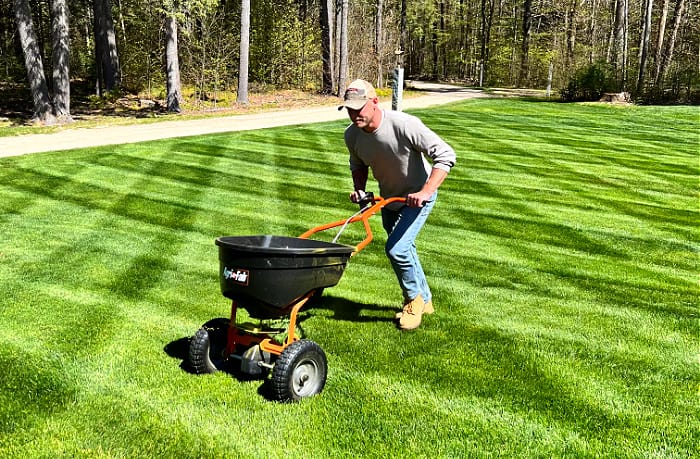
Image Source: plantforsuccess.com
Why Fertilize Your Lawn?
Your lawn needs food, just like you do. Over time, grass uses up the nutrients in the soil. Fertilizing replenishes these nutrients, giving your grass the energy it needs to thrive.
- Stronger Roots: Healthy roots anchor the grass and help it find water and nutrients.
- Thicker Growth: Fertilized lawns grow denser, which helps crowd out weeds.
- Better Color: Proper feeding makes your grass look lush and green.
- Disease Resistance: Stronger grass is less likely to get sick.
- Drought Tolerance: Well-fed lawns can handle dry spells better.
Identifying Your Lawn’s Needs
Before you grab any bag of fertilizer, take a moment to assess your lawn. Different grass types and soil conditions require different approaches.
Soil Testing
The best way to know what your lawn truly needs is to test your soil. You can buy a DIY soil test kit from a garden center or send a sample to your local extension office. A soil test will tell you:
- pH Level: This measures how acidic or alkaline your soil is. Most grasses prefer a slightly acidic to neutral pH (6.0-7.0).
- Nutrient Levels: It will identify if your soil is lacking key nutrients like nitrogen, phosphorus, or potassium.
Grass Type
Different grass species have different nutrient needs. Cool-season grasses (like fescue and bluegrass) and warm-season grasses (like Bermuda and Zoysia) have distinct growth cycles and feeding times.
Key Nutrients in Lawn Fertilizer
Lawn fertilizers are labeled with three numbers, like 10-10-10 or 20-5-10. These numbers represent the percentage by weight of three essential nutrients:
Nitrogen (N) for Lawns
Nitrogen is the most important nutrient for green, leafy growth. It fuels photosynthesis and gives your lawn its vibrant color.
- Role: Promotes green color and leaf growth.
- Deficiency Signs: Yellowing or pale green grass, slow growth.
- Excess Signs: Too much nitrogen can lead to weak, disease-prone grass that grows too fast.
Phosphorus (P) in Lawn Fertilizer
Phosphorus is crucial for root development and early plant growth. It helps establish new lawns and encourages strong root systems.
- Role: Supports root growth and establishment.
- Deficiency Signs: Stunted growth, poor root development, purplish tint on leaves.
- Excess Signs: Can cause algae blooms in waterways if it washes off your lawn. Many established lawns don’t need much added phosphorus.
Potassium (K) in Lawn Fertilizer
Potassium helps the grass withstand stress, including drought, heat, cold, and disease. It’s vital for overall plant health and resilience.
- Role: Improves stress tolerance, disease resistance, and overall plant health.
- Deficiency Signs: Yellowing or browning of leaf edges, increased susceptibility to disease and drought.
- Excess Signs: Generally not a concern, as plants can tolerate high levels.
Types of Lawn Fertilizer
There are several types of lawn fertilizers available, each with its own benefits.
Quick-Release Fertilizers
These fertilizers provide nutrients to the grass immediately after application. They offer a rapid green-up but can also lead to a surge of growth that requires more frequent mowing and can be more prone to burning the lawn if applied incorrectly.
Slow-Release Lawn Fertilizer
Slow-release fertilizers feed your lawn over an extended period. The nutrients are released gradually, providing consistent feeding without the risk of rapid, weak growth or burning. This is often the best fertilizer for lawn health as it reduces the need for frequent applications and provides a steady supply of nutrients.
- Benefits:
- Longer-lasting feeding.
- Reduced risk of burning the lawn.
- Less frequent application needed.
- More even growth.
Organic Fertilizers
These fertilizers are derived from natural sources like compost, manure, and plant matter. They improve soil structure and health over time while providing nutrients.
-
Benefits:
- Improve soil quality.
- Release nutrients slowly.
- Safer for the environment.
- Less risk of burning.
-
Drawbacks:
- Nutrient content can be lower and more variable.
- May take longer to see visible results.
- Can sometimes be more expensive.
Synthetic Fertilizers
These are chemically manufactured fertilizers. They typically have a higher concentration of nutrients and provide quicker results.
-
Benefits:
- Precise nutrient ratios.
- Fast-acting.
- Widely available and often less expensive.
-
Drawbacks:
- Can burn the lawn if over-applied.
- Do not improve soil structure.
- Potential for environmental runoff.
When to Fertilize Lawn
The timing of fertilization is critical for its effectiveness. This is where a good lawn fertilization schedule comes in. The best times depend on your grass type and climate.
Cool-Season Grasses
Cool-season grasses grow most actively in the spring and fall.
- Spring: Fertilize in mid-spring, after the grass has greened up and is actively growing. Avoid fertilizing too early, as this can stimulate growth before the danger of frost has passed.
- Fall: This is the most important feeding of the year for cool-season grasses. Fertilize in early to mid-fall, before the ground freezes. This helps the grass recover from summer stress and build up reserves for winter.
Warm-Season Grasses
Warm-season grasses thrive in the heat of summer.
- Late Spring/Early Summer: Fertilize when the grass has fully greened up and is actively growing.
- Mid-Summer: A second application can be beneficial for continued growth and color.
- Early Fall: A light application in early fall can help the grass recover from summer stress and prepare for dormancy. Avoid fertilizing late in the fall, as this can promote new growth that is vulnerable to frost.
General Guidelines
- Avoid fertilizing dormant or stressed grass: If your lawn is brown due to drought or extreme heat, wait until conditions improve.
- Avoid fertilizing when the grass is wet: This can cause the fertilizer to stick to the blades and potentially burn the grass.
- Avoid fertilizing before heavy rain: This can wash the fertilizer away before it can be absorbed by the roots.
Lawn Fertilization Schedule Example
Here’s a sample lawn fertilization schedule for a typical homeowner, assuming you have a cool-season lawn. Adjust based on your specific grass type and local climate.
| Season | Timeframe | Purpose | Fertilizer Type Recommendation | Notes |
|---|---|---|---|---|
| Spring | Mid-April to Early May | Encourage spring green-up and growth. | Slow-release nitrogen-rich fertilizer (e.g., 20-0-0 or 25-0-0) | Aim for a fertilizer with at least 50% slow-release nitrogen. Avoid high phosphorus unless soil test indicates a need. |
| Summer | June/July | Maintain color and health during heat. | Light application of a balanced fertilizer or slow-release nitrogen. | If conditions are very hot and dry, consider skipping or using a very light application. Water well after application. |
| Fall | Early September | Promote root growth and prepare for winter. | High nitrogen, moderate potassium fertilizer (e.g., 24-0-6 or 20-5-10) | This is a critical feeding for cool-season grasses. The nitrogen helps with recovery, and the potassium builds resilience. |
| Late Fall | Mid-October to Early November | Winterize the lawn for cold weather and next spring. | Low nitrogen, moderate to high potassium fertilizer (e.g., 10-10-20 or 15-0-15) | This application provides nutrients for root development over winter and helps the lawn green up quickly in spring. |
How to Apply Lawn Fertilizer
Applying fertilizer correctly ensures that your lawn gets the nutrients it needs without damage.
Preparing Your Lawn
- Mow: Mow your lawn a day or two before fertilizing. This ensures the fertilizer granules fall to the soil level and don’t stick to the grass blades.
- Water: Water your lawn lightly a day or two before fertilizing if it’s dry. However, do not fertilize a wet lawn.
Measuring and Calibrating Your Spreader
Using the right amount of fertilizer is crucial. Over-fertilizing can burn your lawn and harm the environment.
- Read the Fertilizer Bag: The bag will specify the recommended application rate (usually per 1,000 square feet).
- Calculate Your Lawn Size: Measure your lawn area to determine how much fertilizer you need.
- Calibrate Your Spreader:
- Rotary Spreaders (Broadcast Spreaders): These spread fertilizer in a fan pattern. Most spreader bags have charts that correspond to specific spreader models and settings.
- Drop Spreaders: These drop fertilizer in a narrow band. You need to overlap the passes slightly to ensure even coverage.
How to Calibrate a Rotary Spreader:
- Determine the spreader setting: Check the fertilizer bag for the recommended setting for your spreader model. If it’s not listed, you may need to do a test run.
- Test Run:
- Measure out a known area (e.g., 100 sq ft).
- Put a measured amount of fertilizer (e.g., 1 lb) into your spreader.
- Walk at a normal pace over the test area, operating the spreader as you would normally.
- If you used the whole pound and covered the 100 sq ft, your setting is correct. If you have fertilizer left, the setting is too high. If you ran out early, the setting is too low. Adjust and repeat until you are covering the correct area with the correct amount.
Application Techniques
-
Rotary Spreader:
- Set your spreader to the recommended setting.
- Start near the edge of your lawn and walk in a straight line, keeping the spreader at a consistent speed.
- Turn off the spreader when you reach the edge or stop moving.
- Apply fertilizer in overlapping passes to ensure even coverage. For example, if your spreader has a 4-foot swath, overlap each pass by about 2 feet.
- Go around the perimeter of your lawn first, then fill in the center in parallel passes.
-
Drop Spreader:
- Start along one edge of your lawn and walk in a straight line.
- The spreader drops fertilizer directly below it. You need to overlap the passes slightly to ensure complete coverage.
- Make sure the edge of the previous swath lines up with the center of your spreader’s drop pattern for the next pass.
- Continue in parallel passes until the entire lawn is covered.
Post-Application
- Watering: Water your lawn thoroughly after fertilizing. This helps wash the fertilizer off the grass blades and into the soil, where it can be absorbed by the roots. It also helps activate slow-release fertilizers.
- Sweep: If any fertilizer granules landed on sidewalks, driveways, or patios, sweep them back onto the lawn to prevent them from washing into storm drains and polluting waterways.
Troubleshooting Common Fertilization Issues
Even with the best intentions, problems can arise. Here’s how to handle them.
Lawn Burn
- Cause: Applying too much fertilizer, or applying it to a dry or wet lawn.
- Solution: If you see brown patches shortly after fertilizing, water the lawn deeply and frequently. This helps dilute the fertilizer in the soil. If the burn is severe, you may need to rake out the dead grass and reseed the area.
Uneven Growth or Color
- Cause: Uneven spreader application.
- Solution: Ensure your spreader is properly calibrated and that you are overlapping your passes. For future applications, pay extra attention to consistent speed and coverage.
Fertilizing Too Early or Too Late
- Cause: Not following a proper lawn fertilization schedule.
- Solution: If you fertilize too early in spring before growth has started, the nutrients may be washed away by rain before the grass can use them. If you fertilize too late in fall for cool-season grasses, you risk encouraging tender new growth that can be damaged by frost. Adjust your schedule for the following year based on your grass type’s growth cycle.
Organic Lawn Fertilization
For those seeking a more natural approach, organic lawn fertilization is an excellent option. Organic fertilizers improve soil health over time, leading to a more resilient and sustainable lawn.
Benefits of Organic Fertilization
- Soil Improvement: Organic matter enhances soil structure, aeration, and water retention.
- Slow Nutrient Release: Nutrients are released gradually as microbes break down the organic material, reducing the risk of burning and providing steady feeding.
- Beneficial Microbes: Encourages a healthy soil ecosystem, which can help suppress diseases and pests.
- Environmental Friendliness: Reduces the risk of nutrient runoff into waterways.
Popular Organic Fertilizers
- Compost: Decomposed organic matter that adds nutrients and improves soil structure.
- Manure: Aged manure from herbivores is a good source of nitrogen and other nutrients. Ensure it is well-composted to avoid burning the lawn.
- Alfalfa Meal: Rich in nitrogen and other beneficial nutrients.
- Corn Gluten Meal: A natural pre-emergent weed suppressor and a source of nitrogen.
- Fish Emulsion/Seaweed Extract: Liquid fertilizers that provide a quick boost of nutrients and micronutrients.
Applying Organic Fertilizers
- Compost: Top-dress your lawn with a thin layer (about 1/4 to 1/2 inch) of compost in spring or fall. Rake it into the grass to help it break down.
- Granular Organic Fertilizers: Apply using a spreader, following the product’s instructions for application rates.
- Liquid Organic Fertilizers: Apply using a hose-end sprayer or a tank sprayer.
Organic Lawn Fertilization Schedule:
- Spring: Apply compost or a balanced granular organic fertilizer once growth has begun.
- Summer: If needed, a light application of fish emulsion or seaweed extract can provide a boost.
- Fall: Apply compost or a high-nitrogen organic fertilizer in early fall.
Frequently Asked Questions (FAQ)
How often should I fertilize my lawn?
The frequency depends on your grass type, climate, and the type of fertilizer you use. Generally, cool-season grasses benefit from 2-4 applications per year, with fall being the most important. Warm-season grasses may need 2-3 applications during their active growing season. Slow-release fertilizers can extend the time between applications.
What is the best fertilizer for lawn?
The best fertilizer for lawn typically contains a good amount of nitrogen for lawns, along with balanced phosphorus in lawn fertilizer and potassium in lawn fertilizer as indicated by a soil test. A slow-release lawn fertilizer is often recommended for consistent feeding and reduced risk of burning. For organic options, compost and well-aged manure are excellent choices.
Can I fertilize my lawn when it’s very hot or dry?
It’s best to avoid fertilizing when temperatures are consistently above 85°F (29°C) or when the lawn is suffering from drought. Fertilizing stressed grass can exacerbate the stress and lead to burn. Wait until cooler temperatures or rainfall have returned.
What do the numbers on a fertilizer bag mean?
The three numbers (e.g., 10-10-10) represent the percentage by weight of nitrogen (N), phosphorus (P), and potassium (K). Nitrogen is for green leafy growth, phosphorus for root development, and potassium for overall plant health and stress resistance.
How do I know if my lawn needs fertilizer?
Signs your lawn needs fertilizer include pale or yellowing grass, slow growth, and thinning areas. A soil test is the most accurate way to determine nutrient deficiencies.
By following this comprehensive guide, you can confidently fertilize your lawn to achieve a healthy, vibrant, and resilient turf. Remember to tailor your approach to your specific lawn needs and enjoy the beautiful results!