
Wondering how often to fertilize your grass? The general rule is to fertilize your lawn 2 to 4 times per year, depending on your grass type and the climate you live in. This blog post will break down the best times and frequencies for effective lawn fertilization, ensuring a lush, healthy green carpet for your home.
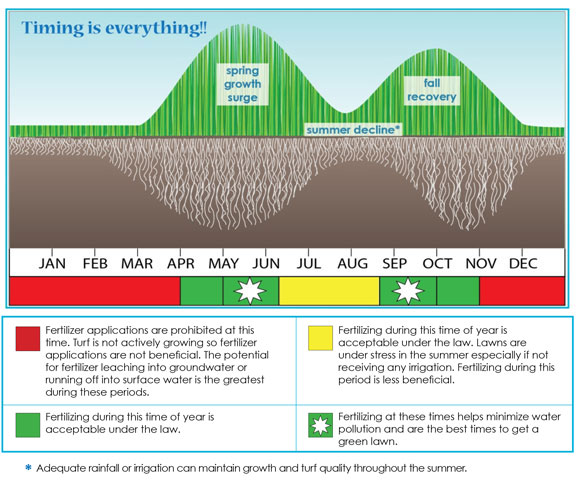
Image Source: healthylawns.suffolkcountyny.gov
Crafting Your Lawn Fertilization Schedule
A healthy lawn requires more than just mowing and watering. It needs a consistent supply of nutrients, delivered through proper fertilization. But how often can you fertilize your lawn without causing harm? The answer lies in a well-planned lawn fertilization schedule. This schedule considers your grass type, the season, and your lawn’s specific needs.
Fertilizer Application Frequency: Finding the Sweet Spot
The fertilizer application frequency is crucial. Too little, and your grass won’t get the food it needs. Too much, and you risk over-fertilizing lawn, which can burn the grass, harm the soil, and even pollute waterways. The goal is to provide a steady, gradual release of nutrients that your grass can effectively use.
Factors Influencing How Often to Fertilize Grass
Several factors dictate how often to fertilize grass for optimal results:
- Grass Type: Cool-season grasses (like Kentucky bluegrass, fescues, and ryegrass) and warm-season grasses (like Bermuda, Zoysia, and St. Augustine) have different growth cycles and nutrient requirements.
- Climate: Regions with distinct seasons will require a different approach than those with milder climates.
- Soil Health: A soil test can reveal nutrient deficiencies and the soil’s pH, guiding your fertilization strategy.
- Lawn Age: New lawns have different needs than established ones.
Best Time to Fertilize Lawn: Seasonal Strategies
The best time to fertilize lawn is during its active growth periods. This is when the grass can best absorb and utilize the nutrients.
Spring Lawn Fertilization: The Awakening
Spring lawn fertilization is often the most important application. As temperatures rise and grass begins to green up, it’s ready for a nutrient boost.
- Timing: Apply your first spring fertilizer after the last frost, typically when grass starts to show significant green color. For cool-season grasses, this might be late March to May. For warm-season grasses, it’s usually April to June.
- Purpose: This application helps repair winter damage, encourages vigorous growth, and builds a strong root system for the upcoming summer months.
- Type of Fertilizer: A slow-release nitrogen fertilizer is ideal for spring. This provides a steady supply of nitrogen without causing rapid, weak growth that can be susceptible to disease or heat stress.
Considerations for Spring Fertilization
- Weed Control: If you’re using a weed and feed product, ensure you’re applying it at the correct time for both the fertilizer and the herbicide to be effective. Avoid applying herbicides when temperatures are expected to exceed 85°F (29°C).
- Mowing: Wait a day or two after fertilizing to mow, and ensure your mower blades are sharp.
Summer Lawn Fertilization: A Cautious Approach
Summer can be a stressful time for lawns, especially in hot climates.
- Fertilizer Application Frequency: It’s generally best to fertilize only once in late spring or early summer. Avoid fertilizing during the hottest parts of summer when grass is under heat stress.
- Type of Fertilizer: If you do fertilize in summer, opt for a low-nitrogen, slow-release formula. This provides minimal stress to the grass.
- Purpose: To maintain color and health, but avoid pushing growth.
Avoiding Summer Stress
- Watering: Ensure your lawn is well-watered before and after fertilizing to prevent burning.
- Heat: If temperatures are consistently above 85°F (29°C), it’s best to postpone fertilization until cooler weather returns.
Fall Lawn Fertilization: The Crucial Replenishment
Fall lawn fertilization is critical for preparing your lawn for winter and setting it up for success the following spring. This is often considered the most important feeding of the year, especially for cool-season grasses.
- Timing: Apply your fall fertilizer in early to mid-fall, typically September or October for cool-season grasses, and late summer to early fall for warm-season grasses. The goal is to fertilize before the ground freezes.
- Purpose: Fall feeding promotes root development and stores energy in the grass blades, helping it survive winter dormancy and emerge healthy in the spring.
- Type of Fertilizer: A fertilizer with a higher nitrogen content, but still preferably slow-release, is beneficial. Potassium is also important in fall to improve winter hardiness.
Fall Feeding Best Practices
- Aeration: If your lawn is compacted, consider aerating before your fall fertilization. This allows nutrients and water to reach the root zone more effectively.
- Overseeding: Fall is also an excellent time for overseeding. You can apply your fertilizer before or after overseeding, depending on the product used.
Winter Lawn Fertilization: Generally Not Recommended
While some might consider a late winter feeding, it’s generally not recommended. Fertilizing too early can encourage new growth that may be killed by late frosts. The grass is also dormant, meaning it won’t absorb the nutrients effectively.
Fertilizing New Lawn: Establishing a Strong Start
Fertilizing new lawn is a bit different than maintaining an established one. The focus is on encouraging root development and healthy growth from the very beginning.
Seeding or Sodding
- Before Planting: Incorporate a starter fertilizer into the soil before seeding or laying sod. Starter fertilizers are typically higher in phosphorus, which is essential for root formation.
- After Seeding/Sodding: If you didn’t fertilize before, apply a starter fertilizer about 2-3 weeks after germination (for seed) or a week after laying sod.
- Frequency: For newly seeded lawns, a light feeding about 4-6 weeks after germination can be beneficial. For sod, wait until the sod has rooted and you can lift a corner to check.
Key Nutrients for New Lawns
- Phosphorus (P): Crucial for root development.
- Nitrogen (N): Promotes leafy growth.
- Potassium (K): Aids in overall plant health and disease resistance.
Fertilizing Established Lawn: Ongoing Nutrition
Once your lawn is established, you can follow a more regular lawn care fertilizer timing schedule.
Cool-Season Grasses
- Spring: One application, typically in April or May.
- Fall: Two applications are highly recommended: one in early fall (September/October) and another in late fall (late October/November).
Warm-Season Grasses
- Late Spring/Early Summer: One application, typically in May or June, after the grass has fully greened up.
- Late Summer/Early Fall: One application in late August or September.
Common Fertilization Mistakes to Avoid
Understanding fertilizer application frequency is key, but so is avoiding common pitfalls.
Over-fertilizing Lawn
This is one of the most detrimental mistakes. Signs of over-fertilizing lawn include:
- Yellowing or browning grass blades (fertilizer burn).
- Excessive thatch buildup.
- Weak, spindly growth that is easily damaged.
- Increased susceptibility to disease and pests.
Table 1: Symptoms of Over-Fertilizing Lawn
| Symptom | Description |
|---|---|
| Fertilizer Burn | Patches of brown or yellow grass, often appearing as stripes where fertilizer was applied. |
| Excessive Thatch | A thick layer of dead grass and organic matter above the soil surface. |
| Weak, Spindly Growth | Grass grows tall and thin, easily collapsing or becoming damaged. |
| Increased Disease/Pests | Lush, over-fertilized grass can be more attractive to certain diseases and insects. |
| Blue-Green Color Initially | Sometimes, grass can turn a dark, almost blue-green color before browning. |
Applying Fertilizer at the Wrong Time
- Mid-Summer Heat: Avoid fertilizing during periods of extreme heat and drought.
- Winter Dormancy: Fertilizing when the grass is dormant is wasteful and potentially harmful.
Not Watering Properly
- Before Fertilizing: Water your lawn thoroughly a day or two before applying fertilizer to moisten the soil.
- After Fertilizing: Water again after fertilizing to help the granules dissolve and move into the soil, and to wash any excess off the grass blades.
Using the Wrong Type of Fertilizer
- Granular vs. Liquid: Granular fertilizers are generally easier for homeowners to apply evenly. Liquid fertilizers can provide a quick green-up but require more frequent application.
- Slow-Release vs. Quick-Release: Slow-release nitrogen fertilizers are preferred for most applications as they provide nutrients over a longer period, reducing the risk of burning and leaching.
Reading Fertilizer Labels: Your Guide to Success
Every fertilizer bag has a label with three numbers (e.g., 10-10-10). These numbers represent the percentage by weight of nitrogen (N), phosphorus (P), and potassium (K) – the three primary macronutrients for plants.
- Nitrogen (N): Promotes leafy green growth and is essential for photosynthesis.
- Phosphorus (P): Crucial for root development, flowering, and seeding.
- Potassium (K): Enhances overall plant health, disease resistance, and drought tolerance.
Choosing the Right Fertilizer
- Soil Test Results: The best way to determine what nutrients your lawn needs is through a soil test from your local cooperative extension office.
- Grass Type: Different grass types have slightly different preferences.
- Season: As discussed, the N-P-K ratio can vary depending on the time of year. Fall fertilizers often have a higher potassium content.
Tools for Fertilizer Application
Applying fertilizer evenly is key to a uniform lawn.
- Broadcast Spreader: Best for large areas. These spreaders cast fertilizer in a wide arc. They come in hopper spreaders (for granular) and tow-behind models.
- Drop Spreader: Good for smaller, more precise applications, especially near garden beds or sidewalks. They drop fertilizer directly below the spreader.
- Liquid Fertilizer Applicator: Often attaches to a hose and mixes the liquid fertilizer concentrate with water as you spray.
Ensuring Even Coverage
- Calibrate Your Spreader: Follow the instructions on the fertilizer bag and your spreader’s manual to ensure you’re applying the correct rate.
- Overlap Passes: For broadcast spreaders, slightly overlap your passes to avoid missed strips or double-applying.
- Walk at a Consistent Pace: This ensures a consistent application rate.
Fertilizing New Lawn vs. Established Lawn: Key Differences Summarized
It’s important to highlight the distinct needs of fertilizing new lawn versus fertilizing established lawn.
Table 2: Fertilization Needs: New vs. Established Lawns
| Feature | Fertilizing New Lawn | Fertilizing Established Lawn |
|---|---|---|
| Primary Goal | Root establishment and initial healthy growth. | Maintenance of health, color, and density. |
| Key Nutrient Focus | Phosphorus (for roots), Nitrogen (for top growth). | Balanced nutrients, with emphasis on Nitrogen and Potassium. |
| Fertilizer Type | Starter fertilizer (higher in P). | Balanced or slow-release fertilizers. |
| Application Timing | Before seeding/sodding, and 2-3 weeks after germination. | Following seasonal schedules based on grass type and climate. |
| Frequency | Minimal applications, focus on establishment. | 2-4 applications per year, depending on grass type. |
| Risk of Burn | Lower, but still possible with improper application. | Higher, especially with quick-release nitrogen in heat. |
FAQ: Your Lawn Fertilization Questions Answered
Q1: Can I fertilize my lawn when it’s wet?
It’s best to fertilize when the grass is dry. Fertilizing wet grass can cause the fertilizer granules to stick to the blades, increasing the risk of burning. Additionally, walking on wet grass can compact the soil.
Q2: How long should I wait to water after fertilizing?
Ideally, water your lawn about 12-24 hours after fertilizing. This helps the fertilizer dissolve and penetrate the soil, and washes any excess off the grass blades. However, if there’s no rain in the forecast, watering soon after application is crucial to prevent burning.
Q3: What is a slow-release fertilizer and why is it better?
Slow-release fertilizers release nutrients gradually over time, typically over 6-8 weeks. This provides a steady supply of food to your lawn, reducing the risk of fertilizer burn, minimizing nutrient leaching into groundwater, and requiring fewer applications compared to quick-release fertilizers.
Q4: My lawn looks yellow. Does it need fertilizer?
Yellowing grass can be a sign of nutrient deficiency, particularly nitrogen. However, it can also be caused by overwatering, underwatering, compacted soil, or disease. It’s best to perform a soil test or consult a local lawn care professional to diagnose the exact problem before applying fertilizer.
Q5: How often can I fertilize my lawn with a weed and feed product?
Weed and feed products combine fertilizer with herbicides. Because herbicides can harm grass when applied under stressful conditions, it’s generally recommended to use them only once or twice a year, typically in the spring. Always follow the product label instructions carefully.
Q6: Is it okay to fertilize during a drought?
It’s generally not recommended to fertilize during a drought or severe heat. Fertilizing can encourage new growth, which requires more water. During a drought, lawns are already stressed, and adding fertilizer can exacerbate this stress and lead to significant damage. Wait until conditions are more favorable.
Q7: When is the best time to fertilize a new lawn that I just seeded?
For a newly seeded lawn, it’s best to wait until the grass has been mowed at least twice. This indicates that the grass has established a decent root system. Apply a starter fertilizer specifically designed for new lawns.
Q8: My lawn seems to be growing too fast after fertilizing. What did I do wrong?
This is often a sign of over-fertilizing lawn, especially with a quick-release nitrogen fertilizer. It can also happen if you used a product with too high a nitrogen content for the season or your grass type. Adjust your fertilizer application frequency and the type of product you use, opting for slow-release formulas when possible.
Conclusion: The Art and Science of Lawn Fertilization
Mastering lawn care fertilizer timing is an ongoing process that involves observation and adaptation. By following a well-planned lawn fertilization schedule, understanding the specific needs of your grass type, and avoiding the pitfalls of over-fertilizing lawn, you can cultivate a vibrant, healthy, and beautiful lawn that enhances your home’s curb appeal and provides a perfect space for outdoor enjoyment. Remember, consistency and thoughtful application are the keys to success.