
So, how many wheelbarrows fit into a cubic yard? Generally, it takes between 10 to 15 wheelbarrows to equal one cubic yard, depending on the size of your wheelbarrow and how you load it. This guide will help you figure out the exact number for your specific project.
Moving materials like soil, gravel, mulch, or concrete for landscaping or construction projects often involves dealing with measurements like cubic yards. But when you’re on the ground, the most common tool you have is a wheelbarrow. This raises a simple yet crucial question: how do you translate what you can carry in a wheelbarrow to the larger quantities needed for a project? Let’s dive into the details of wheelbarrow capacity and how it relates to cubic yard to wheelbarrow calculations.
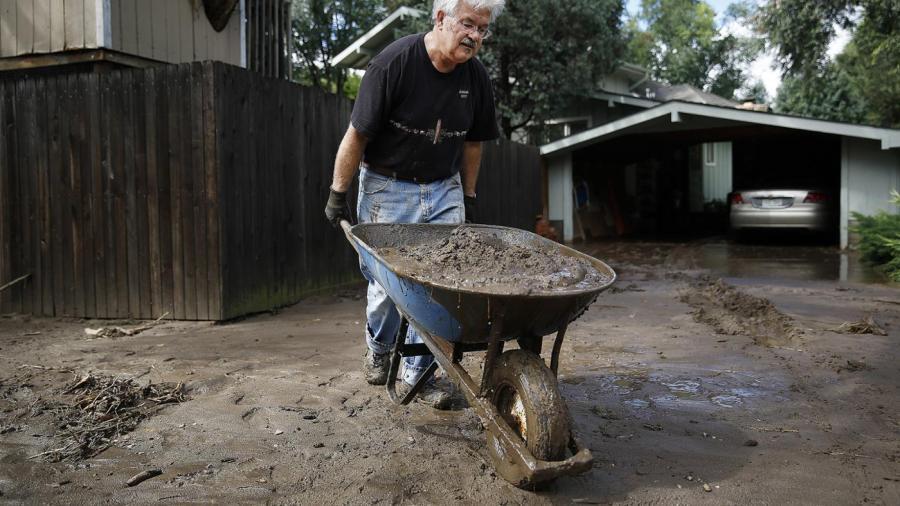
Image Source: www.reference.com
Measuring Your Wheelbarrow: The Foundation of Yardage Estimation
Before we can talk about how much dirt in a wheelbarrow or how many loads make a yard, we need to get a handle on your wheelbarrow’s capacity. This isn’t just about a number printed on the side; it’s about understanding the actual wheelbarrow volume it can hold.
Wheelbarrow Capacity: What’s the Real Deal?
Wheelbarrows come in various sizes, and their stated capacities are usually in cubic feet or gallons. However, it’s important to note that these are often nominal capacities, meaning the theoretical maximum. When you’re actually loading it, especially with bulky materials, you might not reach that theoretical limit.
Common Wheelbarrow Capacities:
- Small Residential Wheelbarrows: Often around 4-6 cubic feet.
- Medium Residential/Light Commercial Wheelbarrows: Typically 6-8 cubic feet.
- Heavy-Duty/Commercial Wheelbarrows: Can range from 8 cubic feet up to 10 cubic feet or more.
Wheelbarrow Measurement: Getting Specific
To get the most accurate wheelbarrow measurement, you can do a simple test.
- Find the Base Length and Width: Measure the inside length and width of the bottom of your wheelbarrow basin.
- Find the Average Width: Since wheelbarrows taper upwards, measure the width at the top of the basin as well. Add the bottom width and top width and divide by two to get an average width.
- Find the Depth: Measure the depth of the basin from the bottom to the top rim.
- Calculate the Volume (Approximation): Multiply the base length by the average width and then by the depth. This will give you a volume in cubic feet.
Formula:
Volume (cubic feet) = Length (ft) × Average Width (ft) × Depth (ft)
Example:
If your wheelbarrow basin measures 3 feet long, 2 feet wide at the bottom, 2.5 feet wide at the top, and 1.5 feet deep:
Average Width = (2 ft + 2.5 ft) / 2 = 2.25 ft
Volume = 3 ft × 2.25 ft × 1.5 ft = 10.125 cubic feet
Remember, this is a rough estimate of the total volume. For practical wheelbarrow load size, you’ll rarely fill it to the brim, especially with loose materials.
Converting Cubic Feet to Cubic Yards: The Math Behind the Loads
The industry standard for measuring bulk materials like soil and gravel is the cubic yard. One cubic yard is a significant amount of material. To figure out how many wheelbarrows make a yard, we need to convert between cubic feet and cubic yards.
Cubic Yard to Wheelbarrow: The Conversion Factor
This is the core of our yard of dirt calculation for wheelbarrow users.
- 1 Cubic Yard = 27 Cubic Feet
This is a fundamental conversion that every landscaper, gardener, or DIYer needs to know.
Material Volume per Wheelbarrow: Practical Loading
Now, let’s connect your wheelbarrow’s volume to this conversion. If your wheelbarrow has a nominal capacity of, say, 6 cubic feet, how does that translate to cubic yards?
Calculation:
Number of Wheelbarrows per Cubic Yard = Total Cubic Feet in a Yard / Volume per Wheelbarrow (in cubic feet)
Example:
Using our hypothetical 6 cubic foot wheelbarrow:
Number of Wheelbarrows per Cubic Yard = 27 cubic feet / 6 cubic feet/wheelbarrow = 4.5 wheelbarrows.
However, this assumes you fill the wheelbarrow to its absolute maximum capacity every single time, which is often not practical or safe.
Translating Wheelbarrow Loads: Practicality Meets Precision
This is where translating wheelbarrow loads becomes an art and a science. The wheelbarrow load size you can comfortably and safely move is what really matters.
How Much Dirt in a Wheelbarrow? Realistic Estimates
When estimating how much dirt in a wheelbarrow, consider these factors:
- Material Density: Different materials have different weights and densities. Dirt is heavier than mulch, for instance.
- Moisture Content: Wet materials are heavier than dry ones.
- Bulking: Some materials, like soil, tend to “bulk up” when disturbed or loaded, meaning they take up more space than they did when compacted.
- Loading Technique: How you fill the wheelbarrow (level, heaped, or overfilled) greatly impacts the actual volume.
Practical Loading Ratios:
For common materials, aim to fill your wheelbarrow about 75-80% full for efficient and safe transport. This means you might be carrying:
- For a 6 cubic foot wheelbarrow: Approximately 4.5 to 4.8 cubic feet of material per load.
- For an 8 cubic foot wheelbarrow: Approximately 6 to 6.4 cubic feet of material per load.
Let’s re-calculate our yardage estimation wheelbarrow with these more realistic load sizes.
Example using a 6 cubic foot wheelbarrow loaded to 4.8 cubic feet:
Number of Wheelbarrows per Cubic Yard = 27 cubic feet / 4.8 cubic feet/wheelbarrow = 5.625 wheelbarrows.
This means you’d need roughly 6 full wheelbarrow loads to move one cubic yard of material.
Example using an 8 cubic foot wheelbarrow loaded to 6.4 cubic feet:
Number of Wheelbarrows per Cubic Yard = 27 cubic feet / 6.4 cubic feet/wheelbarrow = 4.21 wheelbarrows.
So, around 4 to 5 wheelbarrow loads for an 8 cubic foot wheelbarrow.
Factors Influencing Your Wheelbarrow Count
Several things can change the number of wheelbarrow loads needed for a cubic yard. It’s not a one-size-fits-all answer.
The Type of Material Matters
Different materials have different densities and “fluffiness.”
- Topsoil/Dirt: Denser when compacted, but can be loamy and expand.
- Gravel/Crushed Stone: Very dense and heavy.
- Mulch: Lightweight and airy, will take up more space but weigh less.
- Sand: Denser than soil, especially when wet.
A general rule of thumb for how much dirt in a wheelbarrow is that a well-loaded but not overflowing wheelbarrow might carry around 200-300 lbs of dirt. For context, a cubic yard of topsoil weighs roughly 2000-2700 lbs.
Calculating for Different Materials
To get a more precise yard of dirt calculation for different materials, you’ll need to know their approximate density per cubic yard.
| Material Type | Approximate Weight per Cubic Yard (lbs) | Weight per Cubic Foot (lbs) |
|---|---|---|
| Topsoil (Dry) | 2,000 – 2,400 | 74 – 89 |
| Topsoil (Wet) | 2,400 – 2,700 | 89 – 100 |
| Gravel (Compacted) | 2,500 – 2,800 | 93 – 104 |
| Sand (Dry) | 2,400 – 2,600 | 89 – 96 |
| Sand (Wet) | 2,700 – 3,000 | 100 – 111 |
| Mulch (Wood) | 400 – 600 | 15 – 22 |
| Crushed Stone | 2,600 – 2,900 | 96 – 107 |
Note: These are approximate weights and can vary significantly based on moisture content and specific composition.
Using Weight for Calculation:
If you know the weight capacity of your wheelbarrow (or can estimate it based on what feels manageable for you), you can use the material’s density to calculate how many loads you’ll need.
Example:
Suppose you have an 8 cubic foot wheelbarrow and want to move gravel. You estimate you can comfortably carry 250 lbs of gravel per load. Gravel weighs about 100 lbs per cubic foot.
- Weight per Wheelbarrow Load: 250 lbs
-
Volume per Wheelbarrow Load (in cubic feet): 250 lbs / 100 lbs/cubic foot = 2.5 cubic feet.
-
Number of Wheelbarrow Loads per Cubic Yard: 27 cubic feet / 2.5 cubic feet/wheelbarrow = 10.8 wheelbarrows.
This shows how material density drastically changes the number of loads compared to just using volumetric capacity.
The Wheelbarrow Itself: Design and Durability
Not all wheelbarrows are created equal. The design and construction play a role in both capacity and usability.
- Single Wheel vs. Dual Wheel: Dual-wheel models offer more stability, allowing for slightly more confidence in piling material higher, but the actual volume is still limited.
- Basin Shape: Deep, sloping basins can hold more material efficiently than wide, shallow ones.
- Material: Polyethylene (plastic) basins are lighter than steel, which can make a difference in how much weight you can push. Steel basins are generally more durable.
Wheelbarrow Volume: Beyond the Stated Capacity
While manufacturers provide a wheelbarrow volume in cubic feet, this is often the total basin volume. Your practical wheelbarrow load size might be less due to:
- Ease of Dumping: Overfilling makes it hard to tip and empty the wheelbarrow cleanly.
- Stability: A load that is too high or too heavy can tip the wheelbarrow over.
- Operator Strength: Everyone has a limit to how much weight they can comfortably and safely push.
Your Project Site: Terrain and Distance
The environment where you’re working is a significant factor.
- Terrain: Hilly or uneven terrain will reduce the amount you can carry per trip. Steep inclines are challenging.
- Distance: The further you have to push the wheelbarrow, the less material you’ll want to load per trip to conserve energy.
- Obstacles: Navigating around tight corners, steps, or narrow paths will influence your wheelbarrow load size.
Efficiency in Motion: Optimizing Your Trips
To maximize efficiency when translating wheelbarrow loads for a large project:
- Keep loads consistent: Aim for a similar load size each trip.
- Plan your route: Identify the easiest path to and from the material source and the destination.
- Take breaks: Especially for heavy materials or long distances, pacing yourself is key.
Putting It All Together: Step-by-Step Estimation
Let’s break down the process into actionable steps for accurate yardage estimation wheelbarrow projects.
Step 1: Determine Your Project’s Total Yardage
This is usually the first step. If you’re buying materials, they’ll typically be sold by the cubic yard. If you’re calculating how much you need to move, you’ll likely measure your area and calculate volume.
- Area Calculation: Length × Width (for rectangular areas)
- Volume Calculation: Area × Depth (ensure all measurements are in the same units, then convert to yards).
Example: You need to fill a garden bed that is 10 feet long, 5 feet wide, and 6 inches (0.5 feet) deep.
- Volume in Cubic Feet: 10 ft × 5 ft × 0.5 ft = 25 cubic feet.
- Volume in Cubic Yards: 25 cubic feet / 27 cubic feet/yard = 0.93 cubic yards. (Round up to 1 cubic yard for ordering).
Step 2: Assess Your Wheelbarrow’s Practical Capacity
This is where we get into the real-world wheelbarrow measurement.
- Check the manufacturer’s stated capacity: Note it in cubic feet.
- Estimate your practical load: Reduce the stated capacity by about 20-25% to account for practical loading and safe transport.
Example: Your wheelbarrow states 6 cubic feet capacity. Your practical load might be around 4.5 – 4.8 cubic feet.
Step 3: Calculate the Number of Loads
Now we use the conversion factor and your practical load size.
- Formula: Number of Loads = (Project Yardage in Cubic Feet) / (Practical Wheelbarrow Load in Cubic Feet)
Example: You need 1 cubic yard (27 cubic feet) of soil. Your wheelbarrow’s practical load is 4.5 cubic feet.
- Number of Loads: 27 cubic feet / 4.5 cubic feet/wheelbarrow = 6 wheelbarrow loads.
Step 4: Consider the Material Type
If you’re working with materials other than standard topsoil, use the density charts provided earlier to refine your estimate.
Example: You need 1 cubic yard of mulch, which is light. Your wheelbarrow’s practical load is still 4.5 cubic feet, but mulch is much lighter than soil. If you fill it to the brim (e.g., 5.5 cubic feet), you might still be carrying less weight than a half-full load of dirt. However, for volume-based calculations, you’d stick to your volumetric estimate.
If the material is significantly different in density and you’re working with heavy loads, you might want to use weight as your primary constraint.
Example: You need 1 cubic yard of gravel (2700 lbs). Your wheelbarrow can safely carry 250 lbs per load.
- Number of Loads: 2700 lbs / 250 lbs/wheelbarrow = 10.8 wheelbarrow loads.
This highlights the importance of translating wheelbarrow loads based on both volume and weight.
Frequently Asked Questions (FAQ)
Here are some common questions people have about how many wheelbarrows to a yard:
Q: Does it matter if the wheelbarrow is full or heaped?
A: Yes, it matters greatly. A “heaped” load is less predictable and can be unsafe. For consistent results and safety, it’s best to aim for a level or slightly mounded load, which is roughly 75-80% of the maximum capacity. This is your practical wheelbarrow load size.
Q: What is the standard size of a wheelbarrow for these calculations?
A: The most common residential wheelbarrow has a capacity of around 6 cubic feet. Commercial models can be 8 cubic feet or larger. Our examples use a 6 cubic foot wheelbarrow as a common reference point.
Q: Can I use gallons instead of cubic feet for my wheelbarrow?
A: Yes, but you’ll need to convert. 1 cubic foot is approximately 7.48 gallons. So, a 6 cubic foot wheelbarrow holds about 45 gallons. The principle of wheelbarrow measurement remains the same: convert everything to a common unit (cubic feet or cubic yards) for calculation.
Q: How do I calculate yardage if I don’t know the depth?
A: You need to measure the depth. For landscaping, it’s common to work with depths of 3 inches (0.25 yards), 4 inches (0.33 yards), or 6 inches (0.5 yards). Measure your area and the desired depth accurately.
Q: What if the material is very wet and heavy?
A: If your material is significantly wet, its density will increase. You may need to carry less volume per wheelbarrow load size to stay within your physical limits and the wheelbarrow’s structural integrity. Re-evaluating your practical load capacity based on weight is crucial here.
Q: How many wheelbarrows of concrete equal a cubic yard?
A: Concrete is usually measured by volume, and its density is quite high. A typical 6 cubic foot wheelbarrow, loaded to about 5 cubic feet of concrete mix (before water is added, as water adds volume but not structural material), would require approximately 5-6 loads to make a cubic yard. However, mixing concrete in a wheelbarrow is best for small batches. For larger quantities, a mixer is more practical.
Conclusion: Your Project, Your Wheelbarrow, Your Yardage
Mastering the cubic yard to wheelbarrow conversion empowers you to tackle any project with confidence. By accurately measuring your wheelbarrow capacity, applying the correct conversion factors, and considering the type of material and your working conditions, you can effectively estimate how many wheelbarrows to a yard are needed. Whether you’re moving soil, gravel, or mulch, this guide provides the tools for accurate yardage estimation wheelbarrow tasks, ensuring you have the right amount of material and a clear plan for your work. Remember, a little planning and accurate wheelbarrow measurement go a long way in making your project a success.