
A car sounding like a lawn mower is a common complaint, and it typically points to an issue within the exhaust system, engine, or transmission. This distinctive, often loud, rumbling or sputtering noise can be caused by anything from a simple exhaust leak to more complex internal engine problems.
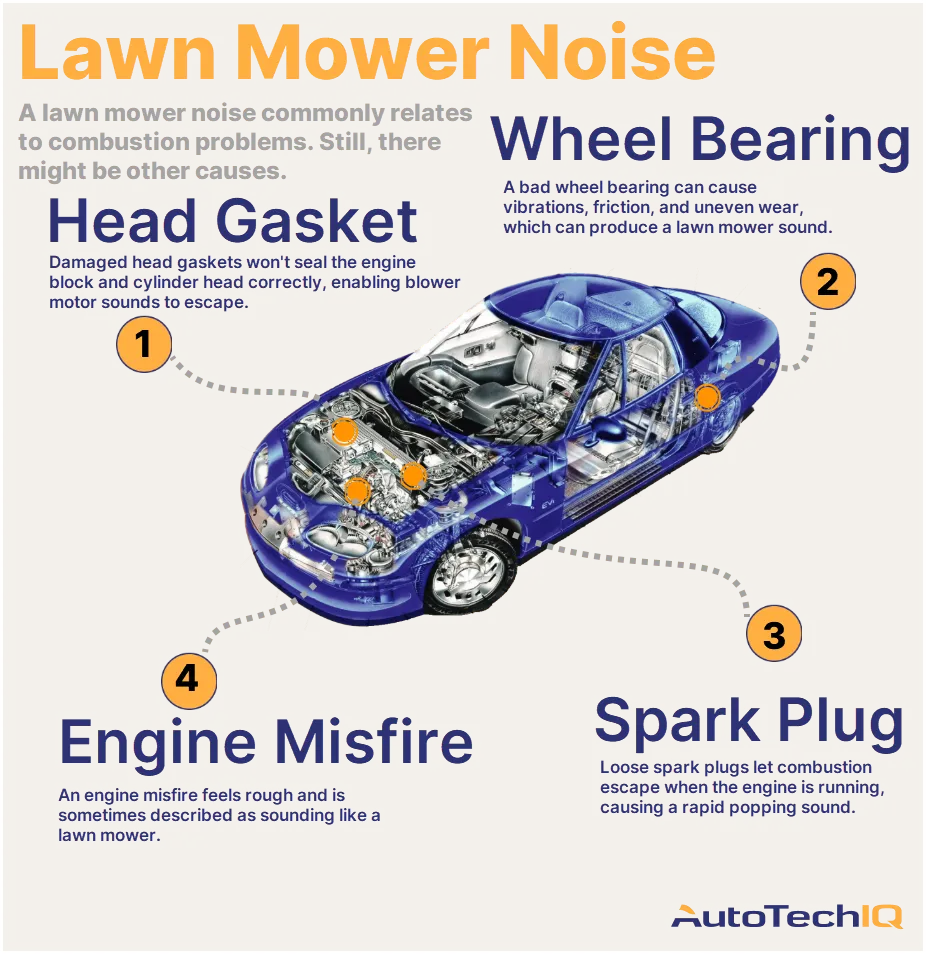
Image Source: www.autotechiq.com
Deciphering the Lawn Mower Drone: Common Causes
That unmistakable sound, reminiscent of a struggling garden tool, can stem from several sources. Let’s break down the most frequent culprits behind your car’s unusual engine noise.
1. Exhaust Leaks: The Primary Suspect
Exhaust leaks are by far the most common reason your car might mimic a lawn mower. When the system designed to channel burnt gases away from your engine is compromised, those gases can escape prematurely, creating a loud, sputtering, or loud exhaust sound.
Where Leaks Happen:
- Cracked Exhaust Manifold: The exhaust manifold is bolted directly to the engine’s cylinder head. Over time, the extreme heat cycles can cause it to crack. A small crack can produce a puffing or ticking sound that intensifies with acceleration, eventually developing into a fuller, lawn-mower-like roar.
- Damaged Exhaust Pipes: The pipes that run from the engine to the muffler can corrode, rust, or suffer impact damage, leading to holes or cracks.
- Loose or Damaged Gaskets: Gaskets seal the connections between different exhaust components (like the manifold to the pipe, or pipes to the muffler). If a gasket blows out or becomes loose, exhaust gases will escape.
- Corroded or Broken Hangers: The exhaust system is held in place by rubber hangers. If these break or the points where they attach to the car’s frame rust away, the exhaust pipes can sag, misalign, and potentially break at a connection point, causing a leak.
Identifying an Exhaust Leak:
- Sound Location: The noise is often loudest when the engine is cold and may seem to come from underneath the car or the front of the engine bay.
- Smell: You might notice a faint smell of exhaust fumes inside the cabin, especially when stopped.
- Visual Inspection: Safely raise your car (if you have the proper equipment and knowledge) and look for black sooty marks around exhaust pipe joints, cracks in the manifold, or holes in the pipes.
2. Muffler Problems: The Noise Dampener Compromised
The muffler’s job is to reduce the sound produced by the engine’s combustion. When the muffler itself is damaged, it can no longer perform this crucial function effectively, leading to a loud exhaust and that classic lawn mower drone.
What Can Go Wrong with a Muffler?
- Rust and Corrosion: Mufflers are exposed to moisture and road salt, making them susceptible to rust. Holes can form in the outer shell or the internal baffles.
- Internal Baffle Damage: Mufflers contain baffles and chambers that redirect exhaust gases to cancel out sound waves. If these baffles break loose or corrode, the sound-dampening effect is lost, resulting in a much louder exhaust note.
- Hole in the Muffler: Direct impact or severe rust can create a hole in the muffler casing, allowing exhaust gases to escape directly and loudly.
Signs of Muffler Issues:
- Increased Volume: The most obvious sign is a significant increase in the volume of your exhaust sound, especially during acceleration.
- Rattling Sounds: Loose internal baffles can sometimes cause a rattling noise, particularly when the engine is idling or at low speeds.
3. Catalytic Converter Issues: More Than Just Emissions
While primarily designed to reduce emissions, a failing catalytic converter can also contribute to abnormal engine sounds, sometimes manifesting as a lawn mower drone.
How Catalytic Converters Affect Sound:
- Clogged Converter: The honeycomb-like structure inside the catalytic converter can become clogged with carbon deposits or debris, especially if the engine is burning oil or running rich. This blockage restricts exhaust flow, creating backpressure. This backpressure can cause the engine to struggle and produce a deeper, more guttural sound, similar to a muffled lawn mower.
- Internal Damage: If the precious metals inside the converter break apart, they can rattle around, creating a metallic scraping or rattling noise, which might be heard along with the exhaust drone.
Recognizing Catalytic Converter Problems:
- Loss of Power: A clogged catalytic converter will significantly reduce engine performance and acceleration.
- Check Engine Light: This is a common indicator of catalytic converter issues.
- Overheating: The converter itself can overheat due to the restricted flow.
- Sulfur Smell: In some cases, a failing converter can produce a rotten egg smell.
4. Belt Squeal vs. Lawn Mower Drone: Differentiating Sounds
Sometimes, what sounds like a lawn mower drone might actually be a series of other noises, including belt squeal. While usually distinct, it’s worth differentiating.
Belt Squeal Explained:
- Worn or Loose Belts: The serpentine belt (or V-belts in older cars) drives accessories like the alternator, power steering pump, and air conditioning compressor. If these belts are worn, glazed, or improperly tensioned, they can slip on the pulleys, producing a high-pitched squeal.
- Pulley Bearing Issues: A failing bearing in one of the accessory pulleys can also cause a squealing or grinding noise.
Key Differences:
- Sound Pitch: Belt squeal is typically a higher-pitched squeal, whereas a lawn mower sound is a lower-pitched rumble or growl.
- When It Happens: Belt squeal is often more pronounced on startup, during acceleration, or when accessories are engaged (like turning the steering wheel or turning on the AC). A lawn mower sound is usually more consistent with engine RPM and exhaust flow.
5. Engine Knocking: Internal Engine Distress
Engine knocking, also known as detonation or pinging, is a serious internal combustion issue that can produce sounds resembling a lawn mower, particularly a poorly maintained one.
What Causes Engine Knock?
- Incorrect Fuel Octane: Using a lower octane fuel than recommended by your manufacturer can cause premature ignition of the fuel-air mixture in the cylinder.
- Carbon Buildup: Deposits in the combustion chamber can increase compression ratios or create “hot spots” that ignite the fuel before the spark plug fires.
- Faulty Spark Plugs or Timing: Incorrect ignition timing or worn-out spark plugs can lead to inefficient combustion.
- Overheating Engine: High engine temperatures can also cause the fuel to ignite prematurely.
Recognizing Engine Knock:
- Metallic Ping or Knock: The sound is often described as a metallic pinging or knocking sound, especially under load or during acceleration.
- Loss of Power: Knocking can lead to a noticeable decrease in engine power.
- Overheating: As mentioned, overheating is often linked to knocking.
6. Transmission Problems: A Less Common, But Possible, Culprit
While less common than exhaust issues, certain transmission problems can sometimes produce noises that might be mistaken for an engine or exhaust issue, including a rumbling or groaning sound.
Transmission-Related Noises:
- Low Transmission Fluid: Insufficient transmission fluid can lead to increased friction and noise as internal components struggle to lubricate properly.
- Worn Gears or Bearings: Internal wear in the transmission can cause grinding, whining, or rumbling noises.
- Torque Converter Issues: Problems with the torque converter can also result in unusual sounds.
Differentiating Transmission Noise:
- Sound Changes with Gears: Transmission noises often change in pitch or intensity as you shift gears or as the transmission “shifts.”
- Feeling in the Drivetrain: You might feel vibrations or shuddering in the car when the transmission is having problems.
Troubleshooting Your Lawn Mower Sound: Step-by-Step
When you first notice this peculiar sound, it’s important to approach troubleshooting systematically.
Step 1: Pinpoint the Sound’s Origin
- Listen Carefully: Try to determine where the sound is coming from. Is it from the front of the car (engine bay), underneath the car, or the rear?
- When Does it Occur? Does the sound happen all the time, only when accelerating, when idling, or when the engine is cold?
Step 2: Visual Inspection (Safely!)
If you’re comfortable and have a safe way to do so, a visual inspection can reveal a lot.
- Check Underneath: Look for any obvious holes, rust, or damage to the exhaust pipes, muffler, or catalytic converter. Check if the exhaust system is hanging low or appears loose.
- Check the Engine Bay: Look for any loose or broken belts. While less common for a lawn mower sound, a very severely damaged or loose belt could create unusual noises.
Step 3: Consider Recent Events
- Did you hit a pothole? This could have dislodged or damaged your exhaust system.
- Has the car been running rough lately? This might indicate an engine performance issue.
Fixing the Lawn Mower Drone: Solutions and Recommendations
Once you have a better idea of the cause, you can explore the solutions.
Exhaust System Repairs:
- Patching vs. Replacement: For small holes in exhaust pipes, a temporary patch might be possible, but often, especially with rust, replacing the affected section of pipe or the entire component (like a muffler) is the more durable solution.
- Replacing Gaskets: If a gasket has failed, it’s usually a relatively straightforward and inexpensive repair to replace it.
- Manifold Repair/Replacement: A cracked exhaust manifold will typically need to be replaced.
Muffler Replacement:
- If the muffler is rusted through or its internal baffles are damaged, it will need to be replaced. This is a common maintenance item for many vehicles.
Catalytic Converter Issues:
- Cleaning: In some cases, a clogged catalytic converter can be cleaned, but this is often a temporary fix.
- Replacement: If the converter is significantly damaged or clogged, it will need to be replaced. This can be an expensive repair, as catalytic converters contain valuable precious metals.
Belt and Pulley Issues:
- Belt Replacement: Replacing a worn or damaged serpentine belt is a relatively simple job.
- Pulley Inspection: If a new belt doesn’t stop the squeal, the pulleys and their bearings should be inspected and replaced if faulty.
Addressing Engine Knock:
- Use Correct Octane Fuel: The first step is always to ensure you’re using the fuel recommended in your owner’s manual.
- Fuel System Cleaning: Carbon buildup can often be addressed with a quality fuel system cleaner or a professional engine decarbonization service.
- Spark Plug Replacement: Worn spark plugs should be replaced.
- Ignition Timing: If ignition timing is off, a mechanic will need to adjust it.
Transmission Repairs:
- Fluid Check and Top-Up: Ensure your transmission fluid is at the correct level.
- Professional Diagnosis: For internal transmission problems, a specialist transmission shop is usually required for diagnosis and repair.
When to Seek Professional Help
While some minor exhaust issues can be temporarily patched by a DIY enthusiast, most problems causing a lawn mower sound require professional attention.
You should always consult a qualified mechanic if:
- You are unsure about the source of the noise.
- The noise is accompanied by a loss of power or poor engine performance.
- The check engine light is illuminated.
- You suspect an internal engine problem like engine knocking.
- You are not comfortable working on vehicle exhaust or engine components.
Factors Affecting Repair Costs
The cost of repairing a lawn mower sound can vary significantly based on the cause and the vehicle.
| Problem Area | Typical Repair Cost (Estimate) | Factors Influencing Cost |
|---|---|---|
| Exhaust Leak (Pipe/Gasket) | $100 – $500 | Location of leak, complexity of pipe replacement, part quality. |
| Muffler Replacement | $200 – $800 | Make/model of car, type of muffler (OEM vs. aftermarket), labor rates. |
| Catalytic Converter | $500 – $2000+ | OEM vs. aftermarket, number of converters, vehicle emissions standards (e.g., CARB states). |
| Exhaust Manifold | $300 – $1000+ | Replacing or repairing manifold, potential for broken bolts during removal. |
| Serpentine Belt | $75 – $200 | Belt quality, additional pulley replacement. |
| Engine Knock | Varies Widely | Depends on the underlying cause (fuel, carbon, spark plugs, internal engine damage). |
| Transmission Issues | $500 – $5000+ | Minor fluid service vs. major internal component rebuild or replacement. |
Note: These are rough estimates and can vary greatly based on your geographic location, the specific make and model of your vehicle, and the labor rates of the repair shop.
Frequently Asked Questions (FAQ)
Q1: Can I drive my car if it sounds like a lawn mower?
A1: It depends on the severity and the cause. If it’s a minor exhaust leak, you might be able to drive for a short period, but it’s not recommended as it can worsen the problem and is unpleasant. If the noise is due to engine knocking or significant exhaust system failure, driving could cause further, more severe damage to your engine or drivetrain. It’s best to get it checked out as soon as possible.
Q2: Is a lawn mower sound dangerous?
A2: While the sound itself isn’t directly dangerous, the underlying causes often are. Exhaust leaks can allow dangerous carbon monoxide fumes into the cabin. Engine knocking indicates combustion problems that can lead to severe engine damage if left unaddressed. Transmission issues can lead to a sudden loss of power or control.
Q3: How often should my exhaust system be inspected?
A3: It’s a good idea to have your exhaust system inspected at least once a year, typically during your regular oil change or routine maintenance service. More frequent checks are advisable if you live in an area with harsh weather conditions or drive on poorly maintained roads.
Q4: Can a bad oxygen sensor cause this sound?
A4: While a bad oxygen sensor won’t directly cause a lawn mower sound, it can contribute to poor engine performance and incorrect fuel-air mixtures, which in turn can exacerbate issues like engine knocking or lead to problems with the catalytic converter, indirectly contributing to unusual sounds.
Q5: Is it okay to ignore a faint lawn mower sound?
A5: No, it is never okay to ignore any abnormal engine sounds. Even a faint noise is a warning sign that something is not right. Ignoring it will likely lead to more significant and expensive repairs down the line. Early detection and repair are always the most cost-effective approach.
By paying attention to the sounds your car makes and addressing them promptly, you can keep it running smoothly and avoid costly surprises. If your car is roaring like a lawn mower, it’s time to investigate!