
So, you’ve spotted mushrooms in your lawn. Why does this happen? The simple answer is that mushrooms are the fruiting bodies of fungi that live in your soil, and their appearance is often a sign of a healthy, albeit moist, ecosystem beneath the grass. While seeing toadstools in grass can be startling, it’s usually not a cause for alarm, especially if they’re not accompanied by other signs of lawn disease.
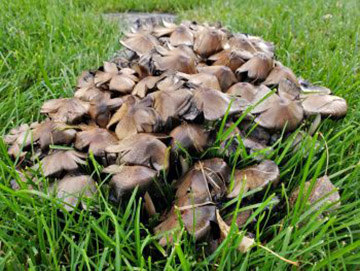
Image Source: organolawn.com
Fungal Growth: The Hidden Network
Mushrooms are the visible part of a much larger organism – a network of thread-like structures called mycelium that lives within the soil. This mycelium is constantly at work, breaking down organic matter, which is essential for soil health. When conditions are just right, the mycelium produces mushrooms, which are its reproductive structures, releasing spores to create new fungal colonies.
What Conditions Encourage Mushrooms?
Several factors contribute to the fungal growth that leads to mushrooms appearing in your yard. These are the primary culprits:
- Ample Moisture: Fungi thrive in damp environments. Prolonged periods of rain, overwatering, or poor drainage can create the ideal conditions for mycelium to flourish and produce mushrooms.
- Organic Matter: The mycelium’s primary food source is decaying organic material. This can include dead grass clippings, fallen leaves, buried roots, or even buried wood. A thick layer of thatch, which is a dense mat of dead and living grass stems and roots, provides a perfect buffet for these fungi.
- Soil Type and Condition: Compacted soils with poor aeration can trap moisture and organic matter, creating pockets where fungi can thrive. Conversely, soils that are too acidic or too alkaline can also favor certain types of fungal activity.
- Shady Areas: Fungi often prefer cooler, shadier spots where moisture tends to linger longer. Areas under trees or near buildings that receive less sunlight are more prone to mushroom growth.
- Fertilizer Use: Over-fertilizing, especially with nitrogen-rich fertilizers, can sometimes stimulate rapid fungal growth.
Deciphering the Mushroom Patches
The appearance of mushrooms isn’t always random. They often show up in specific patterns:
- Fairy Rings: These are circular or arc-shaped mushroom patches that are perhaps the most iconic sign of fungal activity. They form as the mycelium grows outwards from a central point, feeding on organic matter. The grass within the ring can be a darker green due to increased nitrogen, or it might be brown and dead if the fungus has depleted nutrients in that area.
- Scattered Clusters: You might also find mushrooms growing in scattered groups, often near decaying wood or in areas where organic debris has accumulated.
Is It a Lawn Disease or Just Mushrooms?
It’s important to differentiate between the natural occurrence of mushrooms and signs of a serious lawn disease. While both involve fungi, the impact on your lawn is different.
- Mushrooms as Indicators: As mentioned, mushrooms themselves are generally harmless. They are a sign of decomposition happening in the soil, which is a natural process. If your lawn is otherwise healthy and green, the occasional mushroom or fairy ring is usually not a problem.
- Lawn Diseases: True lawn diseases are caused by pathogenic fungi that attack the living grass blades and roots. These diseases typically manifest as discolored patches, thinning grass, wilting, or lesions on the grass blades. Examples include dollar spot, brown patch, and pythium blight.
Here’s a quick comparison to help you tell the difference:
| Feature | Mushrooms/Fungal Growth | Lawn Disease |
|---|---|---|
| Appearance | Visible mushroom caps | Discoloration, wilting, lesions on grass |
| Impact on Grass | Usually minimal to none | Can cause thinning, dead patches, or death |
| Primary Cause | Decomposing organic matter | Pathogenic fungi attacking living grass |
| Soil Condition | Moist, rich in organic matter | Varies, but often linked to stress factors |
The Role of Thatch Buildup
Thatch buildup is a significant contributor to mushroom growth. Thatch is the layer of dead and living grass stems, leaves, and roots that accumulates between the green grass blades and the soil surface. A small amount of thatch is beneficial, but when it becomes too thick (more than half an inch), it can create a spongy, water-retentive layer.
Why Thatch Encourages Mushrooms:
- Food Source: This dense layer of organic material is a prime food source for the fungi that produce mushrooms.
- Moisture Retention: Thatch acts like a sponge, holding onto moisture even when the surface of the soil might be drying out. This creates a perpetually damp environment ideal for fungal growth.
- Reduced Airflow: A thick thatch layer can impede air circulation to the soil, further contributing to damp conditions.
Complying with Your Lawn’s Moisture Needs
Soil moisture is the most critical factor for mushroom proliferation. Fungi need consistent moisture to thrive.
- Overwatering: If you water your lawn too frequently or for too long, you create a consistently wet environment. This is especially problematic if your soil has poor drainage.
- Rainfall: Extended periods of rainy weather, even if you’re not watering, can saturate the soil and encourage mushroom growth.
- Poor Drainage: Lawns with heavy clay soil or those in low-lying areas where water collects are more susceptible to excessive moisture and, consequently, mushrooms.
Aeration and Its Impact on Fungi
Aeration is a crucial lawn care practice that can help manage mushroom growth. Aeration involves creating small holes in the soil, which helps to:
- Improve Drainage: By allowing excess water to drain away more effectively.
- Increase Airflow: This reduces the damp, stagnant conditions that fungi prefer.
- Reduce Thatch: Aeration can help break down thatch over time by exposing it to air and beneficial microorganisms.
- Strengthen Grass Roots: Healthier, deeper grass roots can access water more efficiently, reducing reliance on surface moisture that can fuel fungi.
Maintaining Overall Lawn Health
The best defense against excessive mushroom growth is a healthy, well-maintained lawn. Prioritizing lawn health addresses the underlying conditions that favor fungi.
- Proper Watering: Water deeply and less frequently to encourage deep root growth. Allow the soil surface to dry out slightly between waterings.
- Regular Mowing: Mow at the correct height for your grass type. Avoid cutting too short, as this can stress the grass and make it more susceptible to problems.
- Appropriate Fertilization: Fertilize according to your grass type’s needs and at the right times of the year. Avoid over-fertilizing.
- Dethatching: If thatch buildup is a problem, consider dethatching your lawn, especially in the spring or fall.
- Soil Testing: Periodically test your soil’s pH and nutrient levels. Adjustments can be made to create a less hospitable environment for certain fungi.
Identifying Lawn Mushrooms: What to Look For
Identifying lawn mushrooms is important for distinguishing between benign fungi and potential problems.
- Cap: Observe the shape, color, and texture of the cap. Is it bell-shaped, flat, conical, or something else?
- Gills/Pores: Look underneath the cap. Are there gills, pores, or teeth? What color are they?
- Stem (Stipe): Note the shape, color, and presence of a ring or a volva (a cup-like structure at the base) on the stem.
- Spore Print: For definitive identification, a spore print can be made by placing the cap on paper.
- Habitat: Where is the mushroom growing? Is it near decaying wood, in a fairy ring, or on dead grass?
Important Safety Note: It is crucial to remember that many wild mushrooms are poisonous. Never eat any mushroom found in your lawn unless you are an expert mycologist and can positively identify it as edible. Even non-edible mushrooms can cause irritation if touched by sensitive skin.
Practical Solutions for Mushroom Management
If you want to reduce the appearance of mushrooms in your lawn, here are some practical steps:
Removing Existing Mushrooms
- Physical Removal: The simplest approach is to pick the mushrooms by hand and discard them. This won’t eliminate the underlying fungal network, but it will remove the visible fruiting bodies and prevent spore dispersal. Wear gloves when handling them.
- Using a Spade: You can also dig up the mushroom and the surrounding soil if you want to be more thorough.
Addressing Underlying Causes
- Improve Drainage: If your lawn has poor drainage, consider installing drainage systems or amending the soil with organic matter to improve its structure.
- Reduce Thatch: Dethatch your lawn if the thatch layer is more than half an inch thick. This can be done with a power rake or a dethatching blade on a mower.
- Water Wisely: Adjust your watering schedule. Water less often but more deeply.
- Clean Up Debris: Regularly rake up fallen leaves and grass clippings. Remove any buried wood or organic debris if possible.
- Sunlight: If possible, prune trees and shrubs to allow more sunlight to reach shady areas of the lawn.
Chemical Treatments (Use with Caution)
While often unnecessary, chemical treatments can be used as a last resort:
- Fungicides: Specific lawn fungicides can be used to control certain types of fungal growth. However, it’s important to identify the specific fungus if possible, as not all fungicides are effective against all types. Always follow product instructions carefully.
- Sulfur-Based Products: Some gardeners use elemental sulfur to slightly lower soil pH, which can make the environment less favorable for certain fungi. This should be done cautiously and after a soil test, as excessive sulfur can harm your grass.
Common Questions About Lawn Mushrooms
Q1: Are mushrooms in my lawn dangerous to my pets or children?
A1: While most mushrooms found in lawns are not highly toxic, some can cause mild gastrointestinal upset if ingested. It’s best to remove any mushrooms from your lawn if you have pets or small children who might be tempted to eat them. Always supervise pets and children when they are in the yard.
Q2: Do I need to get rid of mushrooms in my lawn?
A2: No, it’s generally not necessary to remove mushrooms unless they are a nuisance or you are concerned about pets and children. They are a sign of a healthy soil ecosystem. If you wish to remove them, simply pick them by hand or dig them up.
Q3: What causes the circular mushroom patches (fairy rings)?
A3: Fairy rings are caused by the outward growth of fungal mycelium in the soil. The mycelium spreads in a circular pattern, feeding on organic matter. As it grows, it can sometimes create a visible ring of darker green, healthier grass, or a ring of dead or stressed grass.
Q4: Can I treat the soil to prevent mushrooms from growing?
A4: You can manage the conditions that encourage mushrooms. Improving drainage, reducing thatch buildup, watering appropriately, and ensuring good lawn health can all help prevent excessive mushroom growth over time. Specific fungicides can be used, but often addressing the environmental factors is more effective long-term.
Q5: Will killing the mushrooms kill the fungus in my soil?
A5: Removing the visible mushrooms (the fruiting bodies) will not kill the underlying fungal mycelium in the soil. The mycelium is a vast network that can persist for a long time. The goal of lawn care is to manage the conditions so that the mycelium doesn’t produce an overabundance of mushrooms.
Q6: Are all mushrooms in the lawn poisonous?
A6: No, not all lawn mushrooms are poisonous. However, it’s extremely difficult for a layperson to distinguish between edible, non-toxic, and poisonous varieties. Therefore, it’s safest to assume all wild mushrooms in your lawn are potentially harmful and avoid consumption or direct contact with sensitive skin.
By maintaining a healthy lawn with good cultural practices, you can enjoy a lush green carpet of grass while keeping the fungal growth that causes toadstools in grass and mushroom patches in check. Remember, a few mushrooms are often a sign of a vibrant, living soil!