
When your lawn mower refuses to kick into action, it can be a frustrating experience. Typically, a lawn mower won’t start due to fuel issues, a faulty spark plug, carburetor problems, a dead battery (for electric start models), low engine oil, a clogged air filter, ignition system failure, starter motor issues, fuel line blockages, or poor-quality gas. This guide will help you diagnose and fix these common problems so you can get back to a perfectly manicured lawn.
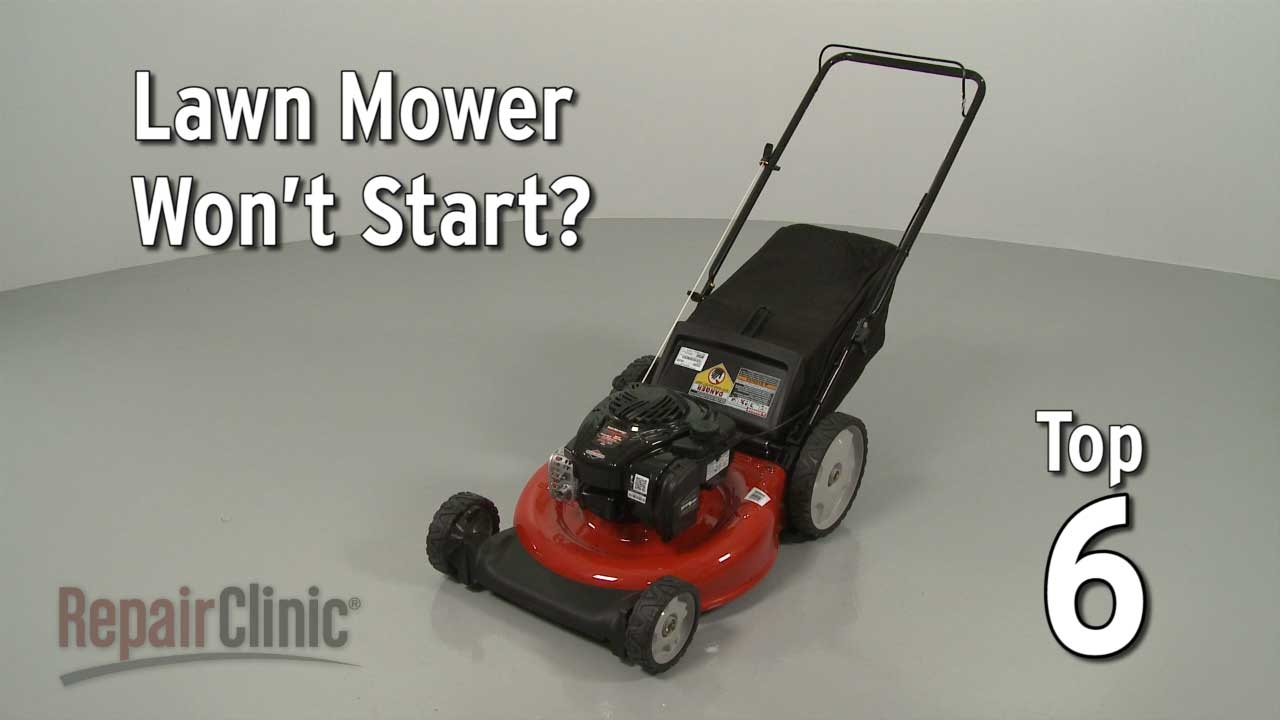
Image Source: i.ytimg.com
Deciphering the Ignition Process
Before we dive into what might be wrong, let’s briefly touch upon how a gasoline-powered lawn mower works when it’s ready to start. It’s a four-stroke process:
- Intake: The piston moves down, drawing a mixture of fuel and air into the cylinder through the open intake valve.
- Compression: The piston moves up, squeezing the fuel-air mixture.
- Power: The spark plug ignites the compressed mixture, creating an explosion that pushes the piston down.
- Exhaust: The piston moves up again, pushing the burnt gases out through the open exhaust valve.
This cycle repeats rapidly, powering the engine and the mower’s blades. If any part of this chain is broken, your mower won’t start.
Fuel Issues: The Lifeblood of Your Engine
Fuel is the most common culprit when a lawn mower won’t start. If the engine isn’t getting the right amount of clean fuel, it simply can’t ignite.
Gas Quality: The Foundation of Performance
- Old Gas: Gasoline degrades over time. Ethanol in modern gasoline absorbs moisture and can separate, creating a gummy substance that clogs fuel lines and the carburetor. If your mower sat through the winter with old gas, this is a prime suspect.
- Contaminated Gas: Water, dirt, or debris in your gas tank can also prevent starting. Always use a clean fuel can and pour carefully.
Solution: Drain the old fuel completely from the tank and carburetor bowl. Refill with fresh, high-quality gasoline. Look for gas with a lower ethanol content if possible, or use a fuel stabilizer in your gas can.
Fuel Line Blockage: The Highway to the Engine
The fuel line is the pathway from the tank to the carburetor. If it’s kinked, crushed, or clogged with debris, fuel won’t reach the engine.
Solution: Inspect the fuel line for any visible damage or kinks. If it appears clear, you can try disconnecting it from the carburetor and blowing compressed air through it from the tank end (ensure the fuel cap is off for ventilation) to clear any blockages. If the line is old and brittle, it’s best to replace it.
Spark Plug Problems: The Ignition Switch
The spark plug is essential for igniting the fuel-air mixture. If it’s not working correctly, the engine won’t fire.
Fouled Spark Plug: Dirty Business
A spark plug can become “fouled” with carbon deposits, oil, or unburned fuel. This coating can prevent a strong spark from jumping the gap.
Solution:
1. Locate the Spark Plug: It’s usually a ceramic-coated cylinder with a metal cap on the end of a wire.
2. Disconnect the Wire: Gently pull the wire off the spark plug.
3. Remove the Plug: Use a spark plug socket wrench to unscrew it.
4. Inspect and Clean: Check the tip of the plug. If it’s black and sooty, or wet, it needs cleaning. You can use a wire brush to gently remove deposits. Ensure the gap between the electrodes is correct for your mower model (check your owner’s manual).
5. Replace if Necessary: If the plug is heavily fouled, cracked, or worn, it’s best to replace it. They are inexpensive and readily available.
Incorrect Spark Plug Gap: The Space Matters
The distance between the spark plug’s electrodes is crucial. Too wide or too narrow a gap can prevent a strong spark.
Solution: Consult your owner’s manual for the correct spark plug gap specification. Use a feeler gauge to measure and adjust the gap if needed.
Carburetor Problems: The Engine’s Mixer
The carburetor precisely mixes fuel and air before sending it into the engine cylinder. It’s a common point of failure.
Carburetor Clogged: Gunked Up
This is incredibly common, especially with old fuel. Gum and varnish deposits can block the tiny passages within the carburetor, preventing fuel flow or proper mixture.
Solution:
1. Clean the Carburetor Bowl: Many carburetors have a removable bowl at the bottom. Drain any fuel from it. You might see sediment at the bottom.
2. Disassemble and Clean (Advanced): For a thorough cleaning, you may need to remove and partially disassemble the carburetor. Use carburetor cleaner spray and compressed air to clear all jets and passages. Refer to your mower’s manual or online videos for specific instructions.
3. Replace the Carburetor: If cleaning doesn’t work or the carburetor is damaged, replacement is often the most straightforward solution.
Float Bowl Issues: The Fuel Level Controller
The float bowl regulates the fuel level within the carburetor. If the float gets stuck or the needle valve it controls is faulty, the fuel mixture will be off.
Solution: Inspect the float for damage and ensure it moves freely. Check that the needle valve it contacts seals properly. Sometimes, a gentle tap on the bowl can free a stuck float.
Battery Dead (for Electric Start Models): No Juice to Crank
If your lawn mower has an electric start, a dead or weak battery will prevent the starter motor from engaging.
Insufficient Charge: The Power Drain
Batteries lose their charge over time, especially if not used or if the mower sat for a long period.
Solution:
1. Check Connections: Ensure the battery terminals are clean and tight. Corroded terminals can prevent a good connection.
2. Charge the Battery: Use a suitable battery charger to recharge the battery.
3. Test the Battery: If charging doesn’t help, the battery may be old and needs replacement.
Engine Oil Low: The Lubrication’s Absence
Most modern lawn mowers have a low-oil sensor that prevents the engine from starting if the oil level is critically low. This is a safety feature to prevent engine damage.
Lack of Lubrication: The Engine’s Lifeline
Without sufficient oil, the internal components of the engine won’t be properly lubricated, leading to increased friction and heat.
Solution:
1. Locate the Oil Dipstick: It’s usually near the engine.
2. Check the Oil Level: Pull out the dipstick, wipe it clean, reinsert it fully, then pull it out again to check the level against the “Add” and “Full” marks.
3. Add Oil: If low, add the recommended type of oil (check your owner’s manual) a little at a time until the level is correct. Never overfill.
Air Filter Clogged: The Engine’s Breathing Problem
The air filter prevents dirt and debris from entering the engine. A clogged filter restricts airflow, leading to a rich fuel mixture and difficulty starting.
Restricted Airflow: Gasping for Breath
When the air filter is severely blocked, the engine can’t get enough oxygen to mix with the fuel efficiently.
Solution:
1. Locate the Air Filter Housing: It’s usually a plastic or metal cover on the side of the engine.
2. Remove the Filter: Carefully remove the air filter.
3. Inspect and Clean/Replace:
* Paper Filters: If the filter is paper, it generally needs to be replaced if it’s dirty. You can try gently tapping it to dislodge loose dirt, but a truly clogged paper filter must be swapped out.
* Foam Filters: Foam filters can often be washed with mild soap and water, then dried completely and lightly oiled with clean engine oil before reinstallation.
4. Test Without Filter (Briefly): For a quick diagnostic, you can try starting the mower for a very short period without the air filter. If it starts, you know the filter was the problem. Do not run the mower without the filter for any extended time, as this will allow dirt into the engine.
Ignition System Failure: No Spark at All
The ignition system encompasses the spark plug, ignition coil, and sometimes a flywheel key. If any component fails, you won’t get a spark.
Faulty Ignition Coil: The Spark Generator
The ignition coil generates the high voltage needed to fire the spark plug. If it fails, there’s no spark.
Solution: Testing an ignition coil usually requires specialized tools or knowledge. If you’ve ruled out the spark plug and fuel issues, a faulty ignition coil is a strong possibility. Replacement is typically required.
Flywheel Key Sheared: The Timing Problem
The flywheel key is a small metal piece that connects the flywheel to the crankshaft, ensuring the spark plug fires at the correct time during the engine cycle. If the mower hits a solid object (like a rock or root), the flywheel key can shear, throwing off the engine’s timing.
Solution: This requires accessing and replacing the flywheel key. It involves removing the flywheel, replacing the key, and reassembling. This is a more advanced repair.
Starter Motor Issues: The Cranking Mechanism
For mowers with electric start, the starter motor is responsible for turning the engine over.
Worn or Faulty Starter: The Motor’s Demise
The starter motor itself can wear out or have electrical issues.
Solution: If you hear a clicking sound but the engine doesn’t crank, or if you hear nothing at all when you turn the key, the starter motor might be the problem. Check the electrical connections to the starter first. If they are good, the starter motor may need to be replaced.
Troubleshooting Steps: A Logical Approach
When your lawn mower refuses to start, follow these systematic steps:
Step 1: Safety First!
- Disconnect the Spark Plug Wire: Before doing any work on the mower, always disconnect the spark plug wire to prevent accidental starting.
- Work in a Well-Ventilated Area: If dealing with fuel, ensure good airflow.
Step 2: Check the Obvious
- Fuel Level: Is there gas in the tank? It sounds simple, but it’s the first thing to check.
- Spark Plug Wire: Is it securely attached to the spark plug?
- Choke Lever: Is the choke set correctly for starting (usually “Choke” or “Start” position)?
Step 3: The “No Spark” Test
- Remove the Spark Plug: As described earlier.
- Reconnect the Spark Plug Wire: Ensure it’s firmly attached.
- Ground the Spark Plug: Hold the metal body of the spark plug firmly against a clean, unpainted metal part of the engine block.
- Attempt to Start: While holding the plug against the engine, try to pull the starter cord (or turn the key for electric start).
- Observe: Look for a strong, blue spark jumping between the spark plug electrodes.
- No Spark or Weak Spark: This indicates an ignition system problem (spark plug, ignition coil, flywheel key, kill switch wire).
- Good Spark: If you have a good spark, the problem is likely with the fuel system or compression.
Step 4: The Fuel System Check
If you have a good spark, focus on fuel:
- Fresh Fuel: Confirm you have fresh gasoline in the tank.
- Fuel Line: Check for blockages or kinks.
- Primer Bulb (if equipped): If your mower has a primer bulb, press it several times. Does it feel firm? If it feels soft or you don’t see fuel moving, there might be a fuel delivery issue.
- Carburetor Bowl: Check for debris or water in the carburetor bowl.
Step 5: Air and Oil
- Air Filter: Inspect and clean or replace the air filter if it’s dirty.
- Oil Level: Ensure the engine oil is at the correct level.
Step 6: If it Still Won’t Start
If you’ve gone through these steps and your mower is still not cooperating, consider these less common but still possible issues:
- Kill Switch: Is the kill switch accidentally engaged or faulty? The kill switch grounds the ignition system, preventing spark.
- Compression: While harder to diagnose without tools, a lack of compression (worn piston rings, damaged valves) will prevent starting. You might notice the starter cord pulls very easily if compression is low.
- Sheared Flywheel Key: As mentioned, this can be a cause if the mower recently hit something hard.
Table: Common Lawn Mower Starting Problems and Solutions
| Problem | Symptoms | Likely Causes | Solutions |
|---|---|---|---|
| No Crank (Electric Start) | Nothing happens when you turn the key or press the start button. | Dead battery, loose battery connections, faulty starter motor, safety interlock engaged (e.g., brake not applied). | Check battery charge and connections. Inspect starter motor for damage. Ensure all safety interlocks are disengaged. |
| Cranks but Won’t Start | Engine turns over but never fires up. | Fuel issues (old gas, no gas, blocked fuel line, bad carburetor), spark plug problems, clogged air filter. | Check fuel quality and level. Inspect fuel lines. Clean or replace spark plug. Clean or replace air filter. Clean carburetor. |
| Starts Briefly, Then Dies | Engine starts for a few seconds and then stops. | Fuel delivery problem (intermittent blockage, carburetor issue), weak spark that fades. | Check fuel system for proper flow. Inspect spark plug. Ensure air filter is clean. |
| Spits and Sputters | Engine runs unevenly, hesitates, or sounds rough. | Incorrect fuel-air mixture (carburetor issue), dirty spark plug, water in fuel. | Clean or adjust carburetor. Clean or replace spark plug. Drain and refill fuel tank with fresh gas. |
| Smells Like Gas | Strong smell of gasoline, but no start. | Flooded engine (too much fuel, not enough air), leaking fuel system. | Let the mower sit for 15-30 minutes to allow excess fuel to evaporate. Check for fuel leaks. Ensure choke is not stuck on. |
Frequently Asked Questions (FAQ)
Q1: How often should I change my lawn mower’s spark plug?
A1: It’s generally recommended to change your spark plug at the beginning of each mowing season, or after approximately 100 hours of use. Inspecting it more frequently, like every 25 hours, is also a good practice.
Q2: Can I use a universal carburetor cleaner for my lawn mower?
A2: Yes, most common carburetor cleaners are designed to work with a wide range of gasoline engines. However, always refer to the product label to ensure compatibility and follow the usage instructions carefully.
Q3: My lawn mower sputtered and died. What’s the most likely cause?
A3: If your mower sputtered and died, it often points to a fuel delivery issue. This could be a clogged fuel filter, a partially blocked fuel line, or a carburetor that isn’t receiving enough fuel. A dirty air filter can also cause this symptom by restricting airflow.
Q4: How do I know if my lawn mower has a low-oil sensor?
A4: Most modern walk-behind and riding lawn mowers are equipped with a low-oil sensor. You can usually confirm this by checking your owner’s manual. If you’re unsure, and you add oil and the mower still won’t start, it’s likely not the cause.
Q5: My electric start mower just clicks when I try to start it.
A5: A clicking sound typically indicates a problem with the battery or the starter solenoid. Check that your battery is fully charged and the terminals are clean and tight. If the battery is good, the starter solenoid might be faulty.
By systematically working through these potential issues, you can diagnose why your lawn mower won’t start and get it running again. Remember to always prioritize safety and consult your owner’s manual for model-specific information. Happy mowing!