
A cubic yard is a unit of volume. One cubic yard is equal to 27 cubic feet. The cost of one cubic yard varies widely depending on the material, location, and supplier.
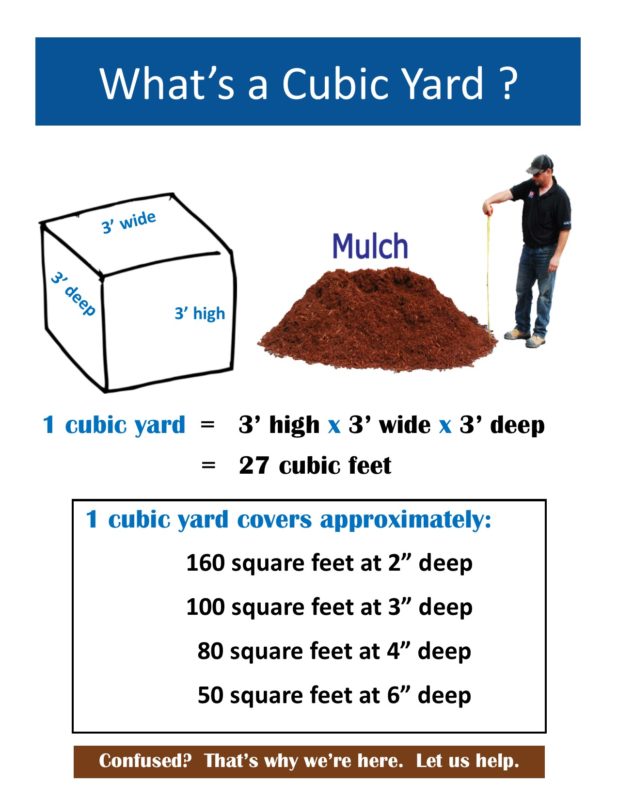
Image Source: stonegarden-nc.com
Deciphering the Cubic Yard: What It Means and How It’s Measured
The cubic yard measurement is a fundamental concept in many industries, from construction and landscaping to shipping and material handling. At its core, it’s a way to quantify space or volume. When we talk about a cubic yard, we’re referring to a cube that measures three feet long, three feet wide, and three feet high. This simple yet powerful unit helps us understand how much material we need or how much space something occupies.
The Anatomy of a Cubic Yard
To truly grasp the cubic yard measurement, let’s break it down:
- Length: 3 feet
- Width: 3 feet
- Height: 3 feet
Multiplying these dimensions gives us the volume: 3 ft * 3 ft * 3 ft = 27 cubic feet. This is the key cubic yard conversion that you’ll use most often.
Why is the Cubic Yard So Important?
You encounter cubic yards in various scenarios:
- Landscaping: Ordering topsoil, mulch, gravel, or sand.
- Construction: Calculating concrete, aggregate, or fill dirt needs.
- Home Improvement: Buying materials for garden beds or driveways.
- Shipping: Determining the volume of goods for transport.
Knowing the cost of a cubic yard for these materials can save you money and prevent you from ordering too much or too little.
The Cost of a Cubic Yard: Factors That Shape the Price
The cubic yard price isn’t static. It fluctuates based on several critical factors. When you’re budgeting for a project, it’s vital to consider these elements to get an accurate estimate of the price per cubic yard.
Material Matters: Different Materials, Different Prices
The type of material you’re buying is the biggest driver of cost.
- Topsoil: Generally affordable, especially for basic grades.
- Mulch: Prices vary significantly based on the type of wood, color, and whether it’s dyed.
- Gravel/Stone: Varies by type, size, and color. Decorative stones can be much more expensive than basic crushed stone.
- Sand: Construction sand is usually less expensive than specialty sands.
- Concrete: This is typically sold by the cubic yard and its price includes cement, aggregates, and water.
- Fill Dirt: Often one of the most economical options, used for leveling or bulk filling.
Quality and Purity: You Get What You Pay For
Higher quality or purer materials will command a higher cubic yard price. For instance:
- Screened Topsoil: More expensive than unscreened topsoil because it’s free of rocks, roots, and debris.
- Washed Gravel: Cleaner and more uniform than unwashed gravel, leading to a higher price per cubic yard.
- Specialty Mixes: Blended soils or decorative stones with unique colors or textures will cost more.
Quantity Discounts: Buying in Bulk
Suppliers often offer discounts for larger orders. Buying 5 or 10 cubic yards might get you a better cubic yard price than buying just 1 cubic yard. This is especially true for bulk materials like gravel or fill dirt.
Delivery Fees: Getting it to Your Door
The cost of a cubic yard doesn’t always include delivery. Delivery charges can add a significant amount to your total bill, especially if you’re far from the supplier. Factors influencing delivery cost include:
- Distance: The further you are, the higher the fee.
- Minimum Order: Some suppliers have a minimum order quantity for delivery.
- Truck Size: Larger loads might require bigger trucks with higher delivery costs.
- Site Access: Difficult access (narrow roads, steep driveways) can sometimes incur extra charges.
Location, Location, Location: Regional Price Differences
The price per cubic yard can vary significantly from one geographic region to another. Factors like local demand, availability of raw materials, and transportation costs all play a role. A cubic yard of mulch in a densely populated urban area might cost more than in a rural setting.
Supplier Differences: Shop Around
Different companies will have different cubic yard pricing structures. It’s always a good idea to get quotes from a few different suppliers before making a decision.
Converting Volumes: From Square Feet to Cubic Yards and Beyond
Accurate calculations are key to successful projects. Often, you’ll need to perform a cubic yard conversion to figure out how much material you need.
From Volume to Cubic Yard
This is the most common conversion. If you have measurements in cubic feet, divide by 27 to get cubic yards.
Formula: Cubic Yards = Cubic Feet / 27
Example: If you need 108 cubic feet of material, you’ll need 108 / 27 = 4 cubic yards.
Cubic Yard to Square Feet: A Different Perspective
This conversion is less common for ordering materials but useful for visualizing coverage. It’s important to remember that cubic yards are volume, and square feet are area. You need to account for depth when converting.
To convert cubic yards to square feet, you need to know the desired depth in feet.
Formula: Square Feet = (Cubic Yards * 27) / Depth (in feet)
Example: If you have 1 cubic yard of mulch and want to spread it 3 inches (0.25 feet) deep:
Square Feet = (1 * 27) / 0.25 = 108 square feet.
Other Useful Conversions
You might also encounter situations where you need to convert between different units of measurement.
- Cubic Feet to Cubic Inches: Multiply by 1728 (12 inches * 12 inches * 12 inches).
- Cubic Yards to Cubic Inches: Multiply by 46656 (27 cubic feet * 1728 cubic inches/cubic foot).
- Cubic Yards to Tons (Weight): This depends heavily on the material’s density. See the next section.
How Many Pounds in a Cubic Yard? Weight Considerations
While cubic yard measurement is about volume, you often need to know the weight for transportation or structural considerations. The crucial piece of information here is density, which varies wildly by material.
The Density Factor
Density is how much mass is packed into a given volume. For bulk materials, this is often expressed in pounds per cubic foot or pounds per cubic yard.
Formula: Weight (in pounds) = Volume (in cubic yards) * Cubic Yard Conversion * Density (in pounds per cubic foot)
Alternatively, if you have density in pounds per cubic yard:
Formula: Weight (in pounds) = Volume (in cubic yards) * Density (in pounds per cubic yard)
Approximate Weights of Common Materials (Per Cubic Yard)
It’s important to note these are approximations. Actual weights can vary due to moisture content, compaction, and specific composition.
| Material | Approx. Weight (lbs/cubic yard) |
|---|---|
| Gravel (Crushed) | 2500 – 3000 |
| Sand (Dry) | 2400 – 2800 |
| Topsoil (Loamy) | 2000 – 2500 |
| Mulch (Wood Chips) | 400 – 800 |
| Concrete (Fresh) | 4050 |
| Fill Dirt (Clay) | 2700 – 3200 |
| Limestone | 2600 – 3000 |
Example Calculation:
If you need 3 cubic yards of crushed gravel and know it weighs approximately 2800 pounds per cubic yard, the total weight would be:
3 cubic yards * 2800 lbs/cubic yard = 8400 pounds.
This is crucial information for truck payload capacities or if you’re ordering delivery and need to ensure the truck can handle the load or if you need to rent a truck.
Practical Application: Estimating Your Needs
Now that you know the factors influencing cost and how to convert units, let’s look at how to estimate your project’s material needs. This is where your cubic yard calculator knowledge comes in handy.
Calculating Volume for Common Shapes
Most landscaping and construction projects involve calculating the volume of rectangular or roughly rectangular areas.
Rectangular Beds or Piles
For a garden bed, a patio base, or a pile of material, you’ll measure length, width, and depth.
Formula: Volume (cubic feet) = Length (ft) * Width (ft) * Depth (ft)
Steps:
- Measure:
- Length of the area (e.g., a garden bed).
- Width of the area.
- Desired depth of the material (e.g., how deep you want the mulch).
- Ensure Consistent Units: Make sure all measurements are in feet. If you measured depth in inches, convert it to feet by dividing by 12.
- Calculate Volume in Cubic Feet: Multiply length * width * depth.
- Convert to Cubic Yards: Divide the cubic feet result by 27.
Example: You want to add a 4-inch layer of mulch to a rectangular garden bed that is 10 feet long and 5 feet wide.
- Depth = 4 inches = 4/12 feet = 0.333 feet
- Volume (cubic feet) = 10 ft * 5 ft * 0.333 ft = 16.65 cubic feet
- Volume (cubic yards) = 16.65 / 27 = 0.617 cubic yards
Since you can’t typically order fractions of a cubic yard, you’d round up to 1 cubic yard to be safe.
Circular Areas (e.g., Tree Rings, Piles)
For circular areas, you’ll need the radius (half of the diameter).
Formula: Volume (cubic feet) = π * radius² (ft) * depth (ft)
(Where π (pi) is approximately 3.14159)
Steps:
- Measure:
- Diameter of the circle. Calculate the radius (radius = diameter / 2).
- Desired depth of the material.
- Ensure Consistent Units: Convert all measurements to feet.
- Calculate Area in Square Feet: Use the formula: Area = π * radius².
- Calculate Volume in Cubic Feet: Multiply the area by the depth.
- Convert to Cubic Yards: Divide the cubic feet result by 27.
Example: You want to put a 6-inch layer of gravel around a tree with a 4-foot diameter.
- Radius = 4 ft / 2 = 2 ft
- Depth = 6 inches = 0.5 ft
- Area = 3.14159 * (2 ft)² = 12.57 square feet
- Volume (cubic feet) = 12.57 sq ft * 0.5 ft = 6.285 cubic feet
- Volume (cubic yards) = 6.285 / 27 = 0.23 cubic yards
Again, you’d round up to 1 cubic yard.
Using a Cubic Yard Calculator
Many online tools act as a cubic yard calculator. These are invaluable for quickly estimating material needs. You simply input your project’s dimensions (length, width, depth) in feet or inches, and the calculator does the conversion for you.
When using a cubic yard calculator, always double-check your input measurements and select the correct units.
The Cubic Yard Price Guide: What to Expect
Let’s put some numbers to the cubic yard price. Remember, these are general estimates and can vary significantly by region and supplier.
Average Costs for Common Materials (Per Cubic Yard)
These figures are based on national averages and may not reflect your local cubic yard pricing.
- Topsoil (Screened): $20 – $50 per cubic yard
- Mulch (Bark, Wood Chips): $25 – $60 per cubic yard (depending on type and color)
- Gravel (Crushed Stone): $30 – $70 per cubic yard (depending on type and size)
- Sand (Construction): $20 – $45 per cubic yard
- Concrete (Ready-Mix): $130 – $170 per cubic yard
- Fill Dirt: $10 – $30 per cubic yard
Delivery fees can add an additional $50 – $200+ depending on distance and quantity.
Example Project Costing: A Landscaping Scenario
Let’s say you’re building a new garden bed and need to fill it with 6 inches of screened topsoil. The bed measures 12 feet long by 8 feet wide.
-
Calculate Volume:
- Length = 12 ft
- Width = 8 ft
- Depth = 6 inches = 0.5 ft
- Volume (cubic feet) = 12 ft * 8 ft * 0.5 ft = 48 cubic feet
- Volume (cubic yards) = 48 / 27 = 1.78 cubic yards
-
Rounding Up: You’ll need to order 2 cubic yards of topsoil.
-
Estimate Cost:
- Assuming a cubic yard price of $35 per cubic yard for screened topsoil.
- Material Cost = 2 cubic yards * $35/cubic yard = $70
-
Add Delivery: Let’s assume a delivery fee of $75.
-
Total Estimated Cost: $70 (material) + $75 (delivery) = $145
This is a simplified example, but it illustrates how to use the cubic yard price to budget.
Frequently Asked Questions (FAQ)
Q1: How much does 1 cubic yard of concrete cost?
The cost of a cubic yard of concrete typically ranges from $130 to $170, but this can vary based on your location, the specific mix design required, and any additives. Delivery fees are usually extra.
Q2: How much does 1 cubic yard of topsoil weigh?
The weight of 1 cubic yard of topsoil can vary depending on its composition and moisture content, but it generally falls between 2,000 and 2,500 pounds.
Q3: How do I convert cubic yards to square feet?
To convert cubic yards to square feet, you need to know the desired depth. The formula is: Square Feet = (Cubic Yards * 27) / Depth (in feet). For example, 1 cubic yard spread 3 inches (0.25 feet) deep will cover 108 square feet.
Q4: What is the average price per cubic yard for mulch?
The price per cubic yard for mulch can range from $25 to $60, depending on the type of wood, whether it’s dyed, and its quality.
Q5: Can I pick up materials in a standard pickup truck?
A standard pickup truck typically has a bed volume that can hold around 0.5 to 1 cubic yard of loose material. However, its payload capacity (weight limit) is often more restrictive. Always check your truck’s specifications for both volume and weight limits before hauling. You might need multiple trips or a larger vehicle for more than a cubic yard.
Q6: What is the difference between a cubic yard and a yard?
A “yard” on its own is an informal term usually referring to a cubic yard when discussing bulk materials like soil, mulch, or gravel. However, technically, a yard is a unit of length (3 feet). So, it’s important to clarify that you mean “cubic yard” when ordering materials.
Q7: How much space does 1 cubic yard take up?
1 cubic yard is a cube measuring 3 feet by 3 feet by 3 feet. This is equivalent to 27 cubic feet.
Q8: Where can I find a cubic yard calculator?
You can find many free cubic yard calculator tools online by searching “cubic yard calculator” or “material calculator.” Most landscaping supply companies also offer them on their websites.
By grasping the concept of the cubic yard measurement, understanding the factors that influence cubic yard pricing, and knowing how to perform cubic yard conversion, you can confidently plan and budget for your next project. Remember to always get quotes from multiple suppliers and factor in delivery costs for the most accurate cost of a cubic yard.