
Figuring out the cost of a cubic yard of dirt depends on several factors, including the type of dirt, where you buy it, and whether you need delivery. Generally, you can expect to pay between $10 and $70 per cubic yard.
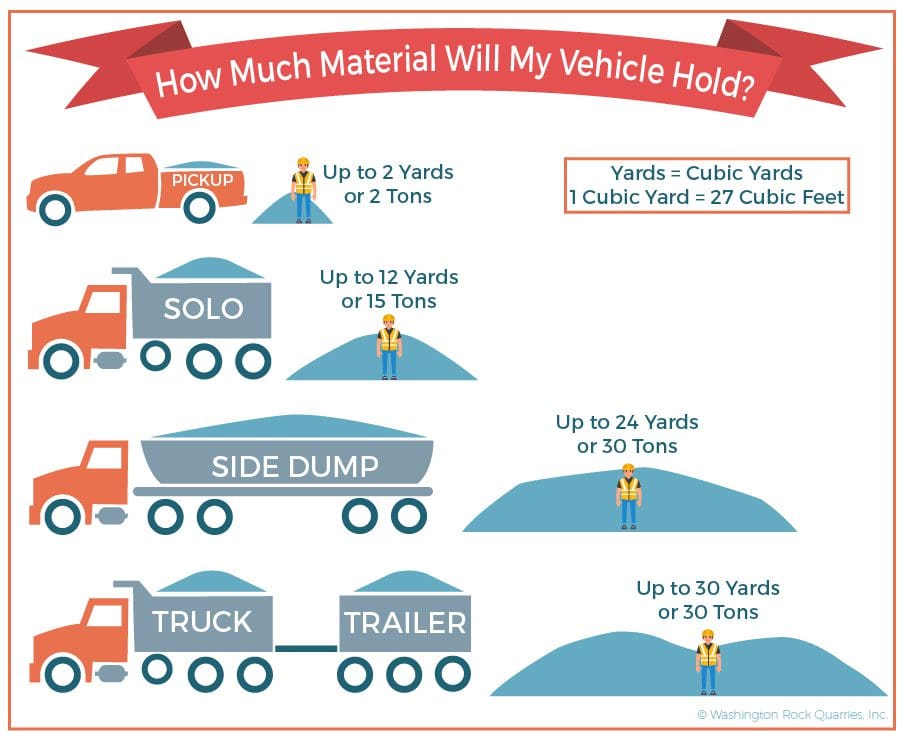
Image Source: www.wa-rock.com
Why Does Dirt Have So Many Different Prices?
The cost of dirt isn’t a one-size-fits-all answer. Many things affect the price you’ll pay for a cubic yard of soil. Think of it like buying lumber; a basic pine board will cost less than a rare hardwood. The same applies to dirt. What you need it for makes a big difference in what kind you’ll buy, and that affects the price.
Types of Dirt and Their Impact on Cost
- Fill Dirt: This is often the cheapest option. It’s usually a mix of soil, sand, and sometimes clay. Fill dirt is great for raising low spots in your yard, backfilling trenches, or creating mounds. It’s not usually high quality for planting. The dirt price per yard for fill dirt can be as low as $10-$25.
- Topsoil: This is the dark, nutrient-rich layer of soil found at the earth’s surface. It’s essential for healthy plant growth. Cost of topsoil is higher because it’s screened, often blended with compost, and generally of better quality. You might pay between $20 and $50 per cubic yard for topsoil. This is ideal for gardens, new lawns, and planting beds.
- Garden Soil/Potting Mix: These are specifically formulated for growing plants. They often contain compost, peat moss, perlite, and other organic matter to improve drainage and nutrient content. Gardening soil cost can range from $30 to $70 per cubic yard.
- Specialty Blends: Some suppliers offer custom blends for specific needs, like sandy loam for drainage or soil rich in organic matter for vegetable gardens. These can be priced higher due to the specialized ingredients.
Where You Buy Your Dirt Matters
The source of your dirt can also influence the dirt price per yard.
- Local Garden Centers/Nurseries: These places are convenient for smaller jobs. They often sell dirt in bags, but they might also offer bulk options. Prices can be a bit higher here due to overhead and smaller quantities.
- Landscape Supply Yards: These are your go-to for larger projects. They typically buy dirt in bulk and can offer better pricing, especially when you buy larger quantities. They are a great source for bulk dirt prices.
- Online Retailers: Some online companies deliver soil. Be sure to factor in shipping costs, which can significantly increase the overall dirt delivery cost.
- Contractors/Excavation Companies: Sometimes, if you’re having excavation work done, they might have excess dirt they can sell or even offer at a reduced rate.
Deciphering the Price: What Goes Into the Cost?
The price tag on a cubic yard of dirt isn’t just for the soil itself. Several hidden costs and factors contribute to the final price.
Material Costs
The raw materials themselves have a cost. This includes the extraction of the dirt, screening it to remove rocks and debris, and any additives like compost or fertilizers that are mixed in to create specific soil types.
Processing and Screening
High-quality topsoil and garden soil are often screened. This process removes rocks, roots, and other debris, making the soil easier to work with and better for planting. Screening adds labor and equipment costs.
Transportation and Delivery
Getting the dirt from the source to your home is a major cost factor. The dirt delivery cost will depend on:
- Distance: The further the delivery, the more you’ll pay.
- Delivery Truck Size: Larger trucks might have higher delivery fees but can carry more at once.
- Accessibility: If your delivery location is hard to reach (e.g., narrow driveways, steep slopes), there might be an extra charge.
This is why purchasing bulk dirt prices often makes more sense for larger projects, as the delivery cost is spread across a greater volume.
Labor and Overhead
The company selling you the dirt has costs associated with their staff, equipment, yard maintenance, and general business operations. These are factored into the price.
Calculating How Much Dirt You Need
Before you even think about prices, you need to know how much dirt you require. Measuring is key to avoiding over or under-buying.
The Cubic Yard Explained
A cubic yard is a unit of volume. It’s a cube that measures 3 feet in length, 3 feet in width, and 3 feet in height.
- 1 cubic yard = 27 cubic feet
Measuring for Your Project
Let’s say you need to cover a rectangular area with a certain depth of soil. Here’s how to calculate the cubic yards:
Length (in feet) × Width (in feet) × Depth (in feet) = Cubic Feet
Once you have the cubic feet, divide by 27 to get cubic yards:
Cubic Feet / 27 = Cubic Yards
Example:
You want to add 4 inches of topsoil to a garden bed that is 10 feet long and 5 feet wide.
- Convert inches to feet: 4 inches = 4/12 feet = 0.33 feet
- Calculate cubic feet: 10 ft × 5 ft × 0.33 ft = 16.5 cubic feet
- Convert to cubic yards: 16.5 cubic feet / 27 cubic feet/yard ≈ 0.61 cubic yards
It’s always a good idea to round up to the nearest quarter or half cubic yard to account for settling and any slight measurement inaccuracies.
Estimating for Different Projects
- Lawn Seeding: For a new lawn, you typically need 2-4 inches of topsoil.
- Gardening Beds: Raised beds might require 6-12 inches or more of high-quality soil.
- Filling Holes: The depth needed will vary greatly depending on the size of the hole. This is where how much does fill dirt cost becomes relevant.
- Creating Slopes/Mounds: Measure the area and the desired height to calculate volume.
The Price of Backyard Dirt: A Practical Look
Let’s break down some typical price ranges for common landscaping needs for the price of backyard dirt.
Table: Estimated Dirt Costs per Cubic Yard
| Dirt Type | Typical Price Range (per Cubic Yard) | Common Uses |
|---|---|---|
| Fill Dirt | $10 – $25 | Leveling, backfilling, creating mounds |
| Topsoil (Screened) | $20 – $50 | Lawns, gardens, planting beds, general landscaping |
| Garden Soil/Compost Blend | $30 – $70 | Vegetable gardens, flower beds, enriching soil |
| Specialty Blends | $40 – $80+ | Specific soil needs (e.g., sandy loam, mushroom compost) |
Note: These are estimates. Actual prices can vary significantly based on location and supplier.
Bagged vs. Bulk Dirt
- Bagged Dirt: Often sold in 0.5 to 2 cubic foot bags at garden centers. While convenient for small tasks, the cost of topsoil per cubic yard is much higher when bought this way. A 1.5 cubic foot bag might cost $5-$10. If you do the math (1.5 cu ft / 27 cu ft/yard), you’re looking at $18-$36 per cubic yard, and that doesn’t include the extra labor to haul many bags.
- Bulk Dirt: Sold by the cubic yard from landscape supply yards. This is almost always the more economical choice for anything more than a very small project. Ordering in bulk helps reduce the per-unit cost and often simplifies delivery. The bulk dirt prices are generally more favorable.
Factors Influencing Delivery Costs
The dirt delivery cost is a crucial part of the overall expense.
Distance from Supplier
This is the most significant factor. Most suppliers have a base delivery fee within a certain radius (e.g., 5-10 miles) and then charge an additional per-mile fee beyond that.
Delivery Volume
Some companies might have a minimum order for delivery, or the delivery fee might be cheaper if you order a larger quantity (e.g., 5-10 cubic yards or more).
Truck and Labor
The type of truck used (dump truck, flatbed with a forklift) and the labor involved in loading and unloading will affect the price.
Timeliness of Delivery
While usually not a major factor for dirt, if you need a specific, expedited delivery slot, there might be a premium.
Comprehending Dirt Removal Prices
Sometimes, your project involves removing existing dirt. The dirt removal price is a separate consideration.
- Haul-Away Services: Companies that specialize in junk removal or excavation will often charge by the truckload or by the hour for dirt removal.
- Volume and Weight: The amount of dirt to be removed and its composition (wet soil is much heavier) will impact the cost.
- Accessibility: Similar to delivery, if the dirt is hard to access for removal, the cost may increase.
- Disposal Fees: The cost of dumping the removed soil at a landfill or transfer station is usually built into the service price.
Generally, expect to pay anywhere from $100 to $500+ for dirt removal, depending on the volume and service provider.
Optimizing Your Dirt Purchase: Tips for Saving Money
- Buy in Bulk: For most projects, buying by the cubic yard from a landscape supply yard is significantly cheaper than buying bagged soil.
- Shop Around: Get quotes from several different suppliers in your area. Prices can vary.
- Consider Timing: Sometimes, suppliers have sales or overstock items.
- Plan Your Project Carefully: Accurately calculate the amount of dirt you need to avoid ordering too much or too little.
- Factor in Delivery: If you have a truck and can pick up the dirt yourself from a landscape supply yard, you can save on delivery fees, especially for smaller quantities.
- Look for Local Sources: Small local quarries or excavators might offer competitive prices.
- Utilize Free Resources (with Caution): Sometimes, people on local online forums or classifieds offer free dirt if they are excavating their property. However, be aware of the quality and that you’ll likely need to arrange transport.
Common Questions About Dirt Pricing
Here are some frequently asked questions that people have about the cost of dirt.
How much does a cubic yard of topsoil cost?
The cost of topsoil typically ranges from $20 to $50 per cubic yard when purchased in bulk. This price can be higher if it’s screened, blended with compost, or bought in smaller quantities or bags.
What is the cheapest type of dirt?
Fill dirt is usually the cheapest option, often costing between $10 and $25 per cubic yard. It’s suitable for leveling or backfilling but not ideal for planting.
Is it cheaper to buy dirt in bulk or bags?
Yes, it is almost always cheaper to buy dirt in bulk by the cubic yard from a landscape supply yard compared to buying bagged soil from a garden center. The price per cubic yard for bagged soil can be two to three times higher.
How much does dirt delivery cost?
Dirt delivery cost varies greatly by location and distance. Expect to pay anywhere from $50 to $200 or more for delivery, depending on the supplier’s radius and your location.
How do I calculate how much dirt I need for my yard?
Measure the length, width, and desired depth of the area you need to fill. Multiply these dimensions (in feet) to get cubic feet. Then, divide the total cubic feet by 27 to find out how many cubic yards you need. Always round up slightly.
Can I get dirt delivered for a small project?
Yes, most landscape supply yards offer delivery for various order sizes. However, there might be a minimum order quantity or a higher per-yard price for very small deliveries to make it cost-effective for the supplier.
What’s the difference between topsoil and fill dirt?
Topsoil is the nutrient-rich upper layer of soil, ideal for growing plants. Fill dirt is a less refined mix of soil, sand, and clay, typically used for grading, leveling, or backfilling where plant growth isn’t a primary concern.
How much does a load of dirt cost?
The term “load” can be ambiguous. A standard dump truck might carry 8-12 cubic yards. So, the cost of a load would be the price per cubic yard multiplied by the number of cubic yards in the load, plus the delivery fee. For instance, 10 cubic yards of topsoil at $30/yard with a $100 delivery fee would cost $400 ($300 for dirt + $100 for delivery).
Is gardening soil more expensive than regular topsoil?
Yes, gardening soil cost is typically higher than plain topsoil because it’s formulated with compost and other organic matter to provide essential nutrients and improve soil structure for better plant growth.
What if I need to remove dirt? What is the dirt removal price?
The dirt removal price typically ranges from $100 to $500 or more, charged by volume or hour, depending on the service provider and the amount of dirt to be hauled away.
Final Thoughts on Your Dirt Purchase
Choosing the right type of dirt and sourcing it wisely can make a big difference in the success of your landscaping project and your budget. By researching bulk dirt prices, factoring in dirt delivery cost, and accurately calculating your needs, you can ensure you get the best value for your money. Whether you’re leveling ground with fill dirt or nurturing a vegetable patch with rich gardening soil, knowing the pricing factors will help you make informed decisions. Don’t forget to consider dirt removal price if your project involves excavation. Always get a few quotes and don’t hesitate to ask suppliers about the quality and composition of their soil.