
Do you need to fertilize your lawn often to keep it healthy and green? Yes, generally, fertilizing your lawn 2 to 4 times per year is a good starting point for most grass types to maintain health and vigor.
A healthy, lush lawn is the envy of the neighborhood, but achieving that emerald carpet isn’t always as simple as watering and mowing. A crucial element in maintaining vibrant turf is proper fertilization. But how often should you fertilize your lawn to reap the greatest benefits without causing harm? This comprehensive guide will walk you through everything you need to know about creating an effective fertilizer schedule for a beautiful yard. We’ll delve into lawn feeding frequency, the best time to fertilize, the role of spring lawn care and fall lawn care, different fertilizer types, and how to cater to your specific grass health and nutrient needs.
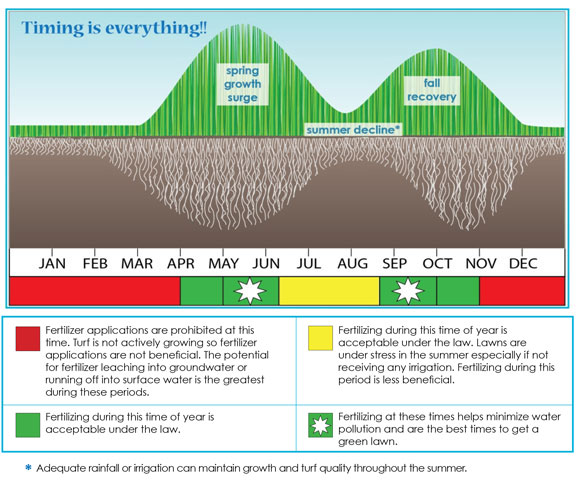
Image Source: healthylawns.suffolkcountyny.gov
Deciphering Your Lawn’s Needs: Why Fertilize?
Lawns, like all living organisms, require nutrients to thrive. Over time, these essential nutrients are depleted from the soil through several natural processes:
- Grass Growth and Clipping Removal: As your grass grows, it uses up nutrients in the soil. If you typically bag your grass clippings, you’re removing a significant source of natural fertilization, as clippings are rich in nitrogen and other elements.
- Leaching: When rain or irrigation passes through the soil, it can wash away water-soluble nutrients, particularly nitrogen, below the root zone where grass can’t access them.
- Soil Depletion: Even without active removal, the soil’s natural nutrient reserves can become depleted over time, especially in heavily trafficked areas or soils with poor structure.
Fertilizing replenishes these lost nutrients, ensuring your grass has the building blocks it needs for:
- Strong Root Development: Essential for drought tolerance and anchoring the plant.
- Vibrant Green Color: Achieved through adequate chlorophyll production, fueled by nitrogen.
- Increased Density: Helping to crowd out weeds and resist disease.
- Enhanced Stress Tolerance: Allowing the lawn to better withstand heat, drought, and foot traffic.
Factors Influencing Your Lawn’s Fertilizer Schedule
The ideal fertilizer schedule isn’t a one-size-fits-all answer. Several key factors will influence how often you need to fertilize:
1. Grass Type
The most significant factor determining lawn feeding frequency is the type of grass you have. Grasses are broadly categorized into two groups:
- Cool-Season Grasses: These grasses, such as Kentucky bluegrass, fescue, and ryegrass, thrive in cooler temperatures (typically fall and spring). They have a distinct dormant period in the hot summer months. Cool-season grasses generally benefit from fertilization in the fall, with a secondary application in the spring.
- Warm-Season Grasses: These grasses, including Bermuda, Zoysia, and St. Augustine, prefer warmer temperatures and go dormant in the winter. Warm-season grasses are actively growing during the summer and typically benefit from more frequent fertilization during their active growing season.
2. Soil Test Results
The most accurate way to determine your lawn’s nutrient needs is through a soil test. Local extension offices or reputable garden centers offer these services. A soil test will reveal:
- pH Level: The acidity or alkalinity of your soil, which affects nutrient availability.
- Nutrient Deficiencies: Specifically identifying which macro and micronutrients are lacking.
- Existing Nutrient Levels: Providing a baseline to avoid over-fertilization.
Based on the soil test, you can select a fertilizer with the appropriate N-P-K (Nitrogen, Phosphorus, Potassium) ratio and adjust your lawn feeding frequency.
3. Climate and Growing Conditions
Your local climate plays a vital role. Regions with longer growing seasons may require more frequent fertilization, especially for warm-season grasses. Conversely, areas with harsh winters or prolonged dry spells might necessitate a more conservative approach.
4. Lawn’s Current Condition
A lawn that is thin, discolored, or slow to recover from stress will likely need more frequent feeding than a dense, healthy lawn. However, it’s important not to over-fertilize a struggling lawn, as this can exacerbate problems. Focus on correcting the underlying issues first.
5. Type of Fertilizer Used
The formulation of the fertilizer you choose will impact its lawn feeding frequency.
- Slow-release fertilizers release nutrients gradually over an extended period, often requiring fewer applications.
- Quick-release fertilizers provide an immediate nutrient boost but can lead to nutrient leaching and may require more frequent applications.
Crafting Your Fertilizer Schedule: A Seasonal Approach
A well-planned fertilizer schedule focuses on the times when your grass is actively growing and can best utilize the nutrients.
Spring Lawn Care: The Awakening
Spring is a critical time for cool-season grasses to recover from winter dormancy and for warm-season grasses to begin their growth cycle.
For Cool-Season Grasses:
- Timing: The first application is typically made when the grass actively resumes growth, usually when temperatures consistently reach 50-60°F (10-15°C). This is often in early to mid-spring.
- Focus: A fertilizer with a higher nitrogen content is beneficial to promote green growth and thicken the turf.
- Frequency: A second application in late spring may be beneficial, especially if using a slow-release formula, to provide sustained nutrition as the grass heads into warmer weather.
- Considerations: Avoid fertilizing too early, before the grass has fully broken dormancy, as this can waste fertilizer and potentially damage new growth if a late frost occurs. Also, if you applied a pre-emergent herbicide, ensure your fertilizer is compatible and doesn’t interfere with its action.
For Warm-Season Grasses:
- Timing: Fertilize when the grass has fully greened up and is actively growing, usually in late spring or early summer, after the threat of frost has passed.
- Focus: Nitrogen is crucial for promoting lush growth and good color.
- Frequency: Multiple applications throughout the summer are generally recommended for optimal growth.
Summer: A Time for Caution
Summer can be a stressful period for lawns, especially cool-season grasses, due to heat and potential drought.
- Cool-Season Grasses: It’s generally best to avoid heavy fertilization of cool-season grasses during the peak of summer heat. High nitrogen applications can promote growth that the grass may not be able to sustain under stress, leading to browning or disease. If you must fertilize, opt for a very light application of a slow-release fertilizer, or one specifically formulated for summer stress with lower nitrogen and potentially added potassium for stress tolerance.
- Warm-Season Grasses: Continue with your fertilization schedule as they are actively growing.
Fall Lawn Care: The Critical Rebuilding Phase
Fall is arguably the most important fertilization period for cool-season grasses. It allows the turf to replenish stored energy reserves, thicken the turf, and prepare for winter dormancy.
For Cool-Season Grasses:
- Timing: The first fall application should occur in early to mid-fall, as temperatures begin to cool down. A second application in late fall, before the ground freezes but after growth has slowed significantly, is highly beneficial.
- Focus: Fertilizers with a higher percentage of slow-release nitrogen are ideal. Potassium is also important for winter hardiness and disease resistance.
- Frequency: Two applications in the fall are highly recommended for cool-season lawns.
- Considerations: This is the time to encourage root development, which will pay dividends in the spring.
For Warm-Season Grasses:
- Timing: Reduce or stop fertilization in the fall as growth begins to slow. The final application for warm-season grasses should be around the time they start to go dormant.
- Focus: A light application of a fertilizer with a higher potassium content can help with winter hardiness.
- Frequency: One final application may be beneficial.
Winter: Dormancy and Minimal Needs
During winter, most lawns are dormant or growing very slowly. Fertilization during this period is generally unnecessary and can even be detrimental, potentially causing shallow root growth or winter kill if an early freeze occurs after fertilization.
Fertilizer Types: Choosing the Right Product
The fertilizer types available can be confusing. Understanding the differences between organic fertilizer and synthetic fertilizer, as well as their release characteristics, is key to effective lawn care.
Synthetic Fertilizers
These are manufactured fertilizers that provide nutrients in readily available forms for plant uptake.
- Pros:
- Nutrient content is precisely labeled and consistent.
- Often provide a quicker green-up effect.
- Generally more cost-effective per pound of nutrient.
- Cons:
- Can be more prone to leaching, especially quick-release formulations, if over-applied or watered excessively.
- Can burn the lawn if applied too heavily or at the wrong time.
- Do not improve soil structure.
- Release Types:
- Quick-Release (Water-Soluble): Nutrients are immediately available. Provide a rapid green-up but can leach quickly and are more likely to burn the lawn if misapplied. Often labeled with numbers like “30-0-4.”
- Slow-Release (Water-Insoluble): Nutrients are released gradually over a longer period (weeks to months). This provides more consistent feeding, reduces the risk of burning, and minimizes leaching. Many modern lawn fertilizers are coated (e.g., sulfur-coated, polymer-coated) to achieve slow release. Look for terms like “slow-release,” “controlled-release,” or “water-insoluble nitrogen” on the label.
Organic Fertilizers
These fertilizers are derived from plant or animal matter.
- Pros:
- Release nutrients slowly and steadily, feeding the lawn over time.
- Less risk of burning the lawn.
- Improve soil structure and health by adding organic matter.
- Support beneficial soil microorganisms.
- Environmentally friendly.
- Cons:
- Nutrient content can be less precise and vary.
- May take longer to see visible results compared to synthetics.
- Can be more expensive per pound of nutrient.
- May have an odor, especially animal-based products.
- Examples:
- Compost
- Manure (well-composted)
- Bone meal
- Blood meal
- Alfalfa meal
- Fish emulsion
Choosing Between Organic and Synthetic:
Many homeowners opt for a combination approach, using slow-release synthetic fertilizers for predictable growth and nutrient boosts, and supplementing with organic fertilizers to improve long-term soil health. If you choose organic, you might need to fertilize more frequently to achieve the same level of growth as with synthetics, but the benefits to your soil are significant.
Common Fertilization Mistakes to Avoid
Even with the best intentions, homeowners can make mistakes when fertilizing their lawns. Be mindful of these common pitfalls:
1. Over-Fertilizing
More is not always better. Excessive nitrogen can lead to:
- Burned Lawns: Yellow or brown patches caused by nutrient toxicity.
- Excessive Leaf Growth: Diverting energy from root development.
- Increased Susceptibility to Diseases and Pests: Weakened turf is more vulnerable.
- Environmental Pollution: Excess nutrients can wash into waterways.
Always follow the application rates recommended on the fertilizer packaging and your soil test results.
2. Fertilizing at the Wrong Time
Applying fertilizer when the grass is dormant or under severe stress can be ineffective or harmful. Stick to the principles of spring lawn care and fall lawn care for cool-season grasses, and the active growing season for warm-season grasses.
3. Not Watering In Fertilization
Many fertilizers, especially synthetic ones, require watering in after application. This:
- Helps the nutrients reach the soil and root zone.
- Washes fertilizer off the grass blades, preventing burn.
- Activates slow-release coatings.
Water lightly for about 15-20 minutes immediately after applying fertilizer, unless rain is expected.
4. Applying to Dry Grass
Never apply fertilizer to a dry, dormant, or drought-stressed lawn. This significantly increases the risk of burning. Water your lawn a day or two before fertilizing if it’s dry.
5. Uneven Application
Using a spreader (broadcast or drop spreader) is crucial for even distribution. Hand-spreading can lead to “hot spots” where too much fertilizer is applied, causing localized burn or over-stimulation. Calibrate your spreader according to the fertilizer and lawn size.
6. Ignoring Soil Test Results
Assuming your lawn has specific deficiencies without a soil test can lead to incorrect fertilizer choices and ineffective applications.
Tailoring Your Approach: Specific Lawn Needs
Beyond the general schedule, consider these specific scenarios:
New Lawns
- Seeding: If you’ve recently seeded, a starter fertilizer with a higher phosphorus content (the middle number in N-P-K) is beneficial for root establishment. Apply it according to the product’s instructions, usually just before or during seeding.
- Sod: Similar to seeding, a starter fertilizer can help sod establish quickly.
Thin or Patchy Lawns
If your lawn is thin or has bare patches, fertilization can help thicken the turf and outcompete weeds. However, ensure you address the root cause of the thinning – it could be disease, pests, poor soil, or lack of sunlight. Fertilizing a lawn with underlying issues might only provide a temporary cosmetic fix.
Fertilizing in Shady Areas
Shady lawns generally grow more slowly and require less fertilization than those in full sun. Reduce the frequency and amount of fertilizer applied to shaded areas to avoid over-stimulating growth that the limited sunlight cannot support.
Conclusion: A Consistent, Informed Approach
Achieving a healthy, lush lawn through proper fertilization is a continuous process that requires attention to your grass type, soil conditions, and the changing seasons. By following a well-researched fertilizer schedule, choosing the right fertilizer types, and avoiding common mistakes, you can provide your lawn with the nutrient needs it craves for optimal grass health.
Remember, the goal is to nourish your lawn, not to force it. A consistent, informed approach to lawn feeding frequency, integrating spring lawn care and fall lawn care principles, will yield the most beautiful and resilient lawn for years to come. Always read and follow the specific instructions on your fertilizer packaging for the best results and to protect your lawn and the environment.
Frequently Asked Questions (FAQ)
Q1: How often should I fertilize my lawn?
A: For most cool-season grasses, fertilize 2-4 times per year, primarily in the fall and spring. For warm-season grasses, fertilize 3-4 times during their active growing season (late spring through summer).
Q2: What is the best time to fertilize my lawn?
A: The best time depends on your grass type. For cool-season grasses, fertilize in early to mid-fall and again in early to mid-spring. For warm-season grasses, fertilize when they are actively growing, typically late spring through summer.
Q3: Can I fertilize my lawn in the summer?
A: It’s best to fertilize cool-season grasses very lightly or not at all during the peak heat of summer. Warm-season grasses can be fertilized during their active summer growth.
Q4: What does N-P-K mean on a fertilizer bag?
A: N-P-K stands for Nitrogen (N), Phosphorus (P), and Potassium (K). These are the three primary macronutrients essential for plant growth. The numbers on the bag represent the percentage by weight of each nutrient in the fertilizer.
Q5: What is the difference between organic and synthetic fertilizer?
A: Synthetic fertilizers are man-made and provide nutrients quickly. Organic fertilizers are derived from natural sources, release nutrients slowly, and improve soil health.
Q6: How do I know if my lawn needs fertilizer?
A: Signs include slow growth, thin turf, pale or yellowish color, and poor recovery from stress. A soil test is the most accurate way to determine nutrient deficiencies.
Q7: Should I water my lawn after fertilizing?
A: Yes, it is generally recommended to water your lawn after fertilizing. This helps the nutrients soak into the soil and prevents the fertilizer from burning the grass blades.
Q8: My lawn is new, how often should I fertilize it?
A: For new lawns from seed or sod, use a starter fertilizer at the time of planting. After establishment, follow the general fertilization schedule for your grass type, usually waiting a few months before the first regular feeding.
Q9: Can I fertilize my lawn in the winter?
A: No, it’s generally not recommended to fertilize lawns in winter as most grass types are dormant. Fertilizing during dormancy can lead to weak growth or winter kill.
Q10: What are the benefits of slow-release fertilizers?
A: Slow-release fertilizers provide a steady supply of nutrients over an extended period, reducing the risk of burning, minimizing nutrient leaching, and requiring fewer applications compared to quick-release fertilizers.