
So, you’re wondering, “How much is a yard of mulch?” The mulch price per cubic yard can vary quite a bit, generally ranging from $20 to $70 or more, depending on the type of mulch, where you buy it, and whether you need delivery.
Mulching your garden beds is one of the easiest and most effective ways to improve your landscape. It helps retain moisture, suppress weeds, regulate soil temperature, and give your garden a polished, professional look. But before you head to the garden center, it’s crucial to know how much mulch you’ll actually need and what the associated costs will be. This guide will break down everything you need to know about the cost of mulch delivery, bulk mulch prices, landscape mulch cost, and how to figure out how many cubic yards of mulch do I need.
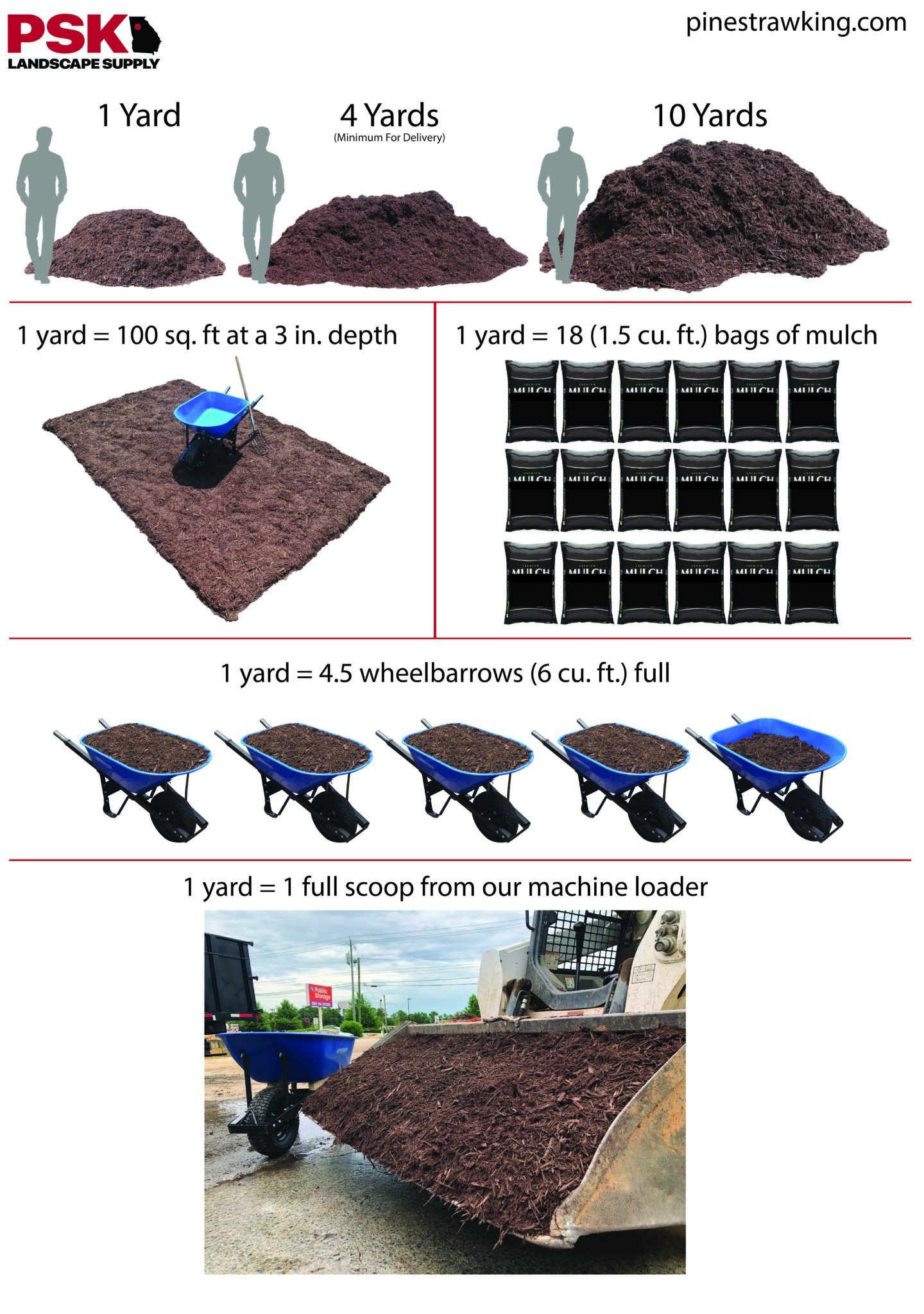
Image Source: pinestrawking.com
Figuring Out Your Mulch Needs: The Math Behind the Mulch
The first step in any mulching project is to determine the volume of mulch required. This is typically measured in cubic yards. Don’t let the term “cubic yards” scare you; it’s simpler than it sounds.
The Basic Calculation
To find out how many cubic yards of mulch you need, you’ll need to measure the area you plan to mulch and the desired depth of the mulch layer.
-
Step 1: Measure the Area.
- For rectangular or square areas, measure the length and width in feet. Multiply these two numbers to get the square footage.
- For irregular shapes, you can break them down into smaller, more manageable rectangular or square sections and add their areas together. Or, you can use approximation techniques.
-
Step 2: Determine the Desired Depth.
- A standard mulch depth is usually between 2 to 4 inches. For new beds, 3-4 inches is often recommended to effectively suppress weeds and retain moisture. For existing beds where mulch is being topped up, 2-3 inches might suffice.
-
Step 3: Convert Depth to Feet.
- Since your area is measured in feet, you need to convert your desired depth from inches to feet. Divide the depth in inches by 12 (because there are 12 inches in a foot).
- For 2 inches: 2 / 12 = 0.167 feet
- For 3 inches: 3 / 12 = 0.25 feet
- For 4 inches: 4 / 12 = 0.333 feet
- Since your area is measured in feet, you need to convert your desired depth from inches to feet. Divide the depth in inches by 12 (because there are 12 inches in a foot).
-
Step 4: Calculate the Volume in Cubic Feet.
- Multiply the area (in square feet) by the depth (in feet). This will give you the total volume in cubic feet.
-
Step 5: Convert Cubic Feet to Cubic Yards.
- There are 27 cubic feet in 1 cubic yard (3 feet x 3 feet x 3 feet = 27 cubic feet).
- Divide your total volume in cubic feet by 27 to get the number of cubic yards you need.
Formula Summary:
Cubic Yards = (Length in feet × Width in feet × Depth in feet) / 27
Using a Mulch Calculator
Many garden centers and landscaping supply websites offer free online mulch calculator tools. These can be a lifesaver, especially if you have complex garden shapes. You simply input your measurements (length, width, and desired depth) and the calculator does the rest, providing you with the exact number of cubic yards needed.
How Much Does A Yard Of Mulch Cost? Breaking Down the Expenses
The average mulch cost is influenced by several factors. It’s not just about the price of the mulch itself; you also need to consider delivery fees and potential installation costs.
The Price of Mulch Itself: Bagged vs. Bulk
When you’re looking for the cheapest mulch prices, you’ll likely encounter two main options: bagged mulch and bulk mulch.
Bagged Mulch
Bagged mulch is readily available at most home improvement stores and garden centers. It’s convenient for smaller projects and easy to transport yourself.
- Typical Bag Size: Bags of mulch usually contain 2 cubic feet of product.
- Cost per Bag: Expect to pay anywhere from $3 to $8 per bag, depending on the type of mulch and brand.
- Calculating Cubic Yards from Bags: Since there are 27 cubic feet in a cubic yard, you’ll need approximately 13.5 bags of mulch to cover one cubic yard (27 cubic feet / 2 cubic feet per bag = 13.5 bags).
- Cost per Cubic Yard (Bagged): If you pay $5 per bag, the cost per cubic yard would be around $67.50 ($5/bag × 13.5 bags/cubic yard).
Table: Estimated Cost of Bagged Mulch per Cubic Yard
| Mulch Type | Cost per Bag (approx.) | Cubic Feet per Bag | Estimated Cost per Cubic Yard (approx.) |
|---|---|---|---|
| Standard | $3 – $5 | 2 | $40.50 – $67.50 |
| Premium/Specialty | $5 – $8 | 2 | $67.50 – $108.00 |
Bulk Mulch
Bulk mulch is sold by the cubic yard and is typically purchased from landscape supply yards, garden centers with bulk options, or directly from mulch producers. This is usually the most economical choice for larger projects.
- Minimum Purchase: Bulk mulch often has a minimum purchase requirement, usually around 1 cubic yard.
- Cost per Cubic Yard (Bulk): The bulk mulch prices can range from $20 to $50 per cubic yard, depending on the type of mulch and the supplier. This is significantly cheaper than bagged mulch when comparing the cost per cubic yard.
Table: Estimated Cost of Bulk Mulch per Cubic Yard
| Mulch Type | Cost per Cubic Yard (approx.) |
|---|---|
| Standard (e.g., Pine Bark) | $20 – $35 |
| Premium (e.g., Cedar, Dyed) | $30 – $50+ |
| Specialty Blends | $40 – $60+ |
Bagged Mulch vs. Bulk Mulch Cost: What’s the Better Deal?
Generally, bagged mulch vs bulk mulch cost favors bulk mulch for larger areas.
- Cost-Effectiveness: For anything more than a few small garden beds, buying in bulk is almost always more cost-effective. The price per cubic yard for bulk is substantially lower.
- Quantity: You can easily buy exactly the amount you need in bulk. With bags, you might end up with too many half-empty bags or have to buy more than you initially calculated.
- Convenience vs. Cost: Bagged mulch offers convenience for small jobs and DIY transport. Bulk mulch is the economical choice for bigger projects, but it often requires a delivery service.
The Cost of Mulch Delivery
If you opt for bulk mulch, you’ll likely need to factor in the cost of mulch delivery. This can significantly impact your overall budget.
- Delivery Fees: Delivery charges vary based on your location, the distance from the supplier, and the quantity of mulch being delivered.
- Typical Delivery Charges: Expect to pay anywhere from $25 to $100 or more for mulch delivery. Some suppliers may offer free delivery for very large orders or within a certain radius.
- Minimum Order for Delivery: Some suppliers might have a minimum order quantity for delivery, often 1 to 2 cubic yards.
Tips for Delivery:
- Confirm Delivery Area: Ensure the supplier delivers to your specific location.
- Specify Drop-off Location: Clearly communicate where you want the mulch delivered on your property. Most suppliers will dump it on your driveway or lawn.
- Inquire About Minimums: Ask if there’s a minimum order for delivery.
- Compare Prices: Get quotes from a few different suppliers to compare delivery fees.
Mulch Installation Cost: Doing It Yourself vs. Hiring a Professional
Beyond the cost of the mulch itself and its delivery, there’s also the consideration of mulch installation cost.
DIY Installation
If you’re comfortable with the physical labor, doing it yourself is the most cost-effective option.
- Labor: Your time and effort are the primary “costs.”
- Tools: You might need a wheelbarrow, shovel, and rake. These are generally one-time purchases or you might already own them.
- Time Commitment: Spreading mulch can be time-consuming, especially for large areas.
Professional Installation
Hiring professionals to install your mulch can save you time and backache, but it comes at a price.
- Labor Costs: Professional landscapers typically charge by the hour or by the cubic yard for installation.
- Hourly Rates: Labor costs can range from $50 to $100 per hour per person.
- Per-Cubic-Yard Installation Costs: Some companies may charge a flat rate per cubic yard for installation, which could be an additional $10 to $30 per cubic yard on top of the mulch and delivery cost.
- Factors Affecting Installation Cost:
- Area Size: Larger areas will naturally cost more.
- Terrain: Sloping or difficult-to-access areas can increase labor time.
- Weed Removal: If extensive weeding is required before mulching, this can add to the cost.
- Edging: Adding decorative edging will incur additional charges.
Table: Estimated Mulch Installation Costs (Labor Only)
| Project Size | Estimated Labor Hours | Hourly Rate ($50-$100) | Estimated Installation Cost |
|---|---|---|---|
| Small Garden Bed | 1-2 | $50 – $200 | $50 – $200 |
| Medium Yard | 3-5 | $150 – $500 | $150 – $500 |
| Large Yard/Complex | 6+ | $300+ | $300+ |
Types of Mulch and Their Impact on Price
The landscape mulch cost is also heavily influenced by the type of mulch you choose. Different materials offer varying benefits, aesthetics, and price points.
Organic Mulches
Organic mulches are derived from plant materials and break down over time, enriching the soil.
-
Wood Chips/Bark Mulch:
- Description: Made from shredded bark, wood chips, or a combination. Often available in natural brown, red, black, or brown dyed varieties.
- Pros: Good weed suppression, retains moisture, moderates soil temperature, aesthetically pleasing, breaks down slowly. Dyed mulches offer vibrant color.
- Cons: Dyed mulches can sometimes fade or bleed in heavy rain. Can attract some insects.
- Price: Generally falls in the mid-range. Natural wood chips can be cheaper, while premium bark mulches (like cedar or pine bark) and dyed mulches will be more expensive.
- Estimated Cost (Bulk per Cubic Yard): $20 – $50+
-
Shredded Bark Mulch:
- Description: Bark that has been shredded into smaller, more uniform pieces.
- Pros: Excellent at retaining moisture and suppressing weeds, looks neat and tidy, decomposes slowly.
- Cons: Can be more expensive than chunky wood chips.
- Estimated Cost (Bulk per Cubic Yard): $25 – $55+
-
Compost:
- Description: Decomposed organic matter.
- Pros: Excellent soil amendment, adds nutrients to the soil as it breaks down.
- Cons: Can be more expensive, may not offer the same aesthetic as wood mulches, can sometimes contain weed seeds if not properly composted.
- Estimated Cost (Bulk per Cubic Yard): $30 – $60+
-
Shredded Leaves:
- Description: Leaves that have been shredded.
- Pros: Inexpensive or free if you collect your own, good soil enrichment.
- Cons: Can blow away easily if not contained, may mat down and prevent water penetration if applied too thickly or not shredded.
- Estimated Cost: Often free if self-sourced, or $10-$20 per yard from some suppliers.
-
Straw or Hay:
- Description: Dried grass or stalks.
- Pros: Very inexpensive, good for vegetable gardens and temporary use.
- Cons: Can contain weed seeds (especially hay), decomposes quickly, can blow away, not the most aesthetically pleasing for formal gardens.
- Estimated Cost: $5-$15 per bale (which covers a smaller area).
Inorganic Mulches
Inorganic mulches are non-plant-based and do not decompose.
-
Gravel/Crushed Stone:
- Description: Small stones or pebbles.
- Pros: Very durable, excellent drainage, long-lasting, modern aesthetic.
- Cons: Can heat up the soil, doesn’t add nutrients, can be difficult to remove or change, can be expensive upfront.
- Estimated Cost (Bulk per Cubic Yard): $30 – $70+ (depending on type of stone)
-
Rubber Mulch:
- Description: Made from recycled tires.
- Pros: Long-lasting, good at suppressing weeds, available in various colors.
- Cons: Can leach chemicals into the soil, can harbor bacteria, can overheat plants, not biodegradable.
- Estimated Cost (Bulk per Cubic Yard): $40 – $70+
Where to Buy Mulch and How to Find the Best Prices
Your choice of supplier can significantly impact the mulch price per cubic yard and the overall landscape mulch cost.
Landscape Supply Yards
- Pros: Often have the best bulk mulch prices, a wide variety of types and colors, knowledgeable staff.
- Cons: May have delivery minimums, might require you to pick it up if you don’t need delivery, generally cater to larger projects.
Home Improvement Stores (e.g., Home Depot, Lowe’s)
- Pros: Convenient for bagged mulch, often have sales, can pick up smaller quantities yourself.
- Cons: Bulk options are less common or more expensive than dedicated supply yards, quality can vary.
Garden Centers
- Pros: Good selection of specialty mulches, can offer advice, often have a mix of bagged and bulk options.
- Cons: Prices can be higher than dedicated supply yards.
Local Nurseries and Farmers Markets
- Pros: Sometimes offer unique or locally sourced mulch options, can support local businesses.
- Cons: Prices and availability can vary greatly.
Finding the Cheapest Mulch Prices
- Shop Around: Get quotes from multiple suppliers, especially for bulk orders and delivery.
- Buy in Bulk: As established, buying by the cubic yard from a landscape supply yard is usually the most economical for larger quantities.
- Consider Natural Options: Uncolored wood chips or bark are often cheaper than dyed or premium varieties.
- Look for Sales and Off-Season Deals: Some suppliers may offer discounts in the fall or early spring.
- DIY Delivery (if possible): If you have a truck and trailer, picking up the mulch yourself can save on delivery fees.
- Source Locally: Local suppliers often have lower transportation costs, which can translate to better prices.
- Use Your Own Leaves: Shredded leaves are a free and effective mulch if you have access to them.
When to Buy and Apply Mulch
The best time to apply mulch is generally spring or fall.
- Spring: Apply mulch after the soil has warmed up and you’ve finished planting. This helps retain moisture and suppress early-season weeds.
- Fall: Applying mulch in the fall can help protect plant roots from harsh winter temperatures and insulate the soil. It also gives your garden a neat appearance throughout the winter.
Applying mulch during extreme heat or drought can sometimes hinder moisture from reaching the soil if the mulch becomes water-repellent.
Frequently Asked Questions (FAQ)
Q1: What is the average cost of a cubic yard of mulch?
The average mulch cost per cubic yard for bulk material typically ranges from $20 to $50, but this can go higher for premium or specialty types. Bagged mulch can cost $40 to $100+ per cubic yard equivalent.
Q2: How do I calculate how many cubic yards of mulch I need?
You need to measure the area you want to mulch in square feet, decide on your desired mulch depth (in inches), convert the depth to feet (inches / 12), multiply the area by the depth in feet to get cubic feet, and then divide the cubic feet by 27 to get cubic yards. A mulch calculator can simplify this process.
Q3: Is it cheaper to buy mulch in bags or in bulk?
Generally, it is significantly cheaper to buy mulch in bulk when comparing the mulch price per cubic yard. Bagged mulch is more convenient for small jobs but costs more per unit.
Q4: What are typical mulch delivery fees?
The cost of mulch delivery varies, but you can expect to pay anywhere from $25 to $100 or more, depending on your location and the quantity ordered.
Q5: How much does it cost to have mulch installed professionally?
Mulch installation cost for professionals can range from $50 to $100 per hour per person, or they may charge an additional $10-$30 per cubic yard for installation on top of material and delivery costs.
Q6: What are the cheapest mulch prices I can find?
The cheapest mulch prices are typically found for natural, uncolored wood chips or bark purchased in bulk from local landscape supply yards. Shredded leaves are often free if you can source them yourself.
Q7: How deep should I apply mulch?
A common recommendation is 2-4 inches of mulch. For new beds, 3-4 inches provides good weed suppression and moisture retention. For topping up existing beds, 2-3 inches is usually sufficient.
By carefully measuring your needs and comparing prices from different suppliers, you can ensure you get the best value for your landscaping project and achieve beautiful, healthy garden beds.