
What is fabric by the yard? Fabric by the yard is a common way to measure and purchase fabric, referring to a specific length of fabric.
When you’re diving into the world of sewing, quilting, or any fabric-related craft, you’ll quickly encounter the term “fabric by the yard.” But what does it really mean, and how big is it? Fathoming the size of fabric by the yard involves looking at both its length and its width, as these two fabric measurements determine the total area of usable material you get. Simply put, a yard of fabric is a standard unit of length, but the fabric width can vary significantly. This difference is crucial when planning projects and figuring out how much fabric do I need.
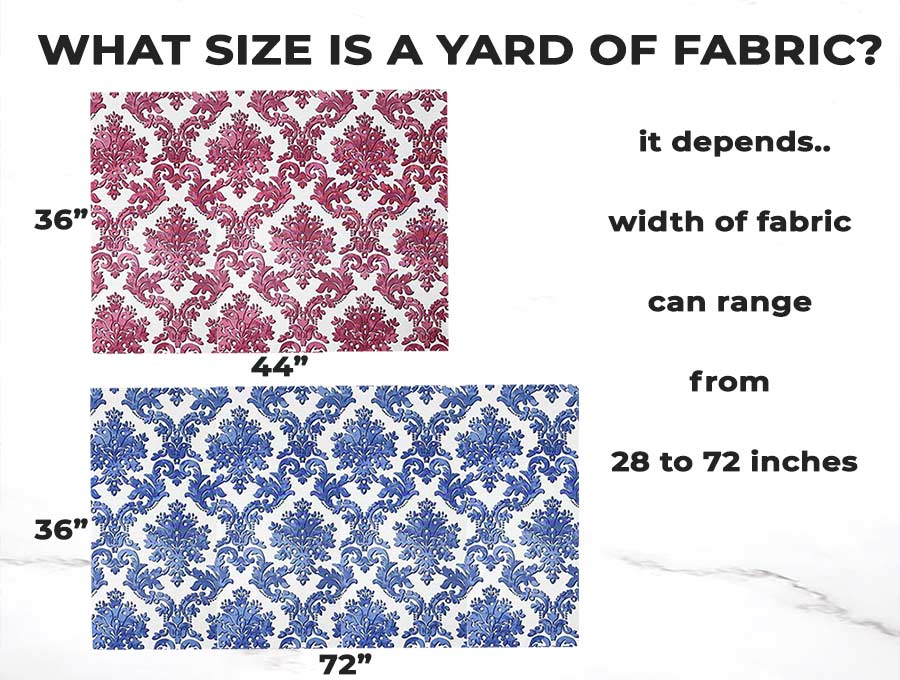
Image Source: hellosewing.com
Deciphering Fabric Measurements: The Yard as a Standard
The concept of buying fabric by the yard is rooted in historical textile trade practices. A yard is a unit of length in the imperial system, equivalent to 3 feet or 36 inches. When you purchase “fabric by the yard,” you are buying a piece of fabric that is 36 inches long. However, the width of that piece is not standardized and is what truly impacts the total amount of material. This is where fabric dimensions become vital.
The Unchanging Length: What a Yard Means
- Length: One yard of fabric is always 36 inches (or 3 feet, or 0.9144 meters). This is the consistent factor when you buy fabric by the yard.
- Purpose of Standardization: This standardized length simplifies transactions and calculations for both sellers and buyers. It provides a predictable basis for pricing and inventory management.
The Variable Width: The Crucial Companion to Length
The real variability in fabric yardage comes from the fabric width. This is often referred to as the standard fabric width, though as we’ll see, it’s not always so standard! The width of the fabric is typically determined by the loom used to weave it and the intended use of the material.
- Typical Fabric Widths:
- Apparel Fabrics: Often come in widths of 44-45 inches (111-114 cm) or 58-60 inches (147-152 cm).
- Quilting Fabrics: Almost exclusively come in a 44-45 inch width.
- Upholstery & Home Decor Fabrics: Can be much wider, sometimes 54 inches (137 cm), 60 inches (152 cm), or even 108 inches (274 cm) or more.
- Specialty Fabrics: Such as those for canvas or industrial use, can have even larger widths.
The fabric roll or bolt of fabric from which your yardage is cut determines this width. Understanding these textile measurements is key to successful project planning.
Calculating Fabric Area: More Than Just Length
Because the fabric width varies, knowing just the length (one yard) isn’t enough to gauge the total amount of fabric. To truly comprehend how big fabric by the yard is, you need to consider the area. Area is calculated by multiplying the length by the width.
Area Calculation Example
Let’s look at two common scenarios:
Scenario 1: Standard Quilting Fabric
- Length: 1 yard (36 inches)
- Width: 44 inches
- Area: 36 inches * 44 inches = 1584 square inches
Scenario 2: Wider Apparel Fabric
- Length: 1 yard (36 inches)
- Width: 60 inches
- Area: 36 inches * 60 inches = 2160 square inches
As you can see, one yard of the wider fabric provides significantly more material than one yard of the narrower fabric. This is a critical point when you ask yourself, “how much fabric do I need.”
Tables for Clarity: Visualizing Fabric Dimensions
To make these differences clearer, let’s use tables to illustrate common fabric dimensions:
Table 1: Common Fabric Widths and Areas per Yard
| Fabric Type | Typical Width (inches) | Width (cm) | Area per Yard (sq inches) | Area per Yard (sq cm) |
|---|---|---|---|---|
| Quilting Fabric | 44 | 111 | 1584 | 10219 |
| Quilting Fabric | 45 | 114 | 1620 | 10452 |
| Apparel Fabric | 58 | 147 | 2088 | 13471 |
| Apparel Fabric | 60 | 152 | 2160 | 13935 |
| Home Decor/Upholstery | 54 | 137 | 1944 | 12542 |
| Home Decor/Upholstery | 108 | 274 | 3888 | 25085 |
Note: These are typical widths; variations exist.
This table highlights how a single yard can represent vastly different amounts of fabric depending on its width. Planning your project with these textile measurements in mind is essential.
Why Fabric Width Matters in Project Planning
The fabric width is not just an abstract number; it directly influences how efficiently you can cut your pattern pieces and how much fabric you’ll ultimately need for a project.
Optimizing Pattern Layouts
When you’re cutting fabric, you want to arrange your pattern pieces on the fabric in the most economical way possible to minimize waste. This process is called “laying out” or “fittting” your pattern.
- Wider Fabrics: Generally allow for more efficient layouts, especially for larger pattern pieces, as you have more room to maneuver. You might be able to fit more pieces across the width, or place them at different angles.
- Narrower Fabrics: Can present challenges. You might need to purchase more fabric yardage because pieces that would fit side-by-side on a wider fabric might have to be cut end-to-end on a narrower one. This can dramatically increase the amount of fabric length you require.
Consider making a simple tote bag. If the bag panels are 18 inches wide, on a 44-inch wide fabric, you might get two panels side-by-side. On a 60-inch wide fabric, you might be able to fit three or even four. This difference in efficiency directly impacts your fabric yardage calculation.
Estimating Fabric Needs: The “How Much Fabric Do I Need?” Question
This is a question every sewer grapples with. The pattern instructions are usually your best guide, as they provide specific yardage requirements based on the intended fabric width. However, sometimes you might find a fabric you love that has a different width than recommended.
- If your chosen fabric is wider than recommended: You might be able to get away with purchasing slightly less fabric yardage than the pattern suggests. However, always double-check your pattern layout to confirm.
- If your chosen fabric is narrower than recommended: You will almost certainly need to purchase more fabric length. This is where a good understanding of fabric dimensions and efficient layout planning becomes crucial. You may need to cut pieces differently, or simply buy extra length to accommodate the narrower width.
Example: A pattern calls for 2 yards of 45-inch wide fabric for a skirt. If you find a beautiful fabric that is only 40 inches wide, you might need to buy 2.5 or even 3 yards to ensure all your pieces fit.
The Bolt of Fabric: The Source of Your Yardage
The bolt of fabric is the large roll of fabric that manufacturers produce. Fabric is typically sold from these bolts. The width of the bolt is fixed for a particular type of fabric. When you buy fabric by the yard, a cutting machine or a store employee unrolls a specific fabric length from the bolt, keeping the full width of the fabric intact.
- Bolt Length: Bolts can vary in length, often containing anywhere from 40 to 100 yards of fabric, sometimes more.
- Cutting: Your purchased yardage is cut from the continuous piece on the bolt. This ensures that the fabric width remains consistent across your entire purchase.
Understanding Different Fabric Measurements and Units
While “fabric by the yard” is common in many parts of the world, especially the United States, other textile measurements are used globally.
Metric System Equivalents
In countries that use the metric system, fabric is usually sold by the meter.
- One Meter: Is equal to 100 centimeters or approximately 39.37 inches.
- Fabric Widths in Metric: Are often stated in centimeters (e.g., 112 cm, 150 cm).
When working with patterns or instructions from different regions, converting between yards and meters is sometimes necessary.
- 1 yard = 0.9144 meters
- 1 meter = 1.0936 yards
This means a meter of fabric, while shorter in length than a yard, can often be wider, potentially offering a similar or even greater usable area. Always check the specific fabric dimensions provided.
Square Yards vs. Linear Yards
It’s important to distinguish between a “square yard” and a “linear yard” of fabric.
- Linear Yard: Refers to the length, as in the “fabric by the yard” measurement (36 inches long).
- Square Yard: Refers to the area. A square yard of fabric would be a piece that is 36 inches long by 36 inches wide.
Most fabric purchases are based on linear yards. If you were to buy a “square yard” of fabric with a standard 44-inch width, you’d actually be buying about 0.82 linear yards (36 inches / 44 inches ≈ 0.82). This can be a source of confusion, so clarifying whether you’re dealing with length or area is crucial.
Specialty Fabrics and Unique Widths
Not all fabrics conform to the common widths. Some specialty fabrics have unique dimensions that can impact your project.
Wide Backings for Quilting
Quilters often use wide backings for their quilts. These fabrics are specifically designed to be wide enough to cover the entire back of a quilt without needing to piece together multiple strips.
- Typical Widths: 108 inches (274 cm) or 118 inches (300 cm) are common.
- Benefit: Using a wide backing saves time and ensures a seamless back, eliminating potential issues with seams showing through or creating unevenness.
When using these wide fabrics, your fabric yardage calculations will be significantly different from using a standard 44-inch width. You’ll need much less fabric length for the same quilt back.
Home Decor Fabrics
These fabrics are often designed for curtains, upholstery, and other home furnishings. They frequently come in wider widths to accommodate larger furniture pieces or drapery panels.
- Widths: 54 inches (137 cm), 60 inches (152 cm), and even up to 118 inches (300 cm) are common.
- Considerations: The wider the fabric, the fewer seams you’ll need for large projects, leading to a cleaner finish and potentially less fabric waste.
Custom Widths and Designer Fabrics
Some designers or specialized mills may produce fabrics with unique widths for artistic or functional reasons. Always check the product description for specific fabric dimensions.
Making Informed Decisions: Tips for Fabric Buyers
To avoid confusion and ensure you get the right amount of fabric for your needs, follow these tips:
Always Check the Fabric Width
Before purchasing, always verify the fabric width. This information is usually available on the fabric label, online product description, or can be asked of the sales associate. Don’t assume all fabrics are the same width.
Read Pattern Instructions Carefully
Patterns are designed with specific fabric measurements in mind. If a pattern calls for a certain yardage of 45-inch fabric, and you choose a 60-inch fabric, re-evaluate your needs. You might need less yardage, but confirm this by laying out your pattern pieces against the wider fabric dimensions.
Factor in Fabric Shrinkage
Most natural fibers, like cotton and linen, will shrink when washed. It’s a good practice to pre-wash your fabric before cutting. Always buy a little extra fabric length to account for shrinkage, especially if the pattern doesn’t already factor it in. A common rule of thumb is to add 10-15% extra fabric yardage.
Consider Nap and Print Direction
Some fabrics have a “nap” (like velvet or corduroy), meaning the fibers lie in one direction. Others have directional prints (like a pattern that only looks right when facing up). In these cases, all pattern pieces must be cut in the same direction. This can significantly impact how much fabric length you need, as you might not be able to nest pattern pieces as efficiently.
- Nap/Directional Prints: Require careful consideration of fabric dimensions and layout.
- Non-directional Prints/Fabrics: Offer more flexibility in cutting.
Plan Your Layout Before You Buy
If you’re unsure, it’s often helpful to sketch out a potential layout of your pattern pieces on a piece of paper representing the fabric dimensions you’re considering. This visual aid can help you estimate the fabric yardage more accurately.
Frequently Asked Questions (FAQ)
Here are some common questions people have about fabric by the yard:
Q1: If I buy 2 yards of fabric, how long is it?
A1: If you buy 2 yards of fabric, you are buying a piece that is 2 yards (or 72 inches, or 6 feet) long. The width will depend on the specific fabric.
Q2: Does fabric by the yard always have the same width?
A2: No, fabric by the yard refers to the length. The fabric width varies significantly depending on the type of fabric and how it’s manufactured. Common widths include 44-45 inches for quilting fabrics and 58-60 inches for apparel fabrics, but wider options are also available.
Q3: How do I figure out how much fabric I need for a project?
A3: Always consult the pattern instructions first, as they provide specific yardage requirements based on recommended fabric widths. If your chosen fabric has different fabric dimensions, consider how your pattern pieces will fit on the wider or narrower fabric and adjust your fabric yardage accordingly.
Q4: What is the difference between buying fabric by the yard and by the fat quarter?
A4: Buying by the yard means you get a continuous length of fabric with the full width. Buying by the fat quarter means you receive a quarter of a yard cut differently: it’s a rectangle that is half the width of a yard cut in half lengthwise (typically 18 inches by 22 inches for standard 44-inch wide fabric), rather than a long strip (36 inches by 44 inches). Fat quarters are popular for quilting and small projects where a variety of fabrics are needed in smaller quantities.
Q5: Can I buy fabric online by the yard?
A5: Yes, many online fabric retailers allow you to purchase fabric by the yard. You can typically select the desired fabric length in increments of a quarter or half yard. Always check the website for their specific cutting and shipping policies.
Q6: What if the fabric is sold on a bolt and I want to buy just half a yard?
A6: Most fabric stores will cut fabric from the bolt of fabric to your specified fabric length, often in increments of a quarter or half yard. So, if you need half a yard, they will cut a 18-inch piece from the bolt, maintaining the full fabric width.
In conclusion, while the “yard” in fabric by the yard refers to a consistent unit of length (36 inches), the actual amount of fabric you receive is a combination of this length and the fabric’s width. By paying close attention to fabric dimensions, fabric width, and carefully planning your projects, you can confidently navigate the world of textile measurements and ensure you always have the right amount of fabric for your creative endeavors.