
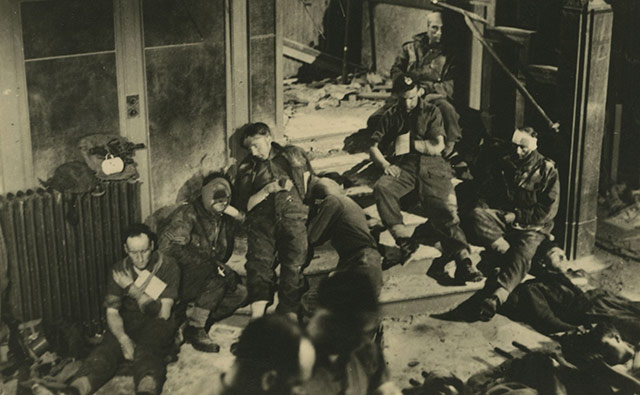
Image Source: www.liberationroute.com
The Truth: Why Did Operation Market Garden Fail?
Operation Market Garden failed because a combination of ambitious goals, flawed planning, and unexpected German resistance meant that the crucial Arnhem bridge objective could not be secured in time, preventing the Allied advance. What was Operation Market Garden? It was a daring plan by Field Marshal Bernard Montgomery to use airborne troops to capture key bridges in the Netherlands, creating a corridor for ground forces to advance into Germany. Can an airborne operation succeed? Yes, but it requires precise execution, overwhelming force, and a clear path for follow-up. Who was responsible for the plan? Field Marshal Montgomery conceived and commanded Operation Market Garden.
Operation Market Garden, launched in September 1944, remains one of the most debated and scrutinized Allied operations of World War II. Hailed initially as a bold stroke to end the war by Christmas, it ultimately faltered, leaving a bitter taste of “what if” in its wake. The scale of ambition was immense: a lightning thrust through Holland, capturing nine bridges over ten days, culminating in a drive into Germany’s industrial heartland. Yet, despite initial successes, the operation was plagued by operation Market Garden setbacks that ultimately led to its failure, particularly at the Arnhem bridge objective.
Allied Strategy Flaws and Overconfidence
The bedrock of the Allied strategy for Operation Market Garden was speed and surprise. The plan relied on three Allied airborne divisions capturing a series of bridges, with the British 1st Airborne Division tasked with the most distant and critical objective: the bridge at Arnhem. Meanwhile, XXX Corps, a British armored formation, was to drive north along a single narrow road, linking up with the airborne forces at each bridge.
However, several fundamental Allied strategy flaws underpinned this ambitious undertaking:
- Underestimation of German Strength: Allied intelligence significantly underestimated the presence and capability of German forces in the area. They believed the region was largely cleared of effective units, occupied primarily by “holiday troops” and recovering soldiers. This assessment proved disastrously wrong.
- Reliance on a Single Axis of Advance: The plan’s dependence on XXX Corps’ ability to advance rapidly along a single, narrow road made it incredibly vulnerable to disruption. Any significant German resistance or blocking action could cripple the entire operation.
- Over-ambitious Timetable: The sheer number of bridges to be captured and the distances involved meant that the operation required near-perfect execution and no significant delays. The timetable was extremely tight, leaving little room for error.
- Lack of Air Superiority Reinforcement: While air support was crucial, the operation did not guarantee continuous, overwhelming air cover for the isolated airborne troops, particularly during resupply efforts.
This overconfidence, perhaps born from a string of earlier Allied victories, blinded the planners to the potential pitfalls. The belief that the German army was on the verge of collapse was a dangerous assumption.
The Arnhem Bridge Objective: A Bridge Too Far
The capture of the Arnhem bridge was the linchpin of Operation Market Garden. The directive was clear: secure the bridge at all costs. However, the Arnhem bridge objective proved to be the operation’s undoing.
- Delayed Landings: Due to weather conditions and German anti-aircraft fire, the airborne drops were scattered and delayed. This meant that the landing zones for the British 1st Airborne Division were further from the bridge than initially planned, forcing troops to march considerable distances under potential enemy fire.
- 1st Airborne Division Struggles: The elite British 1st Airborne Division, led by Major General Roy Urquhart, faced immediate and intense opposition. They were dropped into the teeth of strong German units, including elements of the II SS Panzer Corps. The 1st Airborne Division struggles were compounded by communication breakdowns, delays in parachute drops, and a lack of crucial anti-tank weaponry.
- Isolation and Attrition: While some elements of the division managed to reach the Arnhem bridge, they were quickly isolated. Cut off from supporting ground forces and subjected to relentless German attacks, they fought valiantly but were eventually overwhelmed. The famous last stand at Oosterbeek, where the remaining survivors attempted to hold out, became a symbol of their bravery and the operation’s tragic outcome.
The XXX Corps Advance Delay: A Crippling Bottleneck
The success of Operation Market Garden hinged on the swift advance of XXX Corps. However, the drive north became a slow, grinding battle, hampered by a series of XXX Corps advance delay factors.
- The Narrow Road: The single highway, dubbed “Hell’s Highway,” became a killing ground for XXX Corps. German forces, recovering from the initial shock, launched effective ambushes and counterattacks, blocking the road at numerous points.
- Challenging Terrain: The Dutch landscape, with its narrow roads, canals, and strategically placed villages, provided ideal defensive positions for the Germans. Each bridge and village had to be fought for and secured, slowing the advance considerably.
- Intelligence Failures Market Garden: Crucial intelligence regarding the strength and disposition of German forces along the route of advance was either incomplete or misinterpreted. This meant that XXX Corps was often surprised by the intensity of the resistance they encountered.
- Logistical Challenges Operation Market Garden: The rapid advance also presented significant logistical hurdles. Supplying tanks and vehicles, along with ammunition and fuel, over a long and contested supply line proved to be a constant challenge.
The inability of XXX Corps to break through the German defenses and link up with the airborne forces in a timely manner was a catastrophic failure. By the time elements of XXX Corps reached Arnhem, the 1st Airborne Division had been largely annihilated.
German Resistance Strength and Tactical Acumen
The Allied planners failed to fully appreciate the resurgence of German military capability and the tactical acumen of their commanders in the latter stages of the war. The German resistance strength in the Netherlands was significantly underestimated.
- SS Panzer Divisions: The presence of elements of the II SS Panzer Corps, including the 9th SS Panzer Division and the 10th SS Panzer Division, was a critical factor. These were experienced, well-equipped units that had been refitted and were far from being the demoralized remnants the Allies had anticipated.
- Effective Defensive Tactics: German commanders, such as Generalmajor Heinz Harmel, employed effective defensive tactics. They used the terrain to their advantage, organized ambushes, and launched determined counterattacks that effectively stalled the Allied advance.
- Rapid Reinforcement: Despite the overall strain on German resources, the fluidity of the front allowed for the rapid deployment of reinforcements to critical sectors, particularly around Arnhem.
The resilience and fighting spirit of the German troops, combined with the tactical skill of their leaders, proved to be a decisive counterpoint to the Allied offensive.
Intelligence Failures Market Garden: A Chain of Errors
The pervasive nature of intelligence failures Market Garden contributed significantly to the operation’s downfall.
- Misinterpreting Luftwaffe Activity: A brief surge in Luftwaffe activity was dismissed as a sign of weakness rather than a pre-cursor to reinforcement.
- Inadequate Reconnaissance: Ground reconnaissance of the landing zones and the route of advance was insufficient. This meant that the airborne troops were not fully aware of the terrain and potential enemy positions.
- Underestimating Troop Morale and Equipment: Allied intelligence failed to accurately gauge the morale and fighting capability of the German units present. They were not a beaten force, and their equipment, particularly their tanks, posed a significant threat.
- Lack of Polish Intelligence Integration: The Polish 1st Independent Parachute Brigade, tasked with capturing the northern end of the Arnhem bridge, suffered from poor communication and a lack of coordination with the British forces, partly due to intelligence gaps.
Logistical Challenges Operation Market Garden: Strain on the Lifeline
The logistical demands of Operation Market Garden were immense, and the logistical challenges Operation Market Garden proved to be a constant impediment.
- Supply Lines: The single highway for XXX Corps was a precarious lifeline, vulnerable to interdiction. Any disruption to this artery would starve the advancing forces of essential supplies.
- Airborne Resupply: The airborne divisions, particularly the 1st Airborne Division at Arnhem, were heavily reliant on air resupply. Poor weather, German air defense, and the dispersal of landing zones often hindered these vital missions. Dropped supplies were often missed or fell into enemy hands.
- Ammunition and Equipment Shortages: The intense fighting and the inability of XXX Corps to advance quickly led to critical shortages of ammunition, particularly for the besieged airborne troops. The lack of anti-tank weapons at Arnhem was a glaring omission.
Airborne Operations Vulnerabilities: The Risks of Skyborne Assaults
Operation Market Garden highlighted the inherent airborne operations vulnerabilities. While airborne assaults can be devastating when executed flawlessly, they are also susceptible to a unique set of challenges.
- Dispersal of Forces: Weather, enemy fire, and the vastness of drop zones can lead to the scattering of troops, delaying their assembly and hindering their ability to concentrate force.
- Isolation: Once dropped, airborne units can become isolated, lacking the immediate support of armor and heavy artillery that ground forces rely on.
- Vulnerability to Counterattack: Airborne troops, often lightly equipped, are vulnerable to well-coordinated ground counterattacks, especially if they cannot secure their objectives quickly.
- Reliance on Air Superiority and Ground Support: The success of airborne operations is heavily dependent on maintaining air superiority for resupply and support, and the rapid linking up with ground forces.
The failure at Arnhem was a stark illustration of these vulnerabilities. The 1st Airborne Division struggles were a direct consequence of being dropped into a heavily contested area, unable to link up with XXX Corps, and facing a determined enemy without adequate support.
Post-War Analysis Market Garden: Lessons Learned
The post-war analysis Market Garden has been extensive, offering valuable insights into the complexities of large-scale combined arms operations.
- The Importance of Intelligence: The operation underscored the absolute necessity of accurate and up-to-date intelligence, particularly regarding enemy strength and disposition.
- Flexibility in Planning: Rigid plans that do not account for unforeseen circumstances are prone to failure. A degree of flexibility and contingency planning is vital.
- Logistical Backbone: The most brilliant tactical plan will falter without a robust and secure logistical support system.
- The Human Element: The bravery and sacrifice of the soldiers involved cannot be overstated. However, even extraordinary courage cannot always overcome fundamental strategic and tactical shortcomings.
Operation Market Garden, despite its ultimate failure, was not without its moments of heroism and strategic brilliance. The tenacious defense of the men at Arnhem became a legend. However, the Operation Market Garden setbacks, from the initial intelligence failures to the crucial XXX Corps advance delay, combined with the underestimated German resistance strength, created a perfect storm that led to the operation falling short of its audacious goals. The Arnhem bridge objective remained beyond Allied reach for too long, a grim testament to a plan that, while bold, was ultimately too ambitious and too flawed to succeed.
Frequently Asked Questions (FAQ)
Q1: What was the primary objective of Operation Market Garden?
The primary objective was to capture a series of bridges in the Netherlands, creating a corridor for Allied forces to advance into Germany and potentially end the war by Christmas 1944.
Q2: Why is the failure at Arnhem so significant?
The failure to secure the bridge at Arnhem resulted in the encirclement and near-destruction of the British 1st Airborne Division, a key component of the operation, and meant the entire offensive could not achieve its strategic goals.
Q3: What were the main reasons for the delays in the XXX Corps advance?
Delays were caused by strong German resistance, ambushes along the narrow “Hell’s Highway,” damaged bridges, and the need to clear heavily defended villages and strongpoints.
Q4: How did intelligence failures impact the operation?
Intelligence failures led to an underestimation of German forces in the area, particularly SS Panzer divisions, and a lack of awareness of the terrain’s defensive capabilities, impacting the planning and execution of the airborne drops and ground advance.
Q5: What lessons were learned from Operation Market Garden?
Key lessons included the critical importance of accurate intelligence, the need for more flexible planning, the vital role of logistics, and the inherent vulnerabilities of large-scale airborne operations.
Q6: What happened to the soldiers who fought at Arnhem?
Many soldiers of the 1st Airborne Division who fought at Arnhem were killed or captured. Those who survived were eventually evacuated, but the division suffered extremely heavy casualties, making it a costly operation.