
So, how many fat quarters are in a yard of fabric? A standard yard of fabric, when cut into fat quarters, yields four fat quarters. This is a fundamental piece of knowledge for anyone diving into the world of quilting and sewing.
For crafters and designers, mastering the art of fabric calculations is as crucial as choosing the perfect print. Whether you’re stocking up on quilting fabric for a large project or building a collection of coordinating prints for a scrappy quilt, knowing your fabric yardage is key. One of the most common questions, especially for beginners, revolves around a specific cut: the fat quarter. This guide will provide a definitive answer and delve into all aspects of fabric conversion related to this popular sewing measurement.
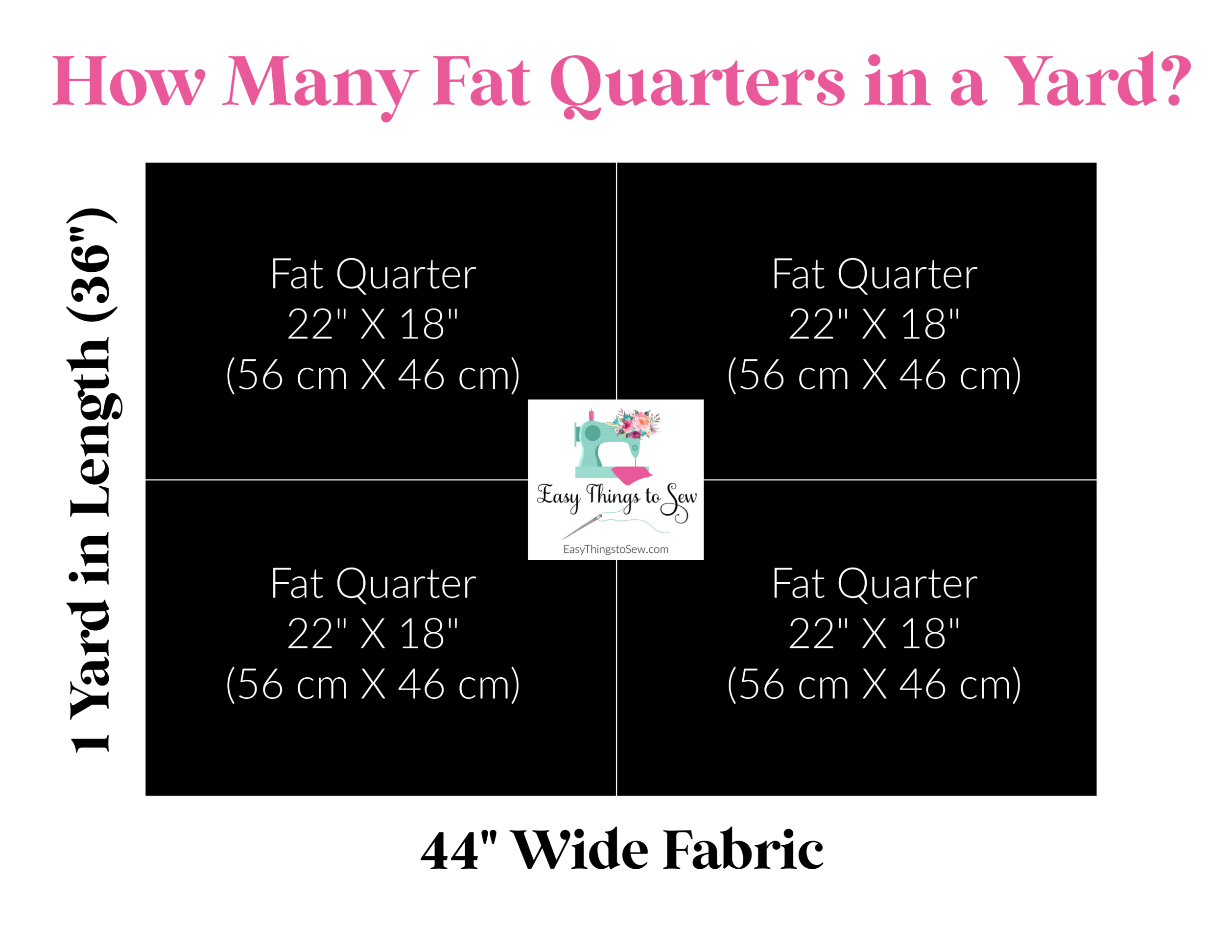
Image Source: easythingstosew.com
Deconstructing the Yard of Fabric
Before we can determine the number of fat quarters within a yard, it’s essential to understand what a “yard of fabric” actually entails. When you purchase fabric by the yard, you’re typically buying it from a bolt. The width of the bolt can vary, but a common width for quilting cotton is 42-44 inches. When you ask for a yard, you receive a piece that is 36 inches long and the full width of the bolt. This 36-inch length is the constant we’ll work with.
Defining the Fat Quarter Size
What exactly is a fat quarter size? Unlike a traditional “long” or “skinny” quarter, which measures 9 inches by the full width of the fabric bolt (e.g., 9″ x 42″), a fat quarter is a more usable shape for many projects. A fat quarter is consistently cut to 18 inches by 22 inches. This squarer shape provides more versatility for piecing and cutting larger motifs.
The Math Behind the Fat Quarter
Now, let’s connect the yard of fabric to the fat quarter. A yard of fabric is 36 inches long. To get fat quarters, we cut this 36-inch length in half, resulting in two pieces that are each 18 inches long.
-
Step 1: Initial Cut. You take your 36-inch length of fabric (the yard) and cut it in half lengthwise. This gives you two pieces, each measuring 18 inches by the width of the bolt (e.g., 18″ x 42″).
-
Step 2: Second Cut. Now, you take each of these 18-inch by 42-inch pieces and cut them in half crosswise. This means cutting them perpendicular to the selvage edge. Each of these cuts yields two pieces that are 18 inches by 22 inches (half of the 42-inch width).
Since you started with two 18-inch by 42-inch pieces, and each of those yields two fat quarters, you end up with a total of four fat quarters from one yard of fabric.
Visualizing the Conversion
Imagine your yard of fabric is a long rectangle.
+————————————————–+ <– 36 inches (length) | | | | +————————————————–+ ^ ^ | | 42-44 inches (width) | | | | | +————————————————–+
When you cut it into fat quarters:
- First Cut: You cut the 36-inch length in half, creating two 18-inch lengths.
+———————————-+ <– 18 inches | | +———————————-+ | | +———————————-+ <– 18 inches
- Second Cut: You then cut each of these 18-inch lengths in half across the width.
This results in four pieces, each measuring 18 inches by 22 inches (half the original width).
+————+————+ <– 22 inches | | | | | | | Fat Qtr 1 | Fat Qtr 2 | <– 18 inches | (18"x22") | (18"x22") | | | | +————+————+ | | | | | | | Fat Qtr 3 | Fat Qtr 4 | <– 18 inches | (18"x22") | (18"x22") | | | | +————+————+
Why Fat Quarters are So Popular
The prevalence of fat quarters in the quilting and sewing community isn’t accidental. Their popularity stems from several practical advantages:
-
Usability: The 18″ x 22″ dimension is highly versatile. It’s large enough to cut many common quilt block components, such as half-square triangles, squares, and rectangles, without needing to piece smaller scraps together. This makes them ideal for pre-cut fabric bundles or for quilters who prefer not to cut their own yardage into smaller pieces.
-
Scrap Management: For those who enjoy working with a variety of fabrics but don’t want to accumulate vast amounts of small scraps, fat quarters offer a good balance. You get a decent amount of fabric in a manageable size.
-
Design Flexibility: When designing a quilt, having a collection of fat quarters allows for easy mixing and matching of prints and colors. You can create visually complex and interesting quilts by simply pulling out a few fat quarters that appeal to you.
-
Pre-cuts: Many fabric manufacturers and independent shops sell pre-cut fat quarters, often bundled by collection or colorway. This saves time and effort for quilters who want to jump straight into their projects.
Calculating Fabric Yardage for Fat Quarters
So, you know that one yard yields four fat quarters. But what if your project calls for a specific number of fat quarters? This is where fabric calculations become essential for efficient quilt making.
Let’s say you need 20 fat quarters for your quilt.
- Calculation: To find out how many yards you need, you divide the total number of fat quarters by the number of fat quarters per yard: 20 fat quarters / 4 fat quarters per yard = 5 yards.
This means you would need to purchase 5 yards of fabric to get 20 fat quarters.
Table: Yardage to Fat Quarter Conversion
Here’s a handy table to quickly see how many fat quarters you get from different amounts of fabric yardage:
| Yards of Fabric | Number of Fat Quarters |
|---|---|
| 0.25 (1/4 yard) | 1 |
| 0.5 (1/2 yard) | 2 |
| 0.75 (3/4 yard) | 3 |
| 1 | 4 |
| 1.25 | 5 |
| 1.5 | 6 |
| 1.75 | 7 |
| 2 | 8 |
| 2.5 | 10 |
| 3 | 12 |
| 3.5 | 14 |
| 4 | 16 |
| 4.5 | 18 |
| 5 | 20 |
When Your Project Doesn’t Require Whole Yards
It’s important to note that fabric stores usually sell fabric by the yard, and often in 1/4 or 1/2 yard increments. So, if you need 5 fat quarters, you would need to purchase 1.25 yards of fabric. This 1.25 yards would then be cut into 5 fat quarters.
If you need 7 fat quarters, you would typically need to buy 2 yards of fabric. You’d cut 5 fat quarters from the first yard, and then cut 2 fat quarters from the second yard, leaving you with two additional fat quarters as a bonus. This is a common scenario when buying quilting fabric for specific projects.
Considerations for Cutting Fat Quarters
While the math is straightforward, there are a few nuances to consider when cutting your own fat quarters from yardage:
-
Bolt Width Variations: As mentioned, quilting cotton typically has a width of 42-44 inches. For the standard fat quarter (18″ x 22″), this width works perfectly. If you are working with fabric that has a significantly different width, the dimensions of your “fat quarter” might vary. However, the principle of cutting the length in half and then the width in half still applies.
-
Salvage Edge: The selvage is the finished edge of the fabric, and it often has manufacturer information printed on it. When cutting fat quarters, it’s generally recommended to trim off the selvages before cutting your pieces, especially if you plan to use the entire 18″ x 22″ dimension for precise piecing. This ensures your measurements are accurate and you don’t have any puckering due to the tighter weave of the selvage.
-
Fabric Shrinkage: Most quilters pre-wash their fabric before cutting. Pre-washing can cause fabric to shrink slightly. It’s best to account for this potential shrinkage when cutting. If you plan to pre-wash, it’s often advisable to cut your fabric slightly larger than the final desired measurements, or to wash your yardage before you cut it into fat quarters. However, for the standard fat quarter cut, the 18″ x 22″ is the standard, and you’ll adjust for shrinkage during the pre-washing and drying process before your final quilt assembly.
-
“Fat” vs. “Skinny” Quarters: The term “fat quarter” is specifically about the dimensions (18″ x 22″). A “skinny quarter” (or traditional quarter) cut from a 42-inch wide bolt would be 9″ x 42″. If you cut your yardage into four 9″ x 42″ pieces, you would have four skinny quarters.
Working with Fat Quarter Bundles
Many quilters opt to purchase pre-cut fabric bundles of fat quarters. These bundles are curated by fabric designers or shops and often feature complementary prints from a specific collection. Buying bundles is a fantastic way to:
- Ensure Cohesion: You’re guaranteed that the fabrics will work well together visually.
- Save Time: No need to cut your own yardage.
- Discover New Fabrics: It’s a great way to explore different designers and styles.
When you buy a fat quarter bundle, it will explicitly state the number of fat quarters included. You can then directly apply the fabric calculations discussed earlier to plan your project. For instance, if you have a bundle of 20 fat quarters, you know you have the equivalent of 5 yards of fabric, cut into usable pieces.
Beyond the Yard: Other Fabric Conversions
While the focus is on fat quarters, it’s useful to briefly touch upon other sewing measurements and how they relate to yardage:
-
Traditional Quarter Yard: As mentioned, this is 9″ x 42″ (or the full width of the bolt). Four traditional quarter yards make one yard of fabric.
-
Half Yard: This is 18″ x 42″. Two half yards make one yard of fabric.
-
Fat Eighth: This is half of a fat quarter, measuring approximately 9″ x 22″. Eight fat eighths make one yard of fabric.
Table: Common Fabric Cuts from a Yard
| Fabric Cut | Dimensions (from a 42″ bolt) | Number of Cuts per Yard |
|---|---|---|
| Yard | 36″ x 42″ | 1 |
| Half Yard | 18″ x 42″ | 2 |
| Traditional Quarter | 9″ x 42″ | 4 |
| Fat Quarter | 18″ x 22″ | 4 |
| Fat Eighth | 9″ x 22″ | 8 |
Frequently Asked Questions (FAQ)
Q1: If I buy 1 yard of fabric, can I get more than 4 fat quarters?
No, not if you adhere to the standard fat quarter dimensions (18″ x 22″). A yard of fabric is 36 inches long. To get the 22-inch width required for a fat quarter, you have to cut the 36-inch length into two 18-inch sections, and then cut those sections in half across the width. This process inherently yields exactly four fat quarters from a single yard. Trying to force more would result in smaller or oddly shaped pieces.
Q2: What is the difference between a fat quarter and a skinny quarter?
A skinny quarter (or traditional quarter yard cut) measures 9 inches by the full width of the fabric bolt (typically 42-44 inches). A fat quarter, on the other hand, is cut to 18 inches by 22 inches. The fat quarter is considered “fatter” or squarer, making it more versatile for cutting larger pieces needed in many quilt blocks.
Q3: Do I need to pre-wash my fabric before cutting fat quarters?
It is highly recommended to pre-wash and dry your fabric before cutting it for quilting or sewing projects, especially if you plan to wash the finished item. Pre-washing helps to remove any sizing or chemicals from the fabric and accounts for potential shrinkage. You can pre-wash your yardage and then cut your fat quarters, or cut your fat quarters first and then pre-wash them, being mindful of potential fraying if the selvages are removed.
Q4: Can I cut fat quarters from fabric that is wider than 44 inches?
Yes. The definition of a fat quarter is an 18″ x 22″ piece of fabric. If you have fabric that is, for example, 60 inches wide, you would still cut your yardage (36 inches long) into four 18″ x 22″ pieces. The extra width of the original fabric doesn’t change the standard dimensions of a fat quarter itself, but it might allow for more efficient cutting or yield larger leftover pieces. However, the most common scenario is working with 40-44 inch wide quilting cotton.
Q5: What if I only need 3 fat quarters for my project?
If you only need 3 fat quarters, you will need to purchase 1 yard of fabric. You will cut 3 fat quarters from that yard, and you will have one remaining fat quarter as a bonus piece to add to your stash. You cannot buy exactly 0.75 yards (which would yield 3 fat quarters) in most fabric stores; they typically sell in increments of 1/4 or 1/2 yards.
Conclusion
The question of “how many fat quarters in a yard” is a foundational one for anyone engaged in quilt making or other fabric crafts. The definitive answer is four fat quarters per yard. This simple fabric conversion unlocks a world of creative possibilities, from building diverse fabric bundles to efficiently managing your fabric yardage. By grasping the fat quarter size and the basic principles of fabric calculations, you empower yourself to undertake any project with confidence, ensuring you have precisely the sewing measurements you need. Happy sewing!