
What is a cubic yard of dirt? A cubic yard of dirt is a unit of measurement for volume, equivalent to a cube that is 3 feet long, 3 feet wide, and 3 feet high. How much dirt is a yard? One yard of dirt, commonly referred to as a cubic yard of dirt, is a volume of 27 cubic feet. This fundamental concept is crucial for anyone involved in landscaping, gardening, construction, or any project requiring bulk soil delivery.
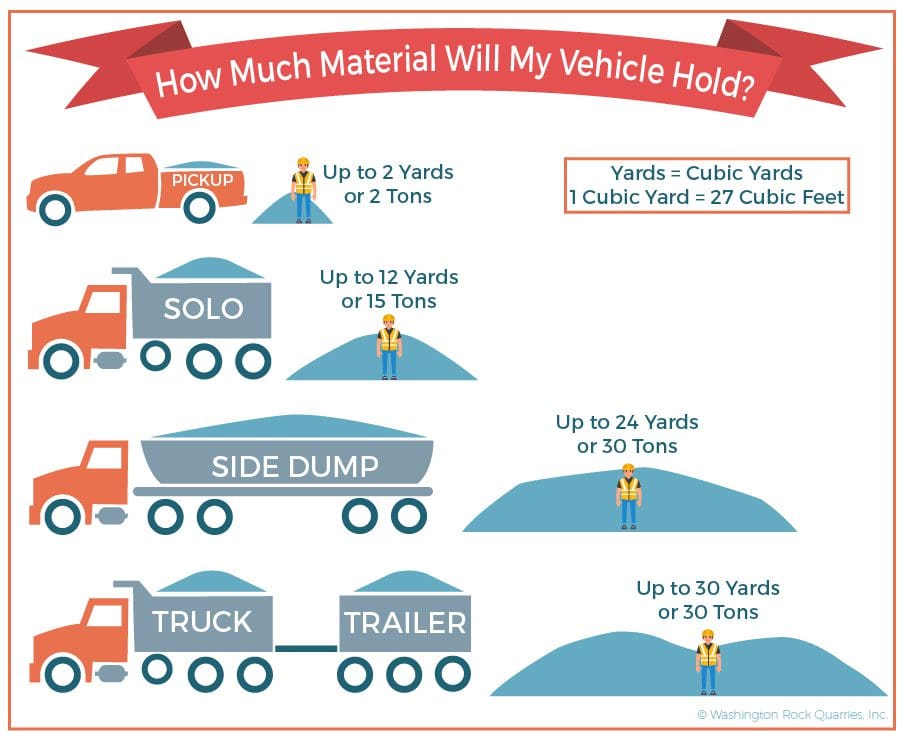
Image Source: www.wa-rock.com
Deciphering the Dirt Measurement: What Exactly Is a Cubic Yard?
When you’re planning a garden, building a patio, or tackling any project that involves moving earth, the term “yard of dirt” is something you’ll encounter frequently. But what does it truly mean in practical terms? A cubic yard of dirt is a standard unit of volume. Imagine a perfect cube with each side measuring exactly three feet. The total volume contained within that cube is one cubic yard.
To visualize this, think about it this way:
- Length: 3 feet
- Width: 3 feet
- Height: 3 feet
Multiplying these dimensions gives us: 3 ft * 3 ft * 3 ft = 27 cubic feet. So, a cubic yard of dirt is equal to 27 cubic feet of soil. This is the standard way soil, mulch, gravel, and other bulk materials are sold and measured in the industry.
Why Does Knowing “How Much Dirt Is A Yard” Matter?
This seemingly simple question of “how much dirt is a yard” is actually the cornerstone of successful project planning. Miscalculating your soil needs can lead to significant problems:
- Underestimating: You might run out of soil halfway through your project, causing delays and requiring an additional, often more expensive, delivery.
- Overestimating: You could end up with a large surplus of soil, taking up valuable space and potentially costing you more than necessary.
Accurate soil calculation ensures you order the right amount of material, saving you time, money, and frustration. Whether you’re filling a raised bed, creating a new flower bed, or grading a landscape, precise measurement is key.
Fathoming Your Soil Needs: How to Measure Dirt for Your Project
The most common reason people ask “how much dirt is a yard” is because they need to figure out how much they need for a specific project. This involves a bit of simple geometry.
Measuring Rectangular or Square Areas
This is the most straightforward scenario. If you’re filling a rectangular planter box, a raised garden bed, or a foundation area, you’ll need to measure the length, width, and depth (or height) of the space you need to fill.
- Measure the Length: Use a tape measure to find the longest side of your area.
- Measure the Width: Measure the shorter side of your area.
- Measure the Depth (or Height): This is the crucial measurement for volume. Determine how deep you need the soil to be. For example, if you’re filling a raised bed that is 12 inches deep, you’ll need to convert that to feet. Since there are 12 inches in a foot, 12 inches is equal to 1 foot.
Once you have these three measurements in feet, you can calculate the volume in cubic feet:
Volume (cubic feet) = Length (feet) × Width (feet) × Depth (feet)
To convert this to cubic yards, you simply divide the total cubic feet by 27 (since there are 27 cubic feet in a cubic yard of dirt):
Volume (cubic yards) = Volume (cubic feet) / 27
Example:
Let’s say you have a rectangular garden bed that is:
* Length = 8 feet
* Width = 4 feet
* Depth = 0.5 feet (6 inches converted to feet)
Calculation:
- Volume (cubic feet) = 8 ft × 4 ft × 0.5 ft = 16 cubic feet
- Volume (cubic yards) = 16 cubic feet / 27 cubic feet/yard ≈ 0.59 cubic yards
In this case, you would need a little over half a yard of topsoil. It’s always wise to round up to the nearest half or full cubic yard of dirt to account for settling and minor inaccuracies.
Measuring Circular Areas
For circular beds, gardens, or planters, the calculation is slightly different as you’ll need to use the formula for the volume of a cylinder.
- Measure the Diameter: Find the widest part of the circle, straight across the center.
- Calculate the Radius: The radius is half of the diameter. (Radius = Diameter / 2)
- Measure the Depth: Again, determine how deep you need the soil to be in feet.
The formula for the volume of a cylinder is:
Volume (cubic feet) = π × (Radius (feet))² × Depth (feet)
Where π (pi) is approximately 3.14159.
After calculating the volume in cubic feet, divide by 27 to get cubic yards:
Volume (cubic yards) = Volume (cubic feet) / 27
Example:
Imagine you need to fill a circular planter that is:
* Diameter = 3 feet
* Depth = 0.75 feet (9 inches converted to feet)
Calculation:
- Radius = 3 feet / 2 = 1.5 feet
- Volume (cubic feet) = 3.14159 × (1.5 ft)² × 0.75 ft
- Volume (cubic feet) = 3.14159 × 2.25 sq ft × 0.75 ft ≈ 5.30 cubic feet
- Volume (cubic yards) = 5.30 cubic feet / 27 cubic feet/yard ≈ 0.20 cubic yards
For this circular planter, you would need approximately 0.2 cubic yards of soil.
Measuring Irregular Shapes
For irregularly shaped areas, like a sprawling flower bed, it’s often easiest to break the area down into smaller, more manageable shapes (rectangles, squares, triangles, half-circles) and calculate the volume of each section. Then, add all the volumes together. Alternatively, you can approximate the area and use a dirt volume calculator online.
Converting Measurements
It’s essential to ensure all your measurements are in the same unit (feet) before you start calculating.
- Inches to Feet: Divide the number of inches by 12.
- 6 inches / 12 = 0.5 feet
- 9 inches / 12 = 0.75 feet
- 12 inches / 12 = 1 foot
- Centimeters to Meters: Divide the number of centimeters by 100. (Note: Most bulk soil is sold in yards, but if you encounter metric measurements, this conversion is useful.)
The Role of Dirt Weight: Dirt Weight Per Cubic Yard
While volume is the primary way soil is sold, the weight of soil can also be a consideration, especially if you’re dealing with weight restrictions for transport or trying to estimate how much material your truck can carry. The dirt weight per cubic yard can vary significantly depending on the type of soil and its moisture content.
Factors Affecting Dirt Weight
- Soil Type: Loam, clay, sand, and topsoil all have different densities.
- Moisture Content: Wet soil is significantly heavier than dry soil.
- Compaction: Compacted soil is denser and therefore heavier per unit volume.
Typical Dirt Weight Estimates
These are general estimates, and actual weights can vary.
| Soil Type | Approx. Weight (Pounds per Cubic Yard) | Approx. Weight (Kilograms per Cubic Meter) |
|---|---|---|
| Dry Topsoil | 1,800 – 2,500 lbs | 1,000 – 1,400 kg |
| Moist Topsoil | 2,200 – 2,800 lbs | 1,200 – 1,550 kg |
| Clay (Moist) | 2,500 – 3,000 lbs | 1,400 – 1,650 kg |
| Sand (Dry) | 2,200 – 2,700 lbs | 1,200 – 1,500 kg |
| Sand (Wet) | 2,800 – 3,200 lbs | 1,550 – 1,750 kg |
| Gravel (Loose) | 2,300 – 2,800 lbs | 1,300 – 1,550 kg |
| Compost (Loose) | 800 – 1,200 lbs | 450 – 670 kg |
| Mulch (Wood Chips) | 500 – 1,000 lbs | 280 – 550 kg |
Important Note: When ordering bulk soil delivery, the price is almost always based on volume (cubic yards), not weight. However, if you’re loading soil into your own vehicle, knowing the weight can help you avoid overloading.
Using a Dirt Volume Calculator
For those who prefer digital assistance, a dirt volume calculator is an invaluable tool. These online calculators simplify the soil calculation process. You typically input the dimensions of your area (length, width, depth) and the calculator automatically converts the volume into cubic yards. Some calculators even allow you to specify the shape of your area (rectangle, circle, triangle) for more accurate results.
How to Use a Dirt Volume Calculator:
- Find a Reputable Calculator: Many landscaping supply companies and DIY websites offer free dirt calculator tools.
- Measure Your Area: Ensure you have your length, width, and depth measurements ready, all in feet.
- Input the Dimensions: Carefully enter your measurements into the calculator.
- Select the Shape: If prompted, choose the correct shape for your area.
- Get Your Result: The calculator will display the estimated cubic yard of dirt needed.
Using a dirt volume calculator can save you time and reduce the chance of errors, especially for more complex shapes or multiple areas.
Understanding Landscaping Soil Volume for Various Projects
The quantity of soil you need will vary greatly depending on the project. Here’s a look at some common landscaping scenarios and how they relate to how much dirt is a yard:
Raised Garden Beds
Raised beds are popular because they offer better drainage and control over soil quality. The depth of a raised bed is critical for landscaping soil volume calculations.
- Shallow beds (6-8 inches): Require less soil per square foot.
- Deep beds (12-18 inches or more): Will need a significant amount of soil.
Example: A 4 ft x 8 ft raised bed that is 1 ft deep requires:
8 ft (length) * 4 ft (width) * 1 ft (depth) = 32 cubic feet.
32 cubic feet / 27 cubic feet/yard = 1.18 cubic yards.
You would likely order 1.25 or 1.5 cubic yards of yard of topsoil to be safe.
Lawns and Seeding
When preparing an area for new sod or seed, a common recommendation is to add a layer of 4-6 inches of quality topsoil.
- For a 4-inch layer: You’ll need 0.33 cubic yards per 100 square feet.
- For a 6-inch layer: You’ll need 0.5 cubic yards per 100 square feet.
To calculate for a larger lawn area:
Square Feet of Area × Depth in Feet / 27 = Cubic Yards Needed
Example: For a 1,000 sq ft lawn requiring a 6-inch (0.5 ft) layer of topsoil:
1,000 sq ft × 0.5 ft / 27 = 18.5 cubic yards.
This is a substantial amount, highlighting why understanding “how much dirt is a yard” is so important for larger projects.
Flower Beds and Borders
These typically require a shallower layer, often 3-4 inches, to amend existing soil or provide a base for planting.
- For a 3-inch layer: You’ll need 0.25 cubic yards per 100 square feet.
- For a 4-inch layer: You’ll need 0.33 cubic yards per 100 square feet.
General Grading and Leveling
If you’re leveling an uneven area, you’ll need to measure the deepest point of the depression you need to fill. This might involve multiple measurements across the area to get an average depth.
Important Consideration: Compaction
Soil, especially organic-rich topsoil, will settle and compact over time, particularly after rain or watering. It’s generally recommended to add an extra 10-20% to your calculated amount to account for this settling. So, if your calculation comes out to 1 cubic yard, consider ordering 1.1 to 1.2 cubic yards.
Bulk Soil Delivery: What to Expect
When you need significant quantities of soil, like a cubic yard of dirt or more, you’ll likely opt for bulk soil delivery. This is usually the most cost-effective way to purchase soil for larger projects.
How Bulk Soil Delivery Works:
- Ordering: You’ll contact a local landscaping supply company. They will ask you about the type of soil you need (topsoil, compost, garden mix, etc.) and the quantity.
- Delivery: The soil is typically delivered in large quantities, often by a dump truck. The truck will deliver the soil to your specified location on your property.
- Placement: You’ll need to be prepared to move the soil from where the truck can access it to your project area. Shovels, wheelbarrows, or even small excavators might be necessary for large deliveries.
Tips for Bulk Soil Delivery:
- Accessibility: Ensure the delivery truck can safely access your property. Check for narrow gates, overhead obstructions (trees, wires), or tight turns.
- Delivery Location: Specify a clear, accessible area where you want the soil dumped.
- Timing: Coordinate the delivery date and time with your project schedule. It’s often best to have the soil delivered a day or two before you plan to start working with it.
- Soil Type: Discuss your project needs with the supplier to ensure you get the right type of soil.
Choosing the Right Soil: More Than Just Volume
While knowing “how much dirt is a yard” is vital for quantity, the type of soil you choose is equally important for the success of your project.
Types of Soil and Their Uses:
- Topsoil: This is the uppermost layer of soil, rich in organic matter and nutrients. It’s excellent for general gardening, lawns, and filling raised beds. Often sold as a blend of sand, loam, and compost.
- Compost: Decomposed organic matter that improves soil structure, aeration, and nutrient content. It’s a fantastic soil amendment and can be used on its own for certain applications or mixed with other soils.
- Garden Soil/Potting Mix: Specially formulated blends designed for container gardening or specific plant needs. These are often lighter and have better drainage than plain topsoil.
- Fill Dirt: Less refined soil, often used for grading, backfilling, or creating berms where aesthetics and nutrient content are less critical.
When ordering, you’ll specify the amount (e.g., “3 cubic yards of screened topsoil”) and the type.
Common Mistakes to Avoid
- Underestimating Settling: Always add a buffer for compaction.
- Inaccurate Measurements: Double-check your length, width, and depth.
- Ignoring Depth: The depth is just as critical as length and width for calculating volume.
- Forgetting About Slopes: If you’re grading a slope, the depth will vary. You might need to calculate at the shallowest and deepest points and average them, or use more advanced methods.
- Not Considering Soil Type Density: While not critical for ordering, it’s good to be aware that different soil types weigh differently.
Frequently Asked Questions (FAQ)
Q1: If I order 1 cubic yard of dirt, how much space will it take up?
A1: One cubic yard is a cube measuring 3 feet x 3 feet x 3 feet. However, when delivered in bulk, it will likely be dumped in a conical pile. The pile’s size will depend on the soil’s moisture content and composition, but it will occupy an area roughly 5-6 feet in diameter and 2-3 feet high.
Q2: Can I get dirt delivered in smaller quantities than a cubic yard?
A2: Some suppliers offer smaller quantities, often in bags that contain a fraction of a cubic yard (e.g., 0.5 cu ft or 2 cu ft). For quantities between bags and a full yard, you may need to arrange a special delivery or purchase bagged soil from a garden center.
Q3: How do I convert square feet to cubic yards?
A3: You cannot directly convert square feet to cubic yards because square feet measure area, while cubic yards measure volume. You need to incorporate the depth of the soil (in feet) into your calculation: Square Feet × Depth (in feet) / 27 = Cubic Yards.
Q4: Will the soil settle after delivery?
A4: Yes, soil will settle and compact over time, especially after rain or watering. It’s generally recommended to order about 10-20% more soil than your exact calculations to account for this settling.
Q5: What is the difference between topsoil and fill dirt?
A5: Topsoil is the nutrient-rich upper layer of soil, ideal for planting and lawns. Fill dirt is less refined and often used for grading or backfilling where soil quality isn’t a primary concern.
Q6: How much does a cubic yard of dirt weigh?
A6: The weight varies greatly, but a cubic yard of dirt typically weighs between 1,800 and 3,000 pounds, depending on its type and moisture content.
Q7: What’s the best way to calculate my soil needs for a circular garden?
A7: Measure the diameter of your garden, calculate the radius (diameter divided by 2), and use the formula: π × (Radius)² × Depth (in feet) / 27 to find the volume in cubic yards.
Q8: Is there a simple way to estimate how much soil I need?
A8: For simple rectangular beds, multiply length by width by depth (all in feet) and divide by 27. For more complex shapes, using an online dirt volume calculator is highly recommended.
By now, you should have a clear grasp of “how much dirt is a yard” and the steps involved in calculating your specific needs. Whether you’re a seasoned gardener or a DIY novice, mastering these measurements will ensure your projects are completed smoothly and successfully. Happy digging!